This article contains AI generated content.
· UpdatedTricho-Rhino-Phalangeal Syndrome: 2 Genes and 6 Biomarkers to Track
If you or your child has been diagnosed with tricho-rhino-phalangeal syndrome (TRPS), you have probably already noticed a gap: most of what you find online describes what the condition looks like, but very little explains what is actually happening at the molecular level, or what a family can realistically track and act on over time. That gap is not an accident. TRPS is rare enough that most general health content skips it entirely, and the handful of pages that do cover it tend to repeat the same short list of physical features without going further.
Generic advice struggles here for a specific reason: TRPS is not a lifestyle-driven condition, and it is not something that responds to the kind of broad "eat better, sleep more, manage stress" recommendations that work for common chronic diseases. It is caused by a change in a single gene — or, in some cases, a small deletion involving two or three neighboring genes — that shapes how bone, cartilage, and hair develop before and after birth. Understanding which gene is involved, and what that gene actually does, changes what questions are worth asking a geneticist or an orthopedic specialist.
This article takes a more specific approach. Instead of a general overview, it walks through the two genes most responsible for TRPS, what each one does in the body, and what current evidence says about monitoring and managing the effects. It then looks at the biomarkers and imaging findings worth tracking over time, a well-regarded book on diagnosing rare genetic conditions, and a small set of supportive approaches with some human evidence behind them.
None of this changes the underlying mutation — that part is fixed at conception. But better information about what TRPS1 and EXT1 actually do, and what can realistically be monitored and supported, tends to lead to better conversations with clinicians and fewer surprises along the way.
Summary
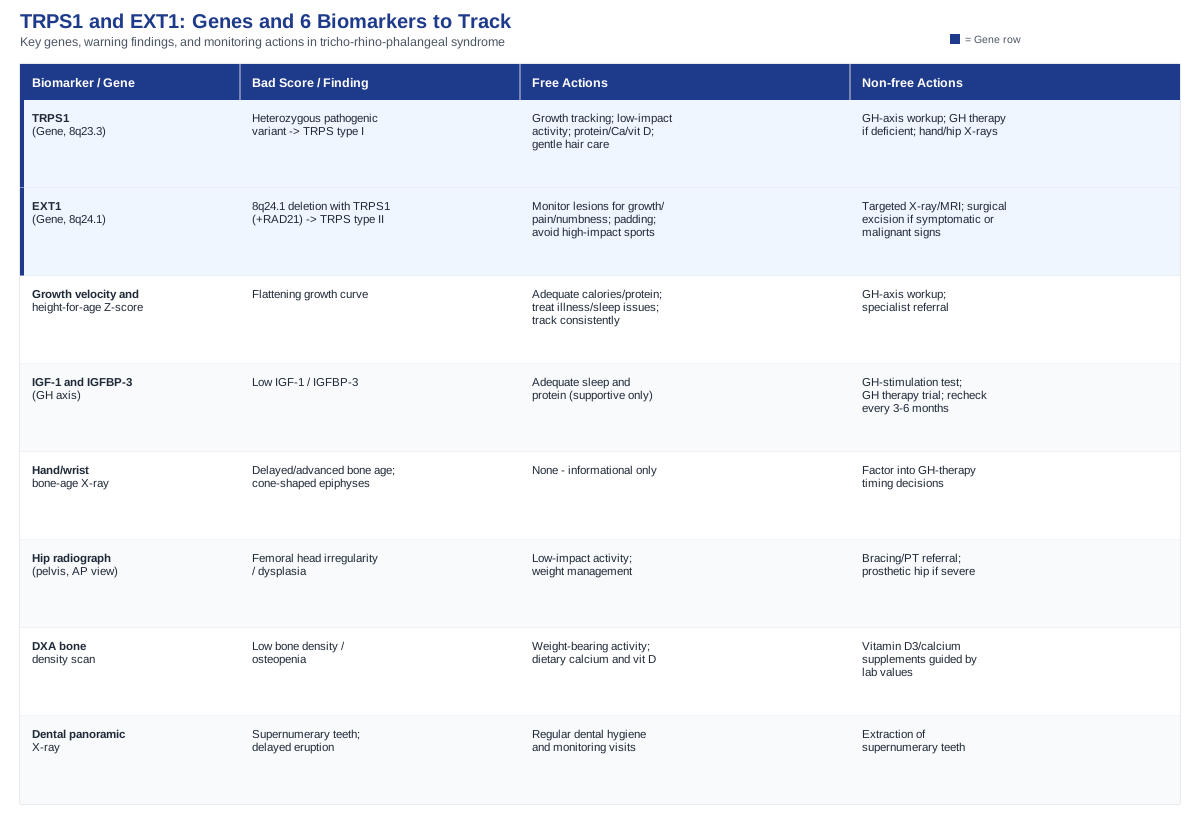
Tricho-Rhino-Phalangeal Syndrome traces back to a well-defined genetic cause, which is actually good news: unlike many chronic conditions where the biology is murky, researchers know almost exactly which gene is disrupted and roughly what it does in growing bone, cartilage, and hair follicles. That clarity opens the door to more useful questions than "what does TRPS look like" — questions like which biomarkers actually matter for long-term monitoring, when growth hormone therapy has shown real (if modest) benefit in documented cases, and where the line sits between what a family can track without any medical equipment and what genuinely requires imaging or lab work. The sections ahead cover the two genes behind TRPS types I, II, and III, six specific measurements worth discussing with a specialist, a genetics book that reframes how rare-disease diagnosis actually works, and a short, honest look at which complementary approaches have any real evidence behind them for the symptoms TRPS tends to bring.
The Two Genes Behind Tricho-Rhino-Phalangeal Syndrome
Before going gene by gene, it's worth naming the two figures often cited as a starting point for understanding personal genetics: Ali Torkamani, a genomics researcher known for work on polygenic risk scoring, and Gary Brecka, known for popularizing epigenetic and biomarker-driven health optimization. Their frameworks are genuinely useful for common, polygenic conditions — heart disease risk, metabolic health, and the like — where many small genetic variants combine with lifestyle to shift risk gradually. TRPS does not work that way. It is caused by a single, high-impact mutation in a dominant gene, and no amount of diet, exercise, or supplementation will change what that gene does structurally during development. That distinction matters because it sets realistic expectations from the start: the value of understanding TRPS1 and EXT1 is not in "optimizing" them, but in knowing what they affect, what can be monitored, and where medical intervention has actual supporting evidence.
TRPS1: the gene that shapes hair, cartilage, and growth plates
TRPS1 sits on chromosome 8q23.3 and encodes an atypical GATA-type zinc finger transcription factor — essentially a protein that turns other genes on or off during development, in this case by repressing GATA-regulated genes. According to GeneReviews, TRPS1 plays a role in chondrocyte differentiation, bone mineralization, and growth plate regulation, interacting with pathways involving osteocalcin, PTHrP, and Sox9/STAT3/Wnt–β-catenin signaling. A separate 2026 review in Developmental Dynamics, drawing on animal-model research, confirms that Trps1 governs both skeletal growth-plate biology and hair follicle development — which explains why a single gene mutation produces the two seemingly unrelated hallmark features of TRPS: sparse, slow-growing hair and distinctive skeletal changes.
When TRPS1 carries a heterozygous pathogenic variant, the result is TRPS type I (and what used to be classified separately as type III, now grouped under the same TRPS1-related spectrum in the 2023 Nosology of Genetic Skeletal Disorders). The condition is autosomal dominant, meaning one altered copy is enough to cause it. Interestingly, GeneReviews notes that many affected individuals inherit the variant from an affected parent, with only about one-third of cases arising as new (de novo) mutations — worth knowing if you're thinking through family planning or trying to understand why a parent might share subtle features without ever having been formally diagnosed.
What TRPS1 disruption actually looks like
The clinical picture is fairly consistent across affected individuals: fine, sparse, slow-growing, sometimes depigmented hair; a distinctive nose with a broad ridge, bulbous tip, and underdeveloped alae; a long, smooth philtrum; cone-shaped epiphyses in the fingers (visible on hand X-rays); brachydactyly with ulnar or radial deviation; short stature; and early-onset hip changes, including a flattened or irregular femoral head that can resemble Perthes disease. Dental findings are also common but often mischaracterized — TRPS typically involves supernumerary (extra) teeth, delayed eruption of primary teeth, microdontia, and malocclusion, not missing teeth as is sometimes assumed.
If TRPS1 is affected: what's possible without medication or equipment
There is no lifestyle intervention that reverses a TRPS1 mutation, and it would be misleading to suggest otherwise. But there is a meaningful, non-medical layer of management that makes a real difference in day-to-day quality of life. Consistent growth tracking using standard pediatric growth charts, at every routine visit, is the single most useful low-cost habit — it's what allows a clinician to notice a meaningful deviation early rather than late. Joint-protective habits matter too: low-impact activity (swimming, cycling) tends to be better tolerated than high-impact sports for children showing early hip changes, since it reduces load on a femoral head that may already be irregular in shape. Adequate protein, calcium, and vitamin D intake supports normal bone mineralization generally, though it does not correct the underlying signaling defect. For the hair changes, gentle hair care (avoiding harsh chemical treatments and excessive heat styling) reduces breakage in hair that is already finer and more fragile than typical. None of this requires supplements or devices — it's a matter of consistent, low-friction habits built around known risk points.
When growth hormone therapy and orthopedic tools come into play
This is where the evidence gets more specific, and more interesting. Classic growth hormone (GH) deficiency is uncommon in TRPS, yet several documented case reports show a measurable growth response to recombinant human growth hormone (rhGH) even in its absence. A 2022 case report in Children described an 11-year-old boy with TRPS I whose growth velocity improved to roughly 1.12 cm per month on rhGH before puberty, and noted that in a review of 12 TRPS I cases, 8 responded favorably to GH therapy despite GH deficiency being uncommon in this population. A separate case report in the International Journal of Pediatric Endocrinology documented a patient with GH-responsive short stature (without classic GH deficiency or resistance) who showed improved height standard deviation scores after two years of treatment, while untreated siblings showed no comparable change — though the authors were careful to frame this as a case for individualized trials, not a blanket recommendation. A third case, published in the European Journal of Medical Genetics, involved a child with TRPS and documented GH insufficiency diagnosed at age 3.5, where treatment improved both growth velocity and the radiographic appearance of the femoral epiphyses.
Practically, GH therapy in these cases is administered as a daily subcutaneous injection, typically continued through childhood until growth plates close, with periodic monitoring of IGF-1 levels, growth velocity, and glucose tolerance rather than any kind of on/off cycling. Documented side effects include injection site reactions, fluid retention/edema, and — rarely — benign intracranial hypertension or reduced insulin sensitivity, which is why ongoing endocrinology follow-up is part of the protocol rather than optional. GeneReviews frames this clearly: GH therapy "may be considered in those with short stature and proven GH deficiency," which means the decision should follow an actual GH-axis workup (see the biomarkers section below), not be pursued speculatively. On the skeletal side, GeneReviews recommends radiographs of the hands, feet, pelvis, and hips when joint pain, swelling, or limited mobility appear, with prosthetic hip implantation considered for severe hip dysplasia in adulthood. Supernumerary teeth are typically managed with straightforward extraction when they cause crowding or eruption problems.
EXT1: the second gene, and why it changes the picture
Some individuals with TRPS don't have an isolated TRPS1 mutation — they have a small deletion on chromosome 8q24.1 that removes TRPS1 together with its neighbor EXT1, and often a third gene called RAD21. This contiguous deletion causes TRPS type II, also known as Langer-Giedion syndrome, and it's a useful illustration of a broader genetic principle: disease isn't always "one gene, one condition." Losing several adjacent genes at once produces a combined phenotype that's more than the sum of its parts. The mechanism was mapped in detail in an early study on the Langer-Giedion syndrome region, which described how TRPS I and the multiple-exostosis phenotype caused by EXT1 loss combine when both genes are deleted together.
EXT1 encodes an enzyme involved in heparan sulfate biosynthesis, which is required for normal cartilage growth-plate regulation. When it's lost, the result is multiple osteochondromas — benign, cartilage-capped bony growths — occurring in roughly 85% of individuals with TRPS II according to GeneReviews. These growths can range from a few to several hundred, and while they are not cancerous, they can cause pain, restrict joint movement, or in rare cases compress nearby nerves or blood vessels. There is also a small lifetime risk (generally cited in the low single digits) of malignant transformation into chondrosarcoma, which is why persistent monitoring matters more here than in isolated TRPS I. Because the deletion often extends to RAD21 as well, more than half of individuals with TRPS II have mild-to-moderate intellectual disability, compared with roughly 10% in TRPS I — a meaningful distinction for families trying to understand what to expect and what additional support (developmental assessment, early intervention services) might be worth arranging early.
Living with EXT1-related exostoses: what's possible without surgery
Day-to-day management of osteochondromas without surgical or imaging equipment centers on awareness and activity adjustment. Learning to recognize the difference between a stable, non-growing lesion and one that's rapidly enlarging, newly painful, or associated with numbness or tingling is the most important non-medical skill a family can build, since those signs are what prompt a timely referral. Padding or protective gear over prominent lesions near the skin surface (shins, shoulder blades) can reduce irritation from clothing or minor bumps. Activity modification — avoiding sports with a high risk of direct impact to a known lesion — reduces the chance of an acute fracture through an osteochondroma, which does happen occasionally. None of this changes the underlying bone growth, but it reduces avoidable complications while a lesion is being monitored rather than treated.
When imaging and surgical tools matter
Surgical excision becomes relevant when an osteochondroma causes persistent pain, restricts joint range of motion, compresses a nerve or vessel, or shows features suggestive of malignant change (rapid growth, an unusually thick cartilage cap, or new pain in adulthood after skeletal maturity, when growth should have stopped). GeneReviews recommends radiographs of symptomatic lesions in TRPS II rather than blanket imaging of every osteochondroma, since most remain harmless. For families managing multiple lesions, this generally means periodic clinical exams supplemented by targeted X-rays or MRI only for lesions that change in character — not routine full-body imaging. An orthopedic surgeon with experience in hereditary multiple exostoses (the same gene, EXT1, causes that condition on its own) is typically better positioned to judge which lesions warrant closer surveillance.
Understanding these two genes in depth is useful, but genetics alone doesn't tell you what to track this year, or next year. That's where a smaller, more practical set of biomarkers comes in.
Six Biomarkers Worth Tracking Over Time
It's worth being upfront about something here: the biomarker panels popularized by figures like Peter Attia, Thomas Dayspring, and Allan Sniderman — built around ApoB, Lp(a), and cardiometabolic risk markers — are genuinely valuable for cardiovascular longevity, but they aren't the right lens for a skeletal dysplasia like TRPS. The measurements that actually matter here come out of pediatric endocrinology and orthopedic genetics rather than lipidology. The six below are the ones with the clearest practical link to TRPS management.
1. Growth velocity and height-for-age Z-score
Why it matters: Short stature is one of the defining features of TRPS, but the rate of growth over time tells you far more than a single height measurement. A flattening growth curve is often the first clinical signal that something warrants a closer endocrine workup.
How to measure it
This requires no special equipment — a standing height measurement (or length for infants) plotted on a standard WHO or CDC growth chart at every pediatric visit, ideally every 3 to 6 months during active growth. Cost: effectively free as part of routine pediatric care.If the score is bad: the plan without supplements or equipment
Ensure adequate total caloric and protein intake, since undernutrition can compound growth delay independent of the genetic cause. Rule out and treat unrelated contributors like chronic illness or sleep-disordered breathing, which can also blunt growth velocity. Track consistently rather than sporadically — a single low measurement is far less useful than a documented trend.If the score is bad: the plan with supplements or equipment
A documented drop in growth velocity is the trigger for a formal GH-axis workup (see biomarker 2) and a specialist referral. If GH deficiency or GH-responsive short stature is confirmed, GH therapy follows the protocol described above — daily injection, periodic monitoring, continued through growth plate closure, with attention to injection site reactions and glucose tolerance.2. IGF-1 and IGFBP-3 (growth hormone axis)
Why it matters: IGF-1 and IGFBP-3 are downstream markers of growth hormone activity and are the standard first-line blood tests used to screen for GH deficiency before anyone considers GH therapy — which, as the case reports above show, has shown real benefit in a subset of TRPS patients.
How to measure it
A standard blood draw, typically ordered by a pediatric endocrinologist. Cost generally runs $50–150 USD depending on the lab and whether insurance covers it, though a full GH-stimulation test (used to confirm deficiency) is more involved and costs several hundred dollars.If the score is bad: the plan without supplements or equipment
There is no dietary or lifestyle intervention that meaningfully raises IGF-1 in the context of a growth-plate signaling disorder like TRPS. Sufficient sleep and adequate protein intake support normal GH pulsatility in general, but won't correct a true deficiency.If the score is bad: the plan with supplements or equipment
Low IGF-1 alongside a confirmed GH-stimulation test result is what supports a GH therapy trial, following the same daily-injection protocol and monitoring schedule described earlier. Repeat IGF-1 testing every 3–6 months during treatment is standard to confirm dosing is appropriate and not excessive.3. Hand and wrist bone-age X-ray
Why it matters: The cone-shaped epiphyses characteristic of TRPS are most visible on hand and wrist films, and bone age (compared against chronological age) helps a clinician judge how much growth potential remains — important context before deciding on interventions like GH therapy.
How to measure it
A single X-ray of the non-dominant hand and wrist, read against standardized bone-age atlases. Cost: roughly $50–250 depending on region and whether it's done as a standalone film or part of a broader skeletal survey.If the score is bad: the plan without supplements or equipment
There's no way to reshape epiphyseal cartilage through diet or activity. The practical value here is informational — knowing bone age helps set realistic expectations for eventual adult height and timing of any medical intervention.If the score is bad: the plan with supplements or equipment
A significantly delayed or advanced bone age relative to chronological age is a data point an endocrinologist factors into GH-therapy timing decisions, since starting too late reduces the window during which treatment can meaningfully affect final height.4. Hip radiograph (pelvis, AP view)
Why it matters: Early, sometimes severe hip dysplasia is one of the more functionally significant features of TRPS, and it can progress silently before pain or a limp appears.
How to measure it
A standard anteroposterior pelvic X-ray, ordered when joint pain, stiffness, or gait changes appear, per GeneReviews guidance — it is not typically done as a routine scheduled scan absent symptoms. Cost: approximately $100–300.If the score is bad: the plan without supplements or equipment
Favor low-impact activity (swimming, cycling, stationary rowing) over high-impact sports once irregularity is documented, to reduce mechanical stress on a femoral head that may already be misshapen. Weight management, where relevant, reduces joint load without requiring any device.If the score is bad: the plan with supplements or equipment
Bracing or physical therapy referral for milder findings; for severe dysplasia, GeneReviews notes that prosthetic hip implantation may eventually be considered. This is a surgical decision made jointly with an orthopedic surgeon based on symptom severity and imaging progression, not something to pursue preemptively.5. DXA bone density scan
Why it matters: Skeletal dysplasias carry some risk of reduced bone density, and GeneReviews specifically lists DXA scanning as appropriate when osteopenia is suspected clinically or after a fracture with minimal trauma.
How to measure it
A dual-energy X-ray absorptiometry scan, non-invasive and quick. Cost: roughly $100–400 depending on the facility and whether it's bundled with other imaging.If the score is bad: the plan without supplements or equipment
Weight-bearing activity appropriate to joint tolerance (walking, light resistance work) supports bone density generally. Adequate dietary calcium and vitamin D intake — through food where possible — supports normal mineralization.If the score is bad: the plan with supplements or equipment
If dietary intake is insufficient, vitamin D3 and calcium supplementation is a reasonable, low-risk addition, typically dosed based on measured serum 25-hydroxyvitamin D levels rather than guessed — over-supplementation carries its own risks (hypercalcemia, kidney stones with excessive calcium), so this should be guided by lab values, not taken indefinitely without rechecking.6. Dental panoramic X-ray
Why it matters: Supernumerary teeth, delayed eruption, microdontia, and malocclusion are well-documented in TRPS, and a panoramic film catches developing extra teeth before they cause crowding or impaction.
How to measure it
A single panoramic dental X-ray, typically recommended once permanent teeth begin developing. Cost: approximately $75–200.If the score is bad: the plan without supplements or equipment
Regular dental hygiene and monitoring visits catch eruption problems early; no home intervention changes tooth number or position.If the score is bad: the plan with supplements or equipment
Extraction of supernumerary teeth, per GeneReviews, is the standard management when they cause crowding or interfere with normal eruption, usually coordinated with a pediatric dentist or orthodontist.Biomarkers and imaging tell you what's happening in the body right now. Understanding how rare-disease diagnosis works more broadly — including why some families wait years for an answer — adds useful context for anyone navigating TRPS or a similar condition.
What "The Genome Odyssey" Reveals About Diagnosing Rare Genetic Conditions
Stanford geneticist and cardiologist Euan Ashley, a contributor to the NIH's Undiagnosed Diseases Network, wrote The Genome Odyssey: Medical Mysteries and the Incredible Quest to Solve Them (2021) around real patient cases where genome or exome sequencing finally answered questions that had gone unresolved for years. It's not written about TRPS specifically, but its lessons map directly onto what families dealing with any rare, single-gene condition tend to experience — including the diagnostic delays and reanalysis process that often precede a TRPS diagnosis. Here are the ten most useful takeaways.
1. The "diagnostic odyssey" is real, and it has a name
Many families spend years cycling through specialists before a genetic cause is identified. Ashley's book normalizes this experience rather than treating it as a personal failure of the family or the earlier clinicians — rare disease diagnosis is genuinely hard, and delay is common rather than exceptional.2. Sequencing the whole family, not just the patient, dramatically improves the odds
Trio sequencing — patient plus both biological parents — lets researchers immediately distinguish inherited variants from new (de novo) ones and filter out irrelevant background variation. This single methodological shift, described repeatedly across the book's cases, is one of the biggest jumps in diagnostic yield in modern clinical genetics.3. A negative genetic test today isn't necessarily a permanent answer
Several cases in the book describe patients whose original sequencing data sat unchanged for years until a gene was newly linked to a phenotype in the scientific literature, at which point reanalysis of the same raw data — without a new blood draw — produced a diagnosis. This is directly relevant to any family with an "inconclusive" genetic panel result.4. Animal models are how uncertain variants get proven, not just guessed at
A genetic variant of unknown significance often needs functional validation — inserting the same mutation into a mouse or zebrafish and observing whether it reproduces the human phenotype. This is exactly the kind of work behind the 2026 Trps1 research cited earlier, which used animal studies to confirm the gene's dual role in skeletal and hair follicle development.5. "One gene, one disease" is often too simple
Contiguous gene deletion syndromes — TRPS type II being a clear example, where losing TRPS1 alongside EXT1 and RAD21 produces a combined phenotype broader than either gene alone — show that neighboring genes on a chromosome can matter just as much as the "main" gene being investigated.6. Specialized diagnostic networks exist precisely for the hardest cases
The NIH Undiagnosed Diseases Network, expanded from an original single-site program into a nationwide, multi-institute initiative, exists specifically for patients who don't fit neatly into any known diagnostic category. Knowing this resource exists matters for anyone whose case doesn't resolve through standard clinical genetics.7. A genetic counselor's value goes beyond the diagnosis itself
Understanding recurrence risk, inheritance pattern (autosomal dominant in TRPS's case), and reproductive options is a distinct skill from making the diagnosis, and Ashley's book repeatedly shows families benefiting from that separate layer of expertise.8. International data sharing multiplies the odds of finding a match
Ultra-rare variants sometimes only become interpretable when a family's data is compared against a global database and matched to one or two other families worldwide with the same mutation — a process that depends on researchers and families opting into shared registries.9. The same mutation doesn't guarantee the same severity
Variable expressivity means two people with an identical TRPS1 mutation — even parent and child — can present quite differently. This is a recurring theme in the book and a genuinely important expectation-setter for families newly navigating a diagnosis.10. The goal is often precision, not cure
For most of the conditions in the book, sequencing didn't produce a cure — it produced clarity about what to monitor, which treatments made biological sense to try (as with the individualized GH trials described earlier in TRPS), and which paths weren't worth pursuing. That reframing — precision over cure — is arguably the book's most practically useful idea for anyone managing a rare genetic condition.Genetics and biomarkers cover the medical core of TRPS management, but day-to-day life also includes things like frequent imaging appointments, joint discomfort, and structural nasal anatomy — areas where a few well-evidenced supportive approaches can help, without pretending to address the underlying condition.
Supportive and Complementary Approaches
None of the approaches below change TRPS1 or EXT1 biology, and none should be mistaken for a substitute for orthopedic, endocrine, or dental care. What they offer is more modest but still real: help with specific, recurring symptoms that come with the condition.
Saline nasal irrigation
The distinctive nasal anatomy in TRPS — a broad nasal ridge, bulbous tip, and underdeveloped alae — can predispose to nasal congestion and crusting, particularly in children who already deal with frequent upper respiratory infections. Saline irrigation is a simple, low-risk hygiene practice that doesn't correct nasal structure but can meaningfully ease congestion-related discomfort.
A 2024 systematic review in Cureus, pooling four randomized controlled trials in children, found that saline nasal irrigation reduced symptom severity in pediatric upper respiratory infections. The evidence here is about general pediatric URI symptoms rather than TRPS specifically, so the extrapolation to TRPS's nasal anatomy is reasonable but not proven for this exact population.
In practice, an isotonic (not hypertonic) saline rinse once or twice daily during a congestion episode, using an age-appropriate squeeze bottle or bulb syringe for young children, is a reasonable and low-risk addition. It should be paused and reassessed with an ENT specialist if there's any suspicion of structural airway narrowing rather than simple congestion.
Music therapy for procedural anxiety
Children with TRPS often go through more medical appointments than their peers — repeat X-rays, orthopedic follow-ups, occasional dental extractions for supernumerary teeth, and sometimes surgery. Procedural anxiety accumulates over repeated visits, and music-based interventions are one of the better-studied, lowest-risk tools for easing it.
A 2008 systematic review in Ambulatory Pediatrics, covering 19 randomized controlled trials and over 1,500 participants aged 1 month to 18 years, found that music reduced pain and anxiety in children undergoing medical and dental procedures. The procedures studied were general medical and dental ones rather than orthopedic-specific, so this is a reasonable but indirect fit for TRPS-related appointments.
Realistically, this means bringing a familiar, calming playlist or having a music therapist involved during an X-ray, blood draw, or dental visit — something that works alongside standard care rather than replacing any sedation or anesthesia protocol a procedure genuinely requires. There's no meaningful downside or side effect to trying it.
Massage therapy for musculoskeletal discomfort
Hip dysplasia and joint changes in TRPS can produce compensatory muscle tightness and discomfort in surrounding tissue, separate from the joint pathology itself. Massage therapy targets that surrounding musculature rather than the underlying skeletal issue.
A 2024 systematic review in the Journal of Integrative and Complementary Medicine, covering 17 studies and 770 participants, found that self-administered massage was a feasible strategy for musculoskeletal pain and chronic conditions — though it's worth being clear that this evidence base is predominantly adult and focused on self-massage rather than pediatric or post-orthopedic-surgery populations, so it's a reasonable but imperfect extrapolation to TRPS-related hip or joint discomfort.
Applied cautiously, this means gentle massage of the muscles around an affected hip or joint — not direct pressure on the joint itself — ideally coordinated with a physical therapist who understands the specific structural changes present. It should never replace orthopedic follow-up for a progressively symptomatic hip.
Nutrition-based dental support
Because dental anomalies — supernumerary teeth, delayed eruption, microdontia, and malocclusion — are a recognized feature of TRPS, it's worth addressing Cure Tooth Decay by Ramiel Nagel, a book often referenced in discussions of nutrition and dental health, built loosely on early 20th-century observational work by Weston Price on traditional diets and dental outcomes.
It's important to be precise about fit here: Nagel's framework centers on preventing and reversing dental caries through fat-soluble vitamin intake (A, D, K2) and reduced sugar and phytic acid consumption. TRPS's dental issues are structural and developmental — extra teeth, delayed eruption, malformed teeth — not caries-driven, so this book does not address the actual mechanism behind TRPS-related dental findings, and its core claims rely on observational and historical evidence rather than modern randomized trials.
What's genuinely useful here is the general principle, not the specific caries-reversal protocol: adequate vitamin D, calcium, and protein intake supports oral and skeletal development broadly. But supernumerary teeth and eruption problems in TRPS require orthodontic or oral-surgical evaluation, not nutritional intervention, and framing it otherwise would be a disservice to families managing this specific condition.
Putting It Together
TRPS comes down to a small number of genes — most often TRPS1 alone, sometimes TRPS1 alongside EXT1 and RAD21 — doing specific, identifiable things during skeletal and hair development. That clarity doesn't translate into a way to reverse the mutation, but it does translate into a clear, practical monitoring plan: growth velocity and the GH axis, hand and hip imaging when symptoms appear, bone density when indicated, and dental surveillance for supernumerary teeth. Growth hormone therapy has shown real, documented benefit in a meaningful subset of cases, and orthopedic and dental interventions address specific complications as they arise, rather than the syndrome as a whole.
The most useful next step is rarely dramatic. It's discussing the six biomarkers above with a pediatric endocrinologist or geneticist, asking specifically whether a GH-axis workup makes sense given your child's growth curve, and setting a realistic schedule for hip and dental monitoring based on symptoms rather than guesswork. A condition this well-characterized genetically deserves a management plan that's just as specific.
Musculoskeletal: Bone Conditions Joint Conditions
Skin: Hair & Nail Conditions