This article contains AI generated content.
Vastus Medialis Oblique Dysfunction: 6 Genes and 7 Biomarkers to Track
If you have been told your vastus medialis oblique, or VMO, is "underactive," "weak," or "firing late," you have probably already done the standard drill: terminal knee extensions, straight-leg raises, a few weeks of physical therapy, maybe some kinesiology tape. Sometimes it helps. Often the improvement is partial, or it fades once you go back to running, squatting, or climbing stairs without thinking about it. That gap between "the exercises worked in the clinic" and "the knee still feels off in real life" is usually not a motivation problem or a technique problem. It is frequently a physiology problem that generic rehab protocols were never designed to catch.
Most advice about VMO dysfunction focuses on the joint and the muscle in isolation: patellar tracking, hip mechanics, quad activation sequencing. All of that matters, but it treats the VMO as if it exists in a vacuum, independent of the hormonal, metabolic, and inherited factors that determine how well any muscle fiber can be recruited, repaired, and maintained in the first place. A vitamin D level in the deficient range, a testosterone level trending low, or a genetic variant that blunts your response to strength training can all quietly cap how much a taping protocol or an exercise band is ever going to accomplish.
This article looks at the layer underneath the rehab exercises: the blood biomarkers that influence muscle quality and recovery, and the genetic variants that shape how your quadriceps respond to training and injury in the first place. Neither is a substitute for good physical therapy or a qualified sports medicine evaluation, and neither promises to "fix" a mechanical problem on its own. But used alongside your rehab plan, they can explain why progress has stalled and where the highest-leverage changes might actually be.
There is genuine, grounded reason for optimism here. Muscle physiology is one of the more measurable, more modifiable parts of human biology. Vitamin D deficiency can be corrected. Inflammatory markers respond to lifestyle change. Even genetic tendencies are not verdicts, since most of what they influence can be trained around or compensated for once you know it exists. The sections below walk through the biomarker panel worth checking first, the genetic variants worth knowing about as a second layer of insight, a physical-therapy book that reframes how clinicians think about knee rehab, and a short set of complementary approaches with actual evidence behind them for this kind of knee dysfunction.
Summary
Here is the short version before the deep dive. Vastus medialis oblique dysfunction rarely comes down to "just do more terminal knee extensions." Underneath the mechanical picture sits a set of measurable biomarkers, such as vitamin D, inflammatory markers, and anabolic hormones, that shape how well the muscle can actually respond to rehab in the first place, plus a handful of genetic variants, like ACTN3 and the vitamin D receptor gene, that influence how much recovery capacity and fiber-type advantage you were dealt to begin with. Below you will find the seven biomarkers worth checking, what a low or high result may mean for your knee, and specific plans, with and without supplements, for correcting them. You will also see which genes matter most, a physical therapist's book that challenges the standard "rest and strengthen" playbook, and which complementary therapies have real clinical evidence behind them for VMO-related knee pain. Read on for the specifics behind each one.
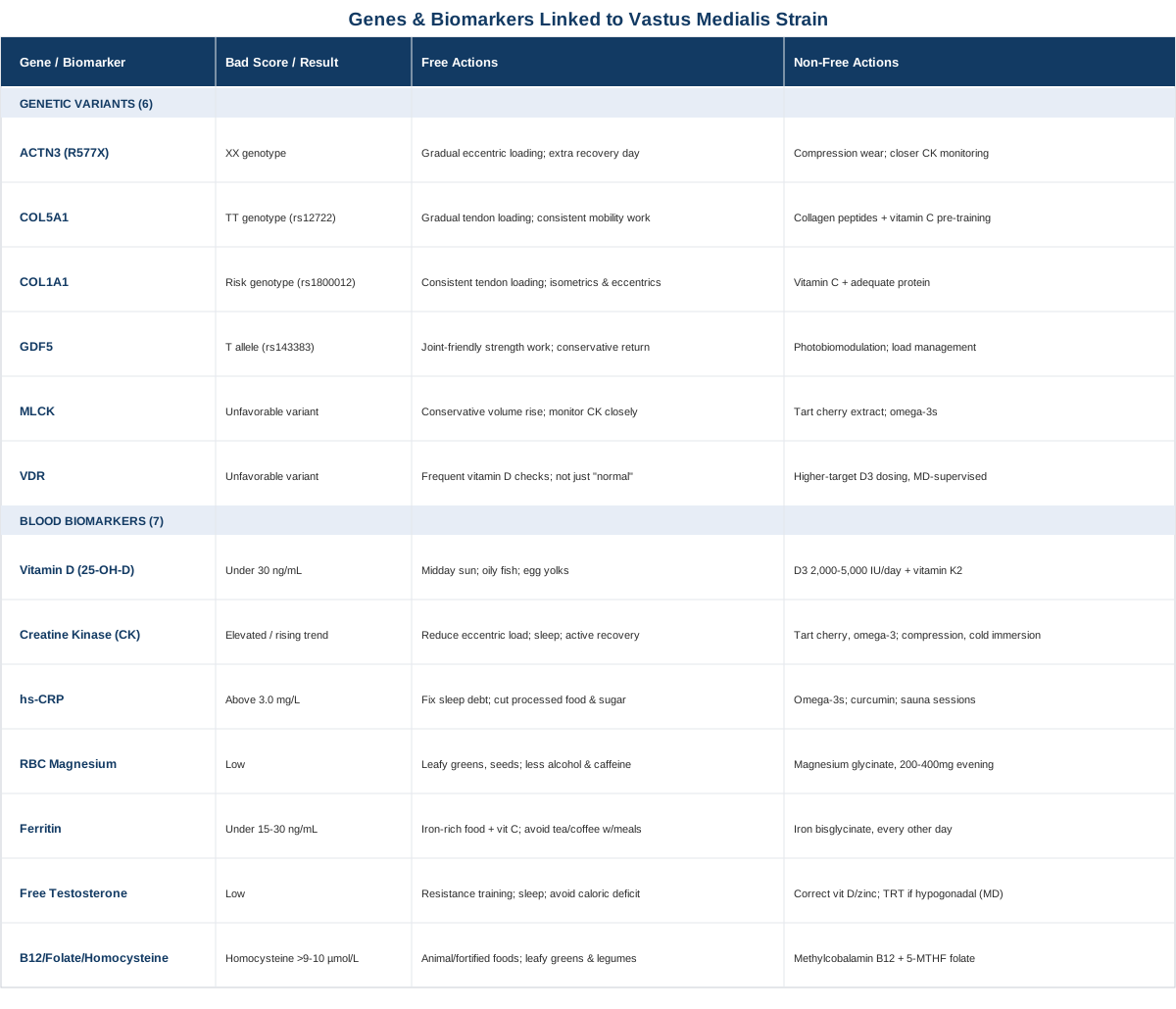
The 7 Biomarkers Most Worth Tracking for Vastus Medialis Oblique Dysfunction
Rehabilitating an underactive VMO is, at its core, an exercise in getting a specific muscle to recruit, grow, and recover efficiently. All three of those processes are hormonally and metabolically regulated. The biomarkers below are the ones with the most direct, evidence-backed connection to muscle strength, recovery, and repair, chosen to be practical: most can be ordered through a standard blood panel, and each has a clear "what do I do if this is off" answer.
Vitamin D (25-hydroxyvitamin D)
Vitamin D receptors are expressed directly in skeletal muscle tissue, including the quadriceps, and low levels are consistently linked to measurable quadriceps weakness. In a large cohort of older adults, vitamin D deficiency was directly associated with reduced quadriceps strength independent of other factors. In people with knee osteoarthritis, correcting a vitamin D deficiency measurably improved both quadriceps strength and knee pain scores over follow-up in a controlled trial. For someone doing VMO-focused rehab, a deficient vitamin D level may mean the muscle simply cannot respond as well to the exercises being prescribed, regardless of how correctly they are performed.
How to measure it: a basic 25-hydroxyvitamin D blood test, widely available through primary care or direct-to-consumer labs, costing roughly 20 to 50 dollars out of pocket if not covered by insurance. Target range for muscle function purposes is generally considered 30 to 50 ng/mL, with many sports medicine clinicians preferring the upper half of that range.
If the score is bad, the plan without supplements: 15 to 30 minutes of midday sun exposure on bare arms and legs, several times a week, adjusted for skin tone and latitude, plus regular intake of fatty fish, egg yolks, and fortified dairy. This is a slow fix, typically taking two to three months to meaningfully shift blood levels, and it is weather- and season-dependent.
If the score is bad, the plan with supplements or equipment: vitamin D3 (cholecalciferol), typically 2,000 to 5,000 IU daily, taken with a meal containing fat for absorption, re-tested at 8 to 12 weeks. Cycling is not usually necessary, but doses above 4,000 IU daily long-term should be monitored with periodic blood tests, since excess vitamin D can raise calcium levels. A red-light or full-spectrum light box is not a substitute for actual UVB sun exposure or supplementation for vitamin D synthesis.
High-sensitivity C-reactive protein (hs-CRP)
Chronic low-grade inflammation is associated with lower muscle strength independent of muscle mass. A systematic review and meta-analysis found that higher CRP, IL-6, and TNF-alpha were all associated with reduced knee extension and grip strength across multiple study populations. For VMO rehab specifically, chronically elevated inflammation can blunt the strength gains you would otherwise expect from a consistent exercise program, which matters when you are trying to correct a specific strength imbalance rather than just "get stronger in general."
How to measure it: hs-CRP is a standard, inexpensive blood test, usually 10 to 30 dollars, included in many routine metabolic panels. A result under 1.0 mg/L is considered low risk; above 3.0 mg/L suggests meaningful systemic inflammation worth investigating further.
If the score is bad, the plan without supplements: address the usual drivers first, poor sleep, visceral fat, gum disease, and low-grade viral or dental infections, along with a diet emphasizing fiber, oily fish, and reducing ultra-processed food and added sugar. Improvement is typically visible within 6 to 8 weeks of sustained change.
If the score is bad, the plan with supplements or equipment: omega-3 fish oil (roughly 2 to 3 grams combined EPA/DHA daily) has the best supporting evidence for lowering CRP modestly over 8 to 12 weeks; curcumin (500 to 1,000 mg daily with piperine for absorption) is a reasonable adjunct with a good safety profile. Fish oil above 3 grams daily can mildly increase bleeding risk, so it should be flagged before any planned surgery, including knee procedures.
Creatine kinase (CK)
CK is released from muscle tissue after damage or unusually heavy loading, and elevated levels are a reliable, if nonspecific, marker of exercise-induced muscle damage that typically peaks 24 to 72 hours after intense or unfamiliar exercise. In VMO rehab, a persistently high CK between sessions can be a sign you are progressing load faster than the muscle is recovering, which is a common reason "the exercises seem to make it worse" rather than better.
How to measure it: a basic serum CK blood test, typically 15 to 40 dollars, best drawn at least 72 hours away from your last hard training session to get a meaningful baseline rather than a post-exercise spike.
If the score is bad, the plan without supplements: extend rest between VMO-focused sessions to 48 to 72 hours, prioritize sleep (7 to 9 hours), and use active recovery, such as easy walking, rather than complete rest or repeated intense loading.
If the score is bad, the plan with supplements or equipment: creatine monohydrate, 3 to 5 grams daily, is well studied for supporting muscle recovery capacity and is not the same thing as the CK enzyme, despite the similar name; it does not need cycling and is safe for most healthy adults at that dose. Compression garments and contrast water therapy (alternating hot and cold) have modest supporting evidence for symptomatic recovery, though the effect size is small.
Free testosterone
Calculated free testosterone tracks more closely with lean mass, strength, and physical performance than total testosterone does, particularly in older men according to a recent analysis, and testosterone administration produces dose-dependent increases in muscle mass and strength. Low free testosterone in someone struggling to rebuild VMO strength after an injury or long deconditioning period is a plausible, underappreciated contributor.
How to measure it: total testosterone plus sex hormone binding globulin (SHBG), used to calculate free testosterone, typically 40 to 100 dollars. Best drawn in the morning, when levels are highest and most representative.
If the score is bad, the plan without supplements: prioritize resistance training itself (which modestly raises testosterone acutely), adequate sleep, maintaining a healthy body fat percentage, and adequate dietary fat and protein intake, since chronic caloric deficits suppress testosterone production.
If the score is bad, the plan with supplements or equipment: vitamin D and zinc correction (if deficient) has the most consistent supporting evidence among over-the-counter options; other "testosterone boosting" herbal supplements have weak or inconsistent human evidence and should not be expected to move the needle meaningfully. Clinically low testosterone with symptoms should be evaluated by a physician for testosterone replacement therapy, which carries real considerations around cardiovascular risk, fertility, and blood count monitoring and should not be self-initiated.
IGF-1
Insulin-like growth factor 1 is a central driver of muscle protein synthesis and satellite cell activity, acting through the same Akt/mTOR pathway that resistance training itself stimulates as described in a detailed mechanistic review. Genotype-dependent variation in IGF-1 response to strength training has also been documented directly in older adults undergoing resistance training. Low IGF-1 can mean the same rehab dose produces a smaller strength adaptation than expected.
How to measure it: a serum IGF-1 blood test, typically 60 to 120 dollars, interpreted against age- and sex-specific reference ranges rather than a single universal number.
If the score is bad, the plan without supplements: adequate total protein intake (roughly 1.6 to 2.2 g/kg bodyweight daily for someone in active rehab), sufficient sleep, and consistent resistance training, which is itself one of the more reliable ways to raise IGF-1 naturally.
If the score is bad, the plan with supplements or equipment: there is no well-supported over-the-counter supplement that reliably raises IGF-1 in healthy people; growth hormone secretagogues and IGF-1 analogs exist but carry real medical risk and require physician oversight, and should not be pursued outside a clinical relationship. Adequate carbohydrate and protein intake around training sessions is the most evidence-based lever available without a prescription.
Fasting insulin (or HbA1c)
Skeletal muscle's ability to respond anabolically to protein and exercise is blunted under insulin resistance, a phenomenon well documented in aging muscle even before diabetes develops. This is part of why longevity-focused physicians such as Peter Attia emphasize insulin sensitivity as a foundational muscle-health marker, not just a diabetes-risk marker. For VMO rehab, poor insulin sensitivity is a quiet ceiling on how efficiently the muscle can use the nutrients you are giving it to rebuild.
How to measure it: fasting insulin (20 to 40 dollars) alongside fasting glucose, used together to calculate HOMA-IR, or simply an HbA1c (15 to 30 dollars) as a rougher three-month average. Fasting insulin under roughly 6 uIU/mL is generally favorable.
If the score is bad, the plan without supplements: reduce refined carbohydrate and added sugar intake, prioritize post-meal walks, and increase overall resistance training frequency, all of which independently improve insulin sensitivity within weeks.
If the score is bad, the plan with supplements or equipment: berberine (500 mg two to three times daily) has meaningful human trial evidence for improving insulin sensitivity, comparable in some studies to metformin, though it can cause gastrointestinal upset and should be introduced gradually; magnesium glycinate (200 to 400 mg nightly) is a reasonable adjunct if dietary intake is low. Anyone with diagnosed diabetes should coordinate any supplement changes with their prescribing physician rather than adjusting alongside medication independently.
Homocysteine (with B12 and folate)
Elevated homocysteine, usually driven by low B12 or folate, is associated with worse peripheral nerve function over time, including measurable declines in motor nerve signaling documented in a six-year longitudinal study. Since VMO activation depends on clean neuromuscular signaling, not just muscle bulk, this is a marker worth checking in anyone whose "weak VMO" looks more like a firing-and-timing problem than a strength problem, particularly in older adults, vegetarians, or anyone on long-term metformin, which depletes B12.
How to measure it: a homocysteine blood test (30 to 60 dollars) alongside B12 and folate levels; homocysteine under 9 to 10 micromol/L is generally considered favorable for neuromuscular health.
If the score is bad, the plan without supplements: increase intake of B12-rich foods, such as eggs, dairy, and animal protein, and folate-rich foods, such as leafy greens and legumes; this is often sufficient for mild elevations from dietary insufficiency alone.
If the score is bad, the plan with supplements or equipment: methylcobalamin B12 (1,000 mcg daily) plus methylfolate (400 to 800 mcg daily) is the standard, well-tolerated correction, usually re-tested at 8 to 12 weeks; higher-dose B12 injections may be warranted for confirmed absorption issues such as pernicious anemia, which should be diagnosed by a physician rather than assumed.
Taken together, this panel gives a fuller picture of why a mechanically sound rehab plan might still be underdelivering. None of these markers replace a physical assessment of VMO timing and strength, but a genuinely stalled recovery is worth checking against at least the first three before assuming the exercises themselves are the problem.
What Your Genes May Be Telling You About VMO Dysfunction
Genetic testing will not diagnose or fix a knee problem, and no serious researcher, including genomics specialists like Ali Torkamani, who studies how genetic and clinical risk factors combine to predict individual outcomes, would suggest otherwise. What genetic variants can do is explain part of the "why me" behind slow recovery, uneven muscle development, or repeated soft-tissue injury around the knee, in the same spirit that functional-medicine communicators like Gary Brecka use genetic panels to flag inherited tendencies worth actively managing rather than treating as fixed fate. The variants below have the most relevant, human-studied connections to quadriceps performance, recovery, and injury risk.
ACTN3 (R577X)
ACTN3 codes for alpha-actinin-3, a structural protein found only in fast-twitch (type II) muscle fibers, the fiber type most responsible for forceful, quick contractions like the ones the VMO needs to stabilize the kneecap during a lunge or a stair descent. People with the XX genotype lack functional alpha-actinin-3 entirely, which is linked to smaller fast-twitch fiber diameter and a documented difference in strength and power response to training compared with RR or RX genotypes, and XX carriers show measurably higher odds of muscle injury in athletic populations in a study of professional football players.
If the gene is bad, the plan without supplements: XX carriers generally respond better to higher training frequency with slightly lower loads and more emphasis on movement quality and eccentric control, rather than chasing maximal explosive power, since the fast-twitch deficit is structural rather than something reps alone reverse.
If the gene is bad, the plan with supplements or equipment: creatine monohydrate (3 to 5 grams daily, no cycling needed) has some suggestive evidence of disproportionately benefiting people with lower fast-twitch fiber capacity, since it supports the phosphocreatine system those fibers rely on; blood flow restriction training equipment can allow strength gains at lower joint loads, which is useful for XX carriers who also show higher soft-tissue injury rates.
Vitamin D receptor gene (VDR)
Certain VDR polymorphisms, including BsmI and FokI variants, are associated with differences in muscle strength independent of actual vitamin D blood levels across multiple genotype studies, meaning some people extract less strength benefit from a given vitamin D level than others.
If the gene is bad, the plan without supplements: the same sun exposure and dietary strategy described in the biomarker section above, but with closer attention to actual strength outcomes rather than assuming a "normal" blood level guarantees normal muscle response.
If the gene is bad, the plan with supplements or equipment: aiming for the higher end of the normal vitamin D range (40 to 50 ng/mL rather than 30) is a reasonable, low-risk adjustment for people who know they carry a less favorable VDR variant, retested every 3 months when adjusting dose, since consistently exceeding 100 ng/mL raises toxicity risk.
COL5A1
COL5A1 affects type V collagen, a structural component of tendons and ligaments. The rs12722 variant is associated with altered risk of tendon and ligament injury in a meta-analysis spanning 21 observational studies, which is directly relevant around the patella, where the quad tendon and patellar tendon experience high repetitive load.
If the gene is bad, the plan without supplements: prioritize gradual tendon loading progressions (isometric holds before dynamic loading) when returning to running or jumping, since collagen adapts more slowly than muscle and unfavorable variants likely need longer progression timelines.
If the gene is bad, the plan with supplements or equipment: 15 grams of hydrolyzed collagen combined with vitamin C, taken 30 to 60 minutes before tendon-loading exercise, has supporting evidence for collagen synthesis; this is a reasonable, low-risk addition with no meaningful side effects at that dose, though evidence is stronger for tendon-specific loading than for the supplement alone.
GDF5
GDF5 variants, including rs143383, are linked to altered risk of tendon pathology and joint-related injury, including a documented association with ACL rupture risk in a genetic association study. Since ACL injuries and VMO dysfunction frequently co-occur, this variant is worth flagging in anyone with a knee-injury history.
If the gene is bad, the plan without supplements: extra emphasis on landing mechanics and deceleration training, not just quad strengthening, since GDF5-related risk is about joint and connective tissue resilience broadly, not muscle strength specifically.
If the gene is bad, the plan with supplements or equipment: there is no supplement with strong evidence for directly modifying GDF5-related joint risk; a knee brace during high-risk activities (cutting sports, heavy squatting during rehab) is a reasonable mechanical compensation while tissue tolerance is being rebuilt.
PPARGC1A (PGC-1alpha)
The Gly482Ser variant (rs8192678) of this gene, which governs mitochondrial biogenesis, is associated with impaired exercise-induced slow-twitch fiber transformation in a controlled human training study, meaning carriers may see a smaller endurance and recovery-capacity adaptation from the same training stimulus.
If the gene is bad, the plan without supplements: extend recovery time between sessions and place more weight on aerobic base work (zone 2 cardio, 3 to 4 sessions weekly) alongside VMO-specific strengthening, since mitochondrial adaptation is the limiting factor, not motivation or exercise selection.
If the gene is bad, the plan with supplements or equipment: creatine has again some supportive rationale here for energy system support; a home cycle ergometer or stationary bike allows consistent, joint-friendly aerobic volume without adding load to a knee already under rehab, which is useful since this variant rewards volume and consistency over intensity.
MSTN (myostatin)
Myostatin normally restrains muscle growth, and certain MSTN variants are associated with differences in strength training response and muscle mass ceiling according to a systematic review and meta-analysis of the rs1805086 variant, with rare function-disrupting variants documented to increase both lean mass and strength substantially in humans carrying loss-of-function myostatin variants.
If the gene is bad, the plan without supplements: for people whose genotype suggests a lower natural hypertrophy ceiling, more frequent, lower-volume VMO-specific sessions (three to four short sessions weekly rather than two long ones) tend to produce steadier gains than infrequent, high-volume training.
If the gene is bad, the plan with supplements or equipment: there is no legal supplement that meaningfully inhibits myostatin in humans despite marketing claims to the contrary; resistance bands and adjustable ankle weights are useful low-cost tools for the higher training frequency this genotype tends to respond to, since they allow quick, low-setup sessions throughout the week.
Genetics is context, not diagnosis. None of these variants override good rehab technique, and a favorable genotype paired with poor training consistency will still underperform an unfavorable genotype paired with disciplined, well-loaded rehab. The value here is in adjusting expectations and training variables, not in searching for an excuse or a shortcut.
The Book That Reframes How Physical Therapists Think About Knee Rehab
Most people with a "lazy VMO" diagnosis are handed a laminated sheet of leg extensions and sent home. Rebuilding Milo, written by sports physical therapist and Olympic weightlifting coach Aaron Horschig, the clinician behind Squat University, pushes back on that model directly, arguing that isolated quad exercises without addressing hip control, ankle mobility, and loading tolerance across the whole kinetic chain tend to produce short-lived results. It draws on his decade of clinical work with lifters and athletes and challenges some fairly entrenched assumptions in mainstream orthopedic rehab. Here are ten of its most useful ideas, condensed.
Pain during a movement does not always mean the movement is the problem
Horschig argues that anterior knee pain during squatting or stair descent is frequently a tissue-tolerance issue, not a mechanics issue, meaning the fix is often a smarter loading progression rather than avoiding the movement altogether.The VMO cannot be meaningfully isolated from the rest of the kinetic chain
He is explicit that "VMO weakness" is rarely a standalone problem; hip abductor and external rotator weakness upstream, and ankle dorsiflexion restriction downstream, both change how load reaches the knee and how much the VMO is asked to compensate.Knee valgus under load is a signal, not a verdict
Rather than treating inward knee collapse as a permanent flaw to brace against, he frames it as feedback about where control is breaking down in that specific rep, which changes moment to moment with fatigue and load.Isometric holds are underused early in rehab
He advocates heavy, long-duration isometric holds (such as a wall sit or a paused squat at the sticking point) early in a rehab timeline, both for pain modulation and for rebuilding tolerance before dynamic loading resumes.Rest alone rarely resolves tendon-related knee pain
Passive rest tends to deload tissue that then re-aggravates the moment normal activity resumes; a progressive loading plan, even a conservative one, generally outperforms extended inactivity.Ankle mobility deserves more attention than it gets
Restricted ankle dorsiflexion forces compensatory knee and hip strategies during squatting and landing, and Horschig treats it as one of the first things to screen, not an afterthought.Single-leg work exposes what bilateral exercises hide
Two-legged exercises can mask a meaningful side-to-side strength or control asymmetry; single-leg step-downs and split squats are emphasized specifically because they cannot be compensated for by the stronger leg.Bracing and taping are bridges, not solutions
He is candid that external supports can reduce pain enough to train through a flare-up, but treats them as temporary scaffolding while underlying strength and control are rebuilt, not a long-term fix.Return-to-activity timelines should be based on tissue capacity, not the calendar
Rather than a fixed "six weeks and you're cleared" timeline, progression should be based on demonstrated strength and pain-free loading tolerance at each stage, since healing rates vary widely between individuals.Athletes and lifters need to self-monitor between clinic visits
Since most rehab time happens outside the clinic, he emphasizes basic self-assessment, tracking pain during specific movements, day-to-day swelling, and single-leg strength, so problems get caught before they become setbacks.The throughline across all ten points is that recovery is systemic, not isolated. That mirrors exactly what the biomarker and gene sections above are getting at from a different angle: the knee itself is rarely the whole story.
Complementary Approaches Worth Considering
None of the following replace a structured rehab program, but each has real, condition-relevant human evidence and a reasonable safety profile, which is a higher bar than most complementary options for knee-related muscle dysfunction clear.
EMG biofeedback
EMG biofeedback uses surface electrodes over the VMO and vastus lateralis to give real-time visual or auditory feedback on muscle activation, which is directly relevant here because "VMO dysfunction" is frequently a timing and recruitment problem rather than a pure strength deficit, and biofeedback targets exactly that gap.
An eight-week program combining biofeedback with exercise produced a significantly greater improvement in the VMO-to-vastus lateralis activation ratio than exercise alone in a controlled study of patellofemoral pain patients, and a broader systematic review concluded biofeedback-assisted exercise shows consistent benefit for pain, function, and quadriceps strength across the available trials.
In practice, this means asking a physical therapist whether they have surface EMG equipment available, typically used for 15 to 20 minutes per session, two to three times weekly for four to eight weeks, layered on top of a standard strengthening program rather than replacing it. Home EMG biofeedback units exist and are reasonably affordable, though clinical supervision for at least the first few sessions helps with correct electrode placement and interpretation.
Massage therapy
Manual therapy targeting the quadriceps, IT band, and surrounding soft tissue is commonly used alongside VMO rehab to address the compensatory tightness that develops when the vastus lateralis and other structures overwork to cover for a lagging VMO.
Evidence here is more modest than for biofeedback and largely extrapolated from broader quadriceps and patellofemoral pain literature rather than VMO-specific trials, with most support centered on short-term pain relief and perceived tightness reduction rather than lasting structural change, so it is reasonable to treat it as an adjunct rather than a primary intervention.
A practical approach is a 20 to 30 minute session focused on the quadriceps and lateral thigh, once or twice weekly during an active flare-up, tapering as symptoms settle; self-massage with a foam roller between professional sessions is a reasonable, low-cost substitute for maintenance.
Photobiomodulation (low-level laser therapy)
Photobiomodulation uses specific wavelengths of red or near-infrared light applied to muscle tissue, theorized to support mitochondrial energy production and reduce exercise-related fatigue, which is relevant for anyone whose rehab progress is limited by slow recovery between sessions rather than by strength alone.
A systematic review and meta-analysis found photobiomodulation therapy improved muscular performance and reduced fatigue associated with exercise in healthy individuals across the pooled trials, though a separate analysis specifically on maximal strength and recovery found more mixed results depending on dosing parameters, so this is best treated as a modest recovery aid rather than a primary treatment.
Devices are typically applied directly over the quadriceps for 5 to 10 minutes per session, before or shortly after training, two to three times weekly; at-home LED panels are available at a range of price points, though clinical-grade laser units used in physical therapy clinics have more consistent dosing than most consumer devices.
Tai chi
Tai chi combines slow, controlled single-leg weight shifts with sustained low-level quadriceps engagement, which overlaps meaningfully with the kind of controlled, proprioceptive knee loading that VMO rehab depends on, particularly for people whose knee pain has limited more conventional strength training.
A 52-week randomized comparative effectiveness trial found tai chi produced benefits similar to standard physical therapy for people with symptomatic knee osteoarthritis across pain, function, and quality of life measures, and separate trials have shown improvements in knee proprioception specifically, a mechanism directly relevant to VMO timing and control.
A realistic starting point is a beginner class, twice weekly for at least eight weeks, since the learning curve for the movements themselves takes a few sessions before the quadriceps engagement becomes the dominant training effect; it pairs well as a lower-intensity complement to more direct VMO strengthening work rather than a replacement for it.
Bringing It Back to the Knee
The honest takeaway is that a stalled VMO recovery is rarely explained by a single cause, and it is almost never fixed by a single intervention. The biomarker panel above catches the metabolic and hormonal factors that quietly cap how well any rehab exercise can work. The genetic variants explain some of why two people doing an identical program recover at different rates. The complementary approaches address the recruitment and recovery gaps that pure strengthening exercises tend to miss. None of these are shortcuts, and none of them replace a proper physical assessment from a qualified physical therapist or sports medicine physician, particularly if there is an underlying structural issue like patellar maltracking, an ACL history, or joint instability that needs its own targeted evaluation.
What this approach does offer is a way to stop guessing. If a knee rehab plan has plateaued, the next useful step is not necessarily a harder version of the same exercises. It is a short blood panel, a look at injury and training history through the lens of the genetic factors above, and an honest conversation with a physical therapist about whether the current program is addressing the whole kinetic chain or just the knee in isolation. That combination of better information and a clear next step is usually what turns a frustrating plateau into steady, measurable progress.
Musculoskeletal: Joint Conditions Tendon & Ligament Conditions