This article contains AI generated content.
Vastus Medialis Strain: 6 Genes And 7 Biomarkers To Track
Introduction
A vastus medialis strain has a way of becoming a recurring character in your training life rather than a one-time event. You rest it, the pain fades, you rebuild your quad strength the way every physio handout tells you to, and then a few months later — a lunge, a sprint start, a deep squat — it flares again. That pattern is frustrating precisely because you did what you were told, and it still came back.
The problem is that "strengthen your quads and stretch more" is advice built for an average person who doesn't exist. It says nothing about whether your connective tissue is genetically predisposed to stiffer or looser collagen, whether your vitamin D or iron levels are quietly limiting how well your muscle fibers repair themselves, or whether your inflammatory load after a hard session is higher than it should be. Two people can follow the exact same rehab plan and get completely different results, and the reason is usually hiding in their biology, not their effort.
This article takes a more specific approach. Instead of one more generic exercise sheet, it looks at the blood biomarkers that reflect your actual muscle-repair capacity right now, and at the genetic variants that shape how your muscle fibers and connective tissue respond to load and injury over the long run. Neither is a diagnosis or a guarantee — genes describe tendencies, not destiny, and biomarkers are snapshots that shift with behavior — but together they turn "why does this keep happening" into a much more answerable question.
The goal here is grounded, not miraculous: better information, applied consistently, tends to produce better decisions. What follows covers the biomarkers worth tracking and how to act on them, the genetic variants most relevant to muscle and connective tissue resilience, a set of ideas from a book that reframes how to think about long-term physical durability, and a short set of complementary approaches with real evidence behind them for this kind of injury.
Summary
If you've been told your vastus medialis strain is "just" a quad issue, the fuller picture is more interesting than that. Certain gene variants — in collagen-building genes like COL5A1 and COL1A1, in the muscle-power gene ACTN3, and in less familiar ones like MLCK and GDF5 — can quietly shape how resilient your muscle fibers and tendons are under load, and what kind of rehab actually compensates for a less favorable version. On the blood side, seven trackable markers, from vitamin D and creatine kinase to ferritin and testosterone, reveal whether your body currently has what it needs to repair tissue efficiently or whether something correctable is slowing you down.
Below, you'll find exactly which biomarkers matter most for muscle and connective tissue repair, how to test each one (with real cost ranges), and specific plans — with and without supplements — for correcting the ones that come back suboptimal. You'll also find the six genes most tied to muscle strain risk and what to do about each one, a distilled set of ideas from Peter Attia's Outlive that reframe how to think about durability decades from now, and a short review of complementary approaches — massage, photobiomodulation, EMG biofeedback, and tai chi — that have real human evidence behind them for exactly this kind of knee and quad injury.
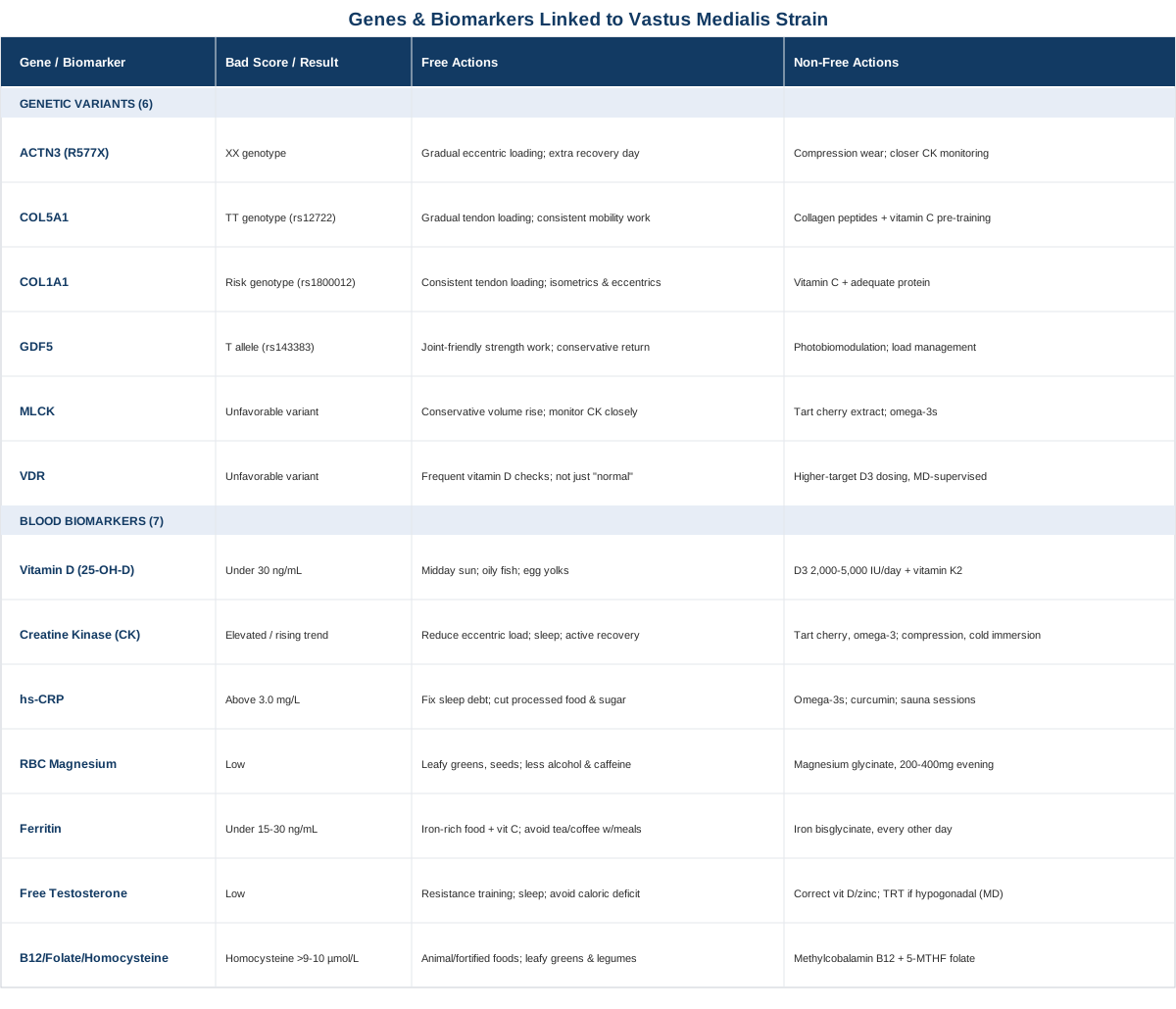
The 7 Biomarkers That Matter Most for Muscle and Connective Tissue Repair
Before getting into genetics — which describes long-run tendencies you can't change — it's worth starting with what's measurable and modifiable right now. Physicians who popularized frequent, precise biomarker testing, like Peter Attia and Thomas Dayspring, generally argue the same thing: a single annual physical catches almost nothing useful, while tracking the right markers over time reveals trends you can actually act on. Applied to a muscle strain, that means treating recovery capacity as something you can measure rather than something you can only guess at from how sore you feel.
The seven markers below were chosen because each one has a direct, evidence-backed link to muscle fiber integrity, connective tissue repair, or the inflammatory load that determines how well a vastus medialis strain heals and how likely it is to recur.
1. 25-Hydroxyvitamin D (Vitamin D Status)
Vitamin D receptors sit directly on skeletal muscle fibers, and low vitamin D status is consistently linked to reduced muscle strength, power, and a higher rate of musculoskeletal injury in athletes, including acute muscle injuries and the inflammation that follows intense exercise (Vitamin D in athletes: focus on physical performance and musculoskeletal injuries). For a muscle already prone to strain, being deficient means the tissue is trying to repair itself without one of its basic building blocks.
How to measure it
A serum 25(OH)D blood test costs roughly $20 to $50 as a standalone test, or is often bundled into a broader panel for little extra cost. Most labs flag anything under 30 ng/mL as insufficient; for muscle and athletic performance, a practical target is 40 to 60 ng/mL rather than the bare minimum.If the score is low: the plan without supplements
Fifteen to twenty minutes of midday sun exposure on bare arms and legs several times a week, more oily fish (salmon, sardines, mackerel) and egg yolks in the diet, and a retest in about three months to see whether that's moved the number meaningfully. This works better in summer months and for lighter skin tones; it's often not enough on its own in winter or for people who train mostly indoors.If the score is low: the plan with supplements or equipment
Vitamin D3, typically 2,000 to 5,000 IU per day, taken with a meal containing fat for absorption, paired with vitamin K2 (MK-7, around 100 mcg/day) to support proper calcium handling. No cycling is needed — this is a daily, ongoing habit — but retest at three months and again seasonally, since sustained doses above roughly 10,000 IU/day risk hypercalcemia and should only be used under medical supervision.2. Creatine Kinase (CK)
CK is released into the bloodstream when muscle fibers are damaged, making it the most direct available marker of how much muscle breakdown a training session — or a strain — actually caused (Creatine kinase and exercise-related muscle damage). Tracked over time, it tells you whether you're recovering between sessions or quietly digging a deeper hole.
How to measure it
A serum CK blood test costs about $15 to $30 alone, or is often included in a comprehensive metabolic-adjacent panel for around $50. Typical reference ranges run from roughly 30 to 200 U/L, but individual baselines vary a lot by muscle mass, sex, and ethnicity — a rising trend from your own baseline matters more than a single absolute number, and CK peaks 24 to 72 hours after hard eccentric loading, so timing the test matters.If the score is persistently elevated: the plan without supplements
Temporarily reduce eccentric loading (deep lunges, downhill running, heavy negatives), prioritize sleep since most tissue repair happens there, add light active recovery like walking or easy cycling, and rebuild load gradually rather than jumping back to prior training volume.If the score is persistently elevated: the plan with supplements or equipment
Tart cherry extract and omega-3 fish oil (roughly 2 to 3 g/day combined EPA/DHA) both have modest evidence for blunting exercise-induced muscle damage; compression garments and cold-water immersion after unusually hard sessions can help symptomatically. Use these around genuinely high-load blocks rather than year-round — there's no established benefit to permanent use, and high-dose fish oil can mildly increase bleeding risk if combined with blood thinners.3. High-Sensitivity C-Reactive Protein (hs-CRP)
CRP is the most studied general inflammation marker in medicine, and it rises specifically in people who are "high responders" to muscle-damaging exercise, staying elevated for a day or two after unusually hard training (C-Reactive Protein Is Elevated Only in High Creatine Kinase Responders to Muscle Damaging Exercise). A chronically elevated baseline suggests your body is carrying more background inflammation than ideal, which can slow tissue repair generally.
How to measure it
An hs-CRP blood test runs about $15 to $25 and is part of most standard cardiometabolic panels. Under 1.0 mg/L is considered low risk, 1 to 3 mg/L average, and above 3 mg/L elevated — though any recent illness or infection can spike it independent of muscle injury, so retest if a result looks off in that context.If the score is elevated: the plan without supplements
Address sleep debt first, since poor sleep reliably raises inflammatory markers; cut back on ultra-processed food and refined sugar; and check that training volume isn't in a chronic overreaching zone, since overtraining itself raises resting CRP.If the score is elevated: the plan with supplements or equipment
Omega-3s (2 to 4 g/day EPA/DHA) and curcumin with piperine (500 to 1,000 mg/day) both have reasonable evidence for lowering inflammatory markers; post-exercise sauna sessions are a plausible, low-risk addition. Curcumin is often cycled 8 to 12 weeks with breaks; side effects at higher doses include GI upset and an increased bleeding risk when combined with anticoagulants.4. Red Blood Cell (RBC) Magnesium
Magnesium is required for the muscle contraction-relaxation cycle and nerve conduction, and deficiency has long been linked to muscle cramping, though the clinical trial evidence for supplementation specifically curing cramps is genuinely mixed (What is the role of magnesium for skeletal muscle cramps?). For a muscle prone to strain, chronically low magnesium is still worth ruling out as a contributing factor to poor contraction control.
How to measure it
RBC magnesium (not standard serum magnesium, which is a poor reflection of tissue stores) costs about $30 to $60 and has to be specifically requested — it isn't part of routine panels.If the score is low: the plan without supplements
More leafy greens, pumpkin seeds, almonds, and dark chocolate; reducing alcohol and heavy caffeine intake, both of which increase magnesium excretion; and addressing any known GI absorption issues.If the score is low: the plan with supplements or equipment
Magnesium glycinate or citrate, 200 to 400 mg elemental magnesium in the evening — glycinate is gentler on the gut. Avoid magnesium oxide, which absorbs poorly. No cycling is required; recheck levels every three months. Side effects are dose-dependent and mostly gastrointestinal — loose stools at higher doses, especially with citrate.5. Serum Ferritin (Iron Stores)
Ferritin reflects total iron stores, and low iron directly impairs oxygen delivery to working muscle, which shows up as fatigue, slower recovery, and — practically — a higher chance of getting hurt again while compensating for tired, under-fueled muscle (Iron deficiency in sports — definition, influence on performance and therapy). This is especially relevant for anyone training at high volume, and particularly common in female athletes.
How to measure it
Serum ferritin costs about $20 to $40, usually ordered alongside a basic iron panel or CBC. Below 15 ng/mL indicates empty stores; 15 to 30 ng/mL is considered low for athletes even if a general lab flags it as "normal"; a practical target for training performance is above 30 to 50 ng/mL.If the score is low: the plan without supplements
Iron-rich foods — red meat, lentils, spinach — paired with a source of vitamin C to boost absorption, and avoiding tea or coffee within an hour of iron-rich meals, since tannins block absorption.If the score is low: the plan with supplements or equipment
Iron bisglycinate, 25 to 65 mg, taken every other day rather than daily — alternate-day dosing has been shown to improve absorption compared to daily dosing. This should only be started with a confirmed low ferritin result, since unnecessary iron supplementation can cause oxidative stress and, in people with hemochromatosis risk, real harm. Retest at 8 to 12 weeks.6. Free Testosterone (with Total Testosterone and SHBG)
Testosterone is a central driver of muscle protein synthesis and tissue remodeling, acting through anabolic signaling pathways that support repair after mechanical loading or injury, in both men and women, though the relevant ranges differ by sex (Testosterone administration increases skeletal muscle strength and protein synthesis). Chronically low levels can mean slower repair after every strain, not just this one.
How to measure it
A panel with total testosterone, free testosterone, and SHBG costs roughly $50 to $100, best drawn in the morning while fasted, when levels are highest and most representative.If the score is low: the plan without supplements
Resistance training with compound lower-body lifts, 7 to 9 hours of sleep (testosterone secretion is heavily sleep-dependent), avoiding a chronic caloric deficit, and managing body fat percentage, since excess adiposity increases conversion of testosterone to estrogen.If the score is low: the plan with supplements or equipment
Correcting any underlying vitamin D or zinc deficiency can help indirectly. For levels in a clinically low, hypogonadal range, testosterone replacement therapy is a legitimate option — but it is a medical decision requiring a physician's oversight and ongoing monitoring, not something to self-administer. Unsupervised use of prohormones or unregulated products should be avoided entirely.7. Vitamin B12, Folate, and Homocysteine
Elevated homocysteine — which rises when B12 or folate are low — has been shown to impair collagen cross-linking, the process that gives connective tissue its structural strength, largely through suppression of the enzyme lysyl oxidase (B Vitamins, Homocysteine and Bone Health). Most of that research is in bone, but the same collagen cross-linking chemistry applies to the tendon and connective tissue surrounding the vastus medialis.
How to measure it
A panel with serum B12, folate, and homocysteine costs about $40 to $70. A practical target for homocysteine is under 9 to 10 µmol/L.If the score is off: the plan without supplements
More animal products or fortified foods for B12, more leafy greens and legumes for folate — this matters most for anyone eating a vegetarian or vegan diet, older adults, or anyone on long-term metformin, all of whom are at higher risk of B12 deficiency specifically.If the score is off: the plan with supplements or equipment
Methylcobalamin B12, 500 to 1,000 mcg/day, and folate in the 5-MTHF form (400 to 800 mcg/day), which is preferable for people carrying common MTHFR variants that reduce conversion of synthetic folic acid. Retest homocysteine at three months. B12 has essentially no toxicity ceiling; high-dose folate alone (without adequate B12) can mask an underlying B12 deficiency, which is why the two are usually corrected together.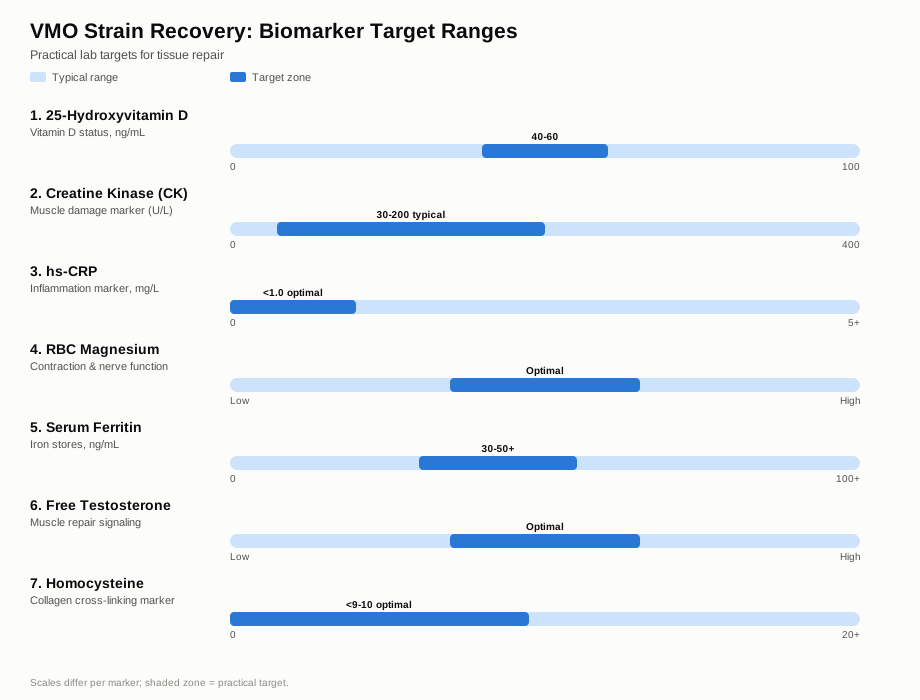
Tracking all seven at once is useful precisely because they interact — low vitamin D and low testosterone often compound each other, and elevated CK alongside elevated CRP is a stronger signal of poor recovery than either alone. With that measurable picture established, it's worth turning to the part of the story biomarkers can't fully capture: the genetic tendencies that shape how your muscle and connective tissue respond to load in the first place.
What Your Genes May Be Telling You About Muscle Strain Risk
Genetic testing for athletic traits has moved from academic curiosity to something genomics researchers like Ali Torkamani have pushed toward practical use — generally arguing that combining several small-effect variants tells you more than fixating on any single gene. Popularizers like Gary Brecka have brought consumer versions of this testing (covering genes like MTHFR, APOE, and ACTN3) into mainstream fitness and recovery conversations. The honest caveat up front: most of the variants below shift risk modestly, evidence quality varies a lot between genes, and none of this is deterministic. A "bad" variant is a nudge to pay closer attention, not a diagnosis.
ACTN3 (R577X) — Muscle Power and Damage Susceptibility
ACTN3 codes for a protein found in fast-twitch muscle fibers. People with two copies of the "X" variant (the XX genotype) don't produce this protein at all, and a systematic review found the XX genotype is associated with a higher probability of non-contact muscle injuries, ankle sprains, and greater exercise-induced muscle damage compared with the RR genotype (ACTN3 R577X genotype and risk of non-contact injury in trained athletes).
If the gene is unfavorable (XX): the plan without supplements
Bias training toward more gradual eccentric-load progression rather than aggressive jumps in volume, build in an extra recovery day after high-intensity sessions, and prioritize a proper warm-up specifically targeting the quads before sprinting or heavy lower-body work.If the gene is unfavorable (XX): the plan with supplements or equipment
There's no supplement that changes this gene's expression, but the practical compensation is external: compression wear during high-volume blocks and closer CK monitoring (see biomarker #2 above) to catch excess damage before it becomes a strain. No cycling applies here — this is a permanent training-style adjustment, not a temporary protocol.COL5A1 — Collagen Structure and Soft Tissue Elasticity
COL5A1 helps regulate the diameter and structure of type I collagen fibrils. The TT genotype at the well-studied rs12722 marker is associated with meaningfully higher risk of musculoskeletal soft tissue injury across multiple studies, while the CC genotype appears more protective (COL5A1 rs12722 and musculoskeletal soft tissue injuries: a meta-analysis).
If the gene is unfavorable (TT): the plan without supplements
Longer, more gradual tendon and muscle loading progressions before increasing intensity, more consistent mobility work around the hip and knee, and closer attention to actual movement quality in deep-flexion positions (deep squats, lunges) rather than just chasing load.If the gene is unfavorable (TT): the plan with supplements or equipment
Collagen peptides (roughly 15g) paired with vitamin C about 30-60 minutes before training have some mechanistic support for supporting connective tissue synthesis around loading sessions, though the strain-prevention evidence is still early. This is typically used only around higher-load training blocks rather than continuously; it's well tolerated with minimal side effects.COL1A1 — Structural Collagen Strength
COL1A1's rs1800012 polymorphism has been linked to tendon and ligament injury risk, including ACL and Achilles injuries, in a meta-analysis, with the rarer TT genotype appearing protective in some models — though evidence across studies is mixed and not fully consistent (COL1A1 rs1800012 and sports-related tendon and ligament injuries: a meta-analysis).
If the gene is unfavorable: the plan without supplements
Given the mixed evidence, the most defensible response is behavioral consistency: regular tendon-loading exercise (slow, controlled isometrics and eccentrics) rather than sporadic high-intensity efforts, which is protective for connective tissue generally regardless of genotype.If the gene is unfavorable: the plan with supplements or equipment
Vitamin C and adequate dietary protein (see testosterone/protein synthesis section above) support baseline collagen synthesis; there's no strong evidence for a specific supplement targeting this gene's effect, so the practical compensation is mostly training-based rather than a bottle-based fix.GDF5 — Tendon and Joint Tissue Regulation
The GDF5 rs143383 variant, particularly the T allele, is associated with reduced GDF5 gene expression in soft tissue and has been linked to Achilles tendon pathology and broader musculoskeletal degenerative risk in a meta-analysis of over 18,000 people (GDF5 rs143383 and musculoskeletal degenerative disease susceptibility: a meta-analysis).
If the gene is unfavorable: the plan without supplements
Extra emphasis on joint-friendly strength work (controlled tempo, full range of motion, avoiding excessive joint compression under fatigue) and being more conservative about jumping into high-impact activity after any period of detraining.If the gene is unfavorable: the plan with supplements or equipment
No supplement directly restores GDF5 expression. Photobiomodulation and structured load management (covered in the complementary approaches section below) are the more realistic external levers here.MLCK — Muscle Contraction Regulation and Damage Susceptibility
MLCK regulates phosphorylation of the myosin regulatory light chain, which affects how well a muscle can generate and withstand force. A study following marathon runners found MLCK gene variants influenced the degree of exercise-induced muscle damage during the race (Myosin Light Chain Kinase (MLCK) gene influences exercise-induced muscle damage during a competitive marathon) — evidence that's still early and mostly studied in endurance contexts rather than strain injuries specifically, so it should be weighted accordingly.
If the gene is unfavorable: the plan without supplements
More conservative volume increases during high-repetition or endurance-style lower-body training blocks, and closer attention to the CK biomarker above during those periods specifically.If the gene is unfavorable: the plan with supplements or equipment
The same anti-inflammatory, recovery-supporting options as the CK biomarker section (tart cherry extract, omega-3s) apply here, used around high-volume blocks rather than continuously.VDR (Vitamin D Receptor) — Vitamin D Sensitivity at the Muscle
Separate from your actual vitamin D blood level, VDR gene variants (including BsmI and TaqI) affect how well muscle tissue responds to whatever vitamin D is circulating, with some studies linking specific variants to leg extensor strength in older adults, though other studies have failed to replicate this (Muscle strength is associated with vitamin D receptor gene variants).
If the gene is unfavorable: the plan without supplements
This is one case where a genetic disadvantage is best offset by simply being more rigorous about the upstream biomarker rather than the gene itself — meaning tighter, more frequent monitoring of your actual 25(OH)D levels rather than assuming a "normal" result is doing its job.If the gene is unfavorable: the plan with supplements or equipment
If testing suggests reduced receptor sensitivity, some practitioners aim for the higher end of the practical vitamin D range (50-60 ng/mL rather than 40) — this should be done with retesting every 3 months and physician input, since it raises the stakes of overshooting into toxicity territory.Genetics explain predisposition, but they say nothing about the mindset shift that tends to actually change outcomes over a decade of training. That shift is the subject of one of the more influential recent books on physical longevity.
Ten Ideas From Outlive That Reframe How to Think About Muscle and Joint Durability
Peter Attia's book Outlive: The Science and Art of Longevity isn't about muscle strains specifically, but its central argument — that most medicine reacts to problems instead of preventing them — maps unusually well onto recurring injuries like this one. Below are ten of its most useful ideas, adapted to the specific problem of a vastus medialis strain that keeps coming back.
1. Medicine 3.0 vs. Medicine 2.0
Attia's framing is that conventional medicine (2.0) waits for a problem to become clinically obvious, while a more proactive approach (3.0) tracks markers and function continuously to catch problems while they're still cheap to fix. Applied here: don't wait for the next flare-up to act — the biomarker panel above exists precisely to catch a slow decline before it becomes a third or fourth strain.
2. The Centenarian Decathlon
Attia's exercise for readers is to list the physical tasks you want to still be able to do in your 80s — carrying groceries, getting off the floor unassisted, hiking — and train backward from there. For a vastus medialis that keeps failing under load, this reframes rehab from "get back to normal" to "build a knee that can handle four more decades of stairs."
3. VO2 Max as a Vital Sign
The book treats cardiorespiratory fitness as close to a vital sign, citing its strong, graded relationship with all-cause mortality — a landmark 46-year follow-up study found that midlife cardiorespiratory fitness independently predicted long-term mortality risk (Midlife cardiorespiratory fitness and the long-term risk of mortality: 46 years of follow-up). The less obvious link to a muscle strain: better aerobic capacity supports faster local tissue recovery between sessions, not just heart health.
4. Muscle as an Organ of Longevity
Attia reframes muscle mass not as vanity or sport-specific but as a metabolic organ that predicts function and independence late in life. A strain that keeps you from training your quads consistently isn't just a nuisance — left unaddressed for years, it's a small but real drag on that long-term muscle reserve.
5. Stability as the Missing Pillar
Where most training programs focus on strength, cardio, and nutrition, Attia argues stability is the most neglected pillar — and it's the most directly relevant one here. A vastus medialis strain is frequently downstream of poor stability and control around the knee and hip, not just insufficient quad strength.
6. Train the Decelerators, Not Just the Accelerators
The book emphasizes eccentric strength and control — the ability to slow down and absorb force, not just produce it — as underappreciated and injury-protective. This lines up directly with how most vastus medialis strains happen: not during the concentric push, but during a poorly controlled deceleration or landing.
7. Marginal Decade Thinking
Attia's "marginal decade" concept is about identifying which decade of life will be hardest physically, and training for it now rather than later. Applied narrowly: the knee stability work that feels optional today is what prevents this same strain from becoming a much bigger problem once you're further from your physical peak.
8. Protein as a Non-Negotiable
The book pushes for higher protein intake than most general guidelines suggest — often in the 1.6 to 2.2 g/kg body weight range — as a baseline for maintaining and repairing muscle tissue, particularly for anyone training seriously or recovering from injury.
9. Sleep as a Recovery Multiplier, Not a Luxury
Attia treats sleep as one of the highest-leverage recovery tools available, ahead of most supplements or gadgets — a theme that shows up repeatedly in this article's biomarker plans, since poor sleep worsens inflammation, blunts testosterone, and slows tissue repair simultaneously.
10. Objective Testing Over Subjective Feeling
Perhaps the book's most practical takeaway: don't rely on how you feel to judge whether you're recovering — test it. That's the same logic behind tracking the seven biomarkers above rather than just waiting to see if the knee "feels fine" before loading it again.
These ideas are about long-term strategy. For the more immediate, hands-on side of managing an active or recovering strain, a handful of complementary approaches have real supporting evidence.
Complementary Approaches Worth Considering
None of the following replace proper loading progression, physical therapy, or the biomarker and genetic considerations above — but each has meaningful human evidence specific to muscle recovery or knee-related rehabilitation, which is why they're worth knowing about rather than dismissing as generic wellness advice.
Massage Therapy
Massage is one of the more evidence-backed recovery tools for muscle-damaging exercise, working through a combination of mechanical effects on local blood flow and swelling, and a measurable reduction in the perception of soreness that speeds return to normal training. For a muscle like the vastus medialis that's prone to repeat strain, reducing residual soreness and stiffness between sessions may lower the chance of compensating with poor mechanics.
A systematic review and meta-analysis of 11 studies covering over 500 participants found that massage significantly reduced muscle soreness at 24, 48, and 72 hours after intense exercise, improved measures of muscle force output, and reduced serum creatine kinase levels compared with no intervention (Massage alleviates delayed onset muscle soreness after strenuous exercise: a systematic review and meta-analysis).
Realistically, this means 15 to 20 minutes of focused massage on the quad and inner thigh within a day or two of a hard session or minor flare-up, rather than expecting it to fix an acute strain on its own. It should be avoided directly over acutely inflamed or newly injured tissue in the first 48-72 hours, and used as a recovery adjunct between properly progressed loading sessions.
Low-Level Laser Therapy / Photobiomodulation
Photobiomodulation uses specific wavelengths of red or near-infrared light to influence cellular energy production (via mitochondrial cytochrome c oxidase) in a way that may reduce inflammation and support tissue repair after muscle damage. It's plausible for a vastus medialis strain specifically because the effect has been studied most consistently in exactly this kind of exercise-induced muscle damage and soreness, rather than in deep structural tears.
A systematic review and meta-analysis on photomodulation therapy for delayed-onset muscle soreness found a positive effect on reducing soreness and supporting recovery markers, though the authors noted variable study quality and dosing protocols across trials (Effects of photomodulation therapy for delayed onset muscle soreness: a systematic review and meta-analysis). Evidence for genuinely torn or structurally damaged tissue, as opposed to soreness and fatigue, is considerably weaker.
In practice, this means treatment sessions in the 655-950 nm wavelength range, applied directly over the quad, typically administered by a physical therapist or sports clinic (home devices exist but vary widely in power output and reliability). It's reasonable as an adjunct during the early recovery window after a mild strain or hard training block, not as a substitute for load management.
EMG Biofeedback for the Vastus Medialis
EMG biofeedback is close to the most condition-specific approach on this list: it uses real-time electromyographic sensors to show you, visually or audibly, how actively your vastus medialis oblique is firing relative to the vastus lateralis during an exercise — directly addressing the muscle imbalance that often underlies recurring strain and patellofemoral pain in the first place.
A randomized study found that an 8-week program combining exercise with EMG biofeedback improved the activation ratio between the vastus medialis and vastus lateralis significantly more than the same exercise program without biofeedback (Biofeedback exercise improved the EMG activity ratio of the medial and lateral vasti muscles in subjects with patellofemoral pain syndrome).
Applying this realistically means working with a physical therapist who has EMG biofeedback equipment for 6 to 8 weeks, focused specifically on activating the VMO during closed-chain exercises like partial squats and step-downs, rather than trying to replicate it with a consumer device without professional guidance on electrode placement and exercise selection.
Tai Chi
Tai chi's slow, controlled, weight-shifting movements train exactly the kind of joint proprioception and lower-limb stability that's often underdeveloped after a knee-adjacent muscle strain — echoing the "stability as a missing pillar" idea covered in the Outlive summary above.
A randomized controlled trial in patients with partial anterior cruciate ligament injuries found that a structured tai chi program produced meaningful improvements in knee extensor strength, pain, proprioception, and overall knee function compared with standard care (Effects of Tai Chi on partial anterior cruciate ligament injury: a single-blind, randomized-controlled trial) — a knee injury context close enough to a vastus medialis strain to be genuinely informative, even though it isn't the identical diagnosis.
In practice, two sessions a week of a beginner-friendly tai chi form, once acute pain has settled enough to bear weight comfortably, works well as a low-impact bridge between formal physical therapy and a full return to sport-specific training. It's gentle enough to be low-risk, but should still be introduced gradually if balance or single-leg loading currently reproduces symptoms.
Conclusion
A recurring vastus medialis strain is rarely explained by effort or a single missed exercise — it's usually the combination of a few specific, checkable things: how your collagen and muscle fiber genetics respond to load, whether key biomarkers like vitamin D, CK, ferritin, and inflammation are quietly working against you, and whether your rehab has actually addressed stability and control rather than just strength. None of the tools here — testing, genetics, or the complementary approaches — replace a proper clinical evaluation of the specific injury, but together they turn a frustrating, repeating problem into something you can actually investigate.
The most useful next step is usually the simplest one: get the core biomarker panel drawn, track how your knee responds to load over the next few weeks, and bring both to a physical therapist or physician who can put the numbers in the context of your actual movement and history. Better information doesn't guarantee a fix, but it consistently beats guessing.
Musculoskeletal: Muscle Conditions Tendon & Ligament Conditions Sports Injuries