This article contains AI generated content.
VEXAS Syndrome Genes And Biomarkers - 5 Genes And 7 Biomarkers To Track
If you or someone in your family has been chasing a diagnosis through years of unexplained fevers, recurrent ear or nose inflammation, strange skin lesions, and blood tests that keep coming back "inflamed but unclear," you already know how exhausting generic advice can be. Most articles about inflammatory disease tell you to manage stress, eat better, and follow up with your doctor. None of that is wrong, but it rarely matches the specificity of what is actually happening at the cellular level in a condition like this one.
VEXAS syndrome is different from most autoinflammatory conditions in one important way: it usually has a single identifiable genetic cause, discovered only in 2020, that had been hiding in plain sight inside diagnoses like relapsing polychondritis, Sweet syndrome, or unexplained myelodysplasia for years before that. That means the usual advice to "reduce systemic inflammation" is far too broad. What actually matters is understanding the specific mutation involved, how it behaves, and which biomarkers reliably track it over time.
This article takes that more precise approach. It walks through the genetics that define VEXAS syndrome, the biomarkers clinicians and researchers actually use to monitor it, a set of ideas from genetics research that reframes how doctors think about "unexplained" adult inflammatory disease, and a small number of complementary approaches with genuine, if limited, supporting evidence.
None of this replaces a hematologist or rheumatologist, and nothing here promises a cure — VEXAS is a serious, evolving disease. But better information changes the quality of the questions you can ask your care team, and that, in a rare disease still being actively mapped out, is worth a great deal.
Summary
VEXAS syndrome is caused almost entirely by acquired mutations in a single gene, UBA1, but which exact mutation a person carries changes almost everything: which symptoms show up first, how fast the disease progresses, and even five-year survival odds. Beyond UBA1 itself, a handful of companion genes picked up later in the bone marrow — TET2, DNMT3A, ASXL1, and SRSF2 — help explain why some patients drift toward myelodysplastic syndrome while others do not. Because this is a disease of acquired mutations rather than inherited risk, the usual "take this supplement to compensate for a bad gene" playbook does not really apply — and this article explains exactly why, and what a more honest version of that plan looks like instead.
Once the genetics are on the table, tracking the right blood markers becomes the practical, week-to-week tool for judging whether treatment is working. Seven biomarkers — from cheap inflammatory markers like CRP and ESR to the UBA1 variant allele fraction measured by genetic sequencing — give a far clearer picture than "how do you feel today." The article also looks at what clonal hematopoiesis research is teaching doctors more broadly about diseases that used to be filed under "idiopathic," and covers complementary approaches with real, if modest, human evidence for chronic inflammatory illness.
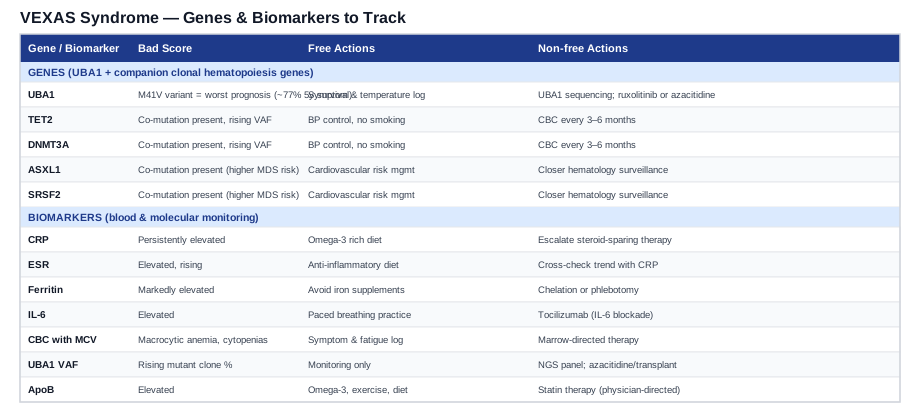
The UBA1 Gene And Its Partners: What The Genetics Of VEXAS Syndrome Actually Show
Genetic wellness content has become popular largely thanks to people like Ali Torkamani, whose work on polygenic risk scoring has shown how much inherited variation across thousands of genes shapes long-term disease risk, and Gary Brecka, who has popularized testing for actionable inherited variants such as MTHFR and APOE and pairing them with specific supplement or lifestyle protocols. That framework works reasonably well for common inherited variants everyone is born with. VEXAS syndrome asks a genuinely different question, because the mutation involved is not inherited at all — it is acquired, later in life, inside a single clone of blood stem cells. Understanding that distinction is the key to using genetic information about VEXAS wisely rather than being misled by advice built for a different kind of genetics problem.
Why VEXAS Syndrome Is Fundamentally A Genetics Story
Before 2020, patients with the pattern of symptoms now called VEXAS syndrome were diagnosed with a patchwork of separate conditions: relapsing polychondritis, Sweet syndrome, polyarteritis nodosa, or "unclassifiable" adult-onset autoinflammatory disease, often alongside unexplained anemia or low blood counts. In a landmark 2020 study, researchers at the National Institutes of Health sequenced the genomes of patients with this unexplained pattern and found that most of them shared somatic mutations in a single gene on the X chromosome, UBA1, occurring specifically in their blood stem cells rather than in every cell of the body (Beck et al., New England Journal of Medicine, 2020). That discovery gave the disease its name — Vacuoles, E1 enzyme, X-linked, Autoinflammatory, Somatic — and, more importantly, gave clinicians a specific test to order instead of a guessing game of overlapping syndromes.
The Gene At The Center: UBA1
UBA1 encodes the ubiquitin-activating enzyme E1, the first and rate-limiting step in a three-enzyme cascade that tags damaged or misfolded proteins for disposal inside the cell. Two versions, or isoforms, of the protein are normally produced from the same gene: a full-length isoform (UBA1b) that works mainly in the cell nucleus, and a shorter isoform (UBA1a) that works in the cytoplasm. In VEXAS syndrome, mutations disrupt production of the shorter cytoplasmic isoform specifically inside myeloid blood cells. The cell tries to compensate using a third, much less efficient isoform, and the result is a pileup of unrecycled, misfolded proteins that triggers a cellular stress response and a cascade of innate-immune inflammation — the biological engine behind the fevers, chondritis, skin lesions, and blood count abnormalities seen in VEXAS (Grayson, Patel & Young, Blood, 2021).
Three Faces Of The Same Mutation: M41V, M41T, and M41L
Most VEXAS-causing mutations converge on a single amino acid position, methionine 41 (M41), which happens to be the exact start codon for the cytoplasmic UBA1a isoform — which is precisely why mutating it is so damaging. But which amino acid M41 gets swapped for matters enormously. According to detailed genotype-phenotype data compiled in the NIH's own clinical genetics reference, patients with the p.Met41Val (M41V) variant tend to have the most severe course, with a five-year survival around 77 percent and a higher rate of an undifferentiated inflammatory pattern rather than classic ear chondritis. Patients with p.Met41Thr (M41T) more often develop inflammatory eye disease and have an intermediate five-year survival near 83 percent. Patients with p.Met41Leu (M41L) tend to have the mildest course, frequently presenting with Sweet syndrome-like skin disease, and historical cohorts have shown five-year survival approaching 100 percent (VEXAS Syndrome, GeneReviews, NCBI Bookshelf). In practical terms, the exact three-letter genetic result on a lab report is not a technicality — it is one of the strongest single predictors of how aggressively the disease needs to be treated.
If Your UBA1 Result Comes Back Positive: The Plan Without Supplements Or Equipment
It has to be said plainly: there is no supplement, diet, or piece of home equipment that reverses a somatic UBA1 mutation, because the mutation lives inside a clone of bone marrow stem cells, not in a pathway that responds to nutrient status the way, say, an MTHFR variant might respond to methylfolate. The "plan without supplements" here is really a plan of medical monitoring and treatment sequencing, and it starts with confirming the diagnosis through a hematologist or rheumatologist familiar with VEXAS, then establishing a treatment approach matched to genotype severity. For many patients this begins with corticosteroids to control acute inflammation, but because long-term steroid dependence carries its own serious costs, the realistic non-supplement plan is to move toward a steroid-sparing agent as quickly as the disease allows. Ruxolitinib, a JAK1/2 inhibitor, has shown the strongest response rates among currently used steroid-sparing options, producing roughly an 83 percent response at three months compared to about 18 percent with other JAK inhibitors in a large multicenter retrospective study, alongside a median steroid dose reduction of over 80 percent among responders (Heiblig et al., Blood, 2022). For patients whose bone marrow disease dominates the picture, hypomethylating agents such as azacitidine, or allogeneic stem cell transplantation in eligible patients, are the non-supplement interventions that directly target the mutant clone itself rather than just its downstream inflammation. None of these carry a fixed "frequency" the way a supplement would; dosing and cycling are set and adjusted by a treating physician based on labs and response, typically reviewed every one to three months in the first year.
If Your UBA1 Result Comes Back Positive: The Plan With Supplements And Equipment
Supplements and equipment in VEXAS are adjuncts to medical therapy, never substitutes for it, and the honest framing matters here more than in almost any other condition discussed on health sites. The most evidence-backed additions address the side effects of the mandatory treatments rather than the mutation itself. Long-term steroid use accelerates bone loss, so calcium (roughly 1,000–1,200 mg per day from diet plus supplementation if needed) and vitamin D (commonly 1,000–2,000 IU daily, adjusted to a blood level target your physician sets) are standard, guideline-supported adjuncts, generally taken daily and continued for as long as steroids are used, with the main side effect being gastrointestinal upset at high doses or, rarely, hypercalcemia if over-supplemented. Because VEXAS carries a markedly elevated risk of unprovoked blood clots, some patients and physicians discuss omega-3 fatty acids (roughly 1–2 grams daily of combined EPA/DHA) as a mild adjunct for triglycerides and vascular inflammation, cycled continuously rather than on-and-off, with the main caution being an additive bleeding risk if combined with anticoagulants. On the equipment side, a home blood pressure cuff and a simple symptom-and-temperature log are genuinely useful low-cost tools, since they give your care team objective data between visits rather than relying on memory of "a bad week." None of these change the underlying genetics; they support a body that is managing both a disease and its treatment.
Beyond Codon 41: Non-M41 And Splice-Site Variants
Not every case of VEXAS syndrome involves the M41 hotspot. A smaller subset of patients carry other UBA1 variants, including splice-site mutations and rarer missense changes elsewhere in the gene, that still reduce production of the cytoplasmic isoform through a different mechanism. Recent work characterizing these "non-M41" variants has found they can behave somewhat differently in terms of variant allele burden and clinical severity, reinforcing that a negative result for the three classic M41 mutations does not fully rule out VEXAS if clinical suspicion remains high — broader UBA1 sequencing, not just hotspot testing, may be needed in ambiguous cases.
The Supporting Cast: TET2, DNMT3A, ASXL1, and SRSF2
UBA1 does not always act alone. A large analysis of clonal hematopoiesis in VEXAS patients found that typical age-related clonal hematopoiesis mutations — most often in TET2 and DNMT3A, and less frequently in ASXL1 and SRSF2 — co-occur with the causal UBA1 mutation in roughly 60 percent of patients (Spectrum of clonal hematopoiesis in VEXAS syndrome, Blood, 2023). Interestingly, that same study found these companion mutations were not strongly associated with worse inflammatory or hematologic outcomes on their own, but they matter for a different reason: they are markers of a bone marrow that is already prone to clonal drift, and they are the same mutations tracked in the broader clonal hematopoiesis of indeterminate potential (CHIP) literature, which links them to higher long-term cardiovascular and blood cancer risk independent of VEXAS itself (Jaiswal et al., New England Journal of Medicine, 2014).
If A Co-Occurring Mutation Turns Up: The Plan Without Supplements
Because TET2, DNMT3A, ASXL1, and SRSF2 mutations are also acquired rather than inherited, the same rule applies: nothing removes them. The plan without supplements is built around reducing the other risks these mutations are known to amplify. That means standard cardiovascular risk management — blood pressure control, smoking cessation if applicable, and routine lipid screening — takes on extra importance, since CHIP-associated mutations amplify atherosclerotic risk through the same inflammatory pathways implicated in VEXAS itself. It also means these findings usually prompt slightly closer hematology surveillance, typically a complete blood count every three to six months, to catch early signs of progression toward myelodysplastic syndrome sooner rather than later.
If A Co-Occurring Mutation Turns Up: The Plan With Supplements And Equipment
Here, the most defensible additions are the same general anti-inflammatory and cardiovascular-support measures used in CHIP more broadly: omega-3 fatty acids at the dose described above, and, where appropriate and physician-directed, statin therapy, which has separate evidence for reducing cardiovascular events in people with elevated inflammatory markers. A home lipid or CRP fingerstick test (roughly 20–40 US dollars per kit) can be a reasonable low-cost equipment addition for patients tracking trends between formal labs, run monthly or quarterly rather than daily, since day-to-day inflammatory marker fluctuation is normal and over-testing tends to create anxiety without adding useful information.
The Epigenetic Twist: Why This Is (Almost) Only A Disease Of Men
VEXAS syndrome overwhelmingly affects men, and the reason is a genuinely elegant piece of X-chromosome biology rather than a bias in who gets diagnosed. UBA1 sits in a region of the X chromosome that escapes the normal process of X-inactivation, meaning that unlike most X-linked genes, both copies stay active in women's cells. A woman who acquires a UBA1 mutation in one blood stem cell still has a normal, functioning second copy expressed in that same cell, which appears to protect against full-blown disease. The rare exceptions prove the rule: a small number of women with VEXAS syndrome have been reported, and nearly all of them had an unusual chromosomal backdrop — either constitutional Turner syndrome (a single X chromosome from birth) or acquired age-related loss of the second X chromosome in their bone marrow — removing that protective second copy (VEXAS syndrome in a female patient with constitutional 45,X, Haematologica, 2022). This is one of the clearest examples in modern medicine of epigenetic gene dosage directly explaining a disease's sex distribution.
Getting Tested: What A Genuinely Useful Genetic Workup Looks Like
For a man over 50 with unexplained recurrent fevers, chondritis, skin inflammation, and macrocytic anemia or unexplained cytopenias, the useful test is targeted UBA1 sequencing, usually performed on a blood sample by a laboratory with hematology-genetics expertise, sometimes bundled into broader myeloid gene panels used for suspected clonal blood disorders. This is meaningfully different from consumer genomic tests aimed at inherited polygenic risk, and it will not show up on a standard 23andMe-style report, since it is looking for an acquired mutation present in only a subset of blood cells, not something written into the germline. Asking specifically for UBA1 hotspot or full-gene sequencing, rather than a generic autoinflammatory panel, is the detail most likely to shorten the path to an accurate diagnosis.
Six — And One More — Biomarkers Worth Tracking Once VEXAS Is On The Table
Once a UBA1 mutation is confirmed, or strongly suspected, the genetics answer "why," but they do not tell you week to week whether treatment is working. That is what biomarkers are for, and while VEXAS is too new and too rare to have inspired its own dedicated biomarker guidelines from figures like Peter Attia, Thomas Dayspring, or Allan Sniderman, the cardiometabolic risk-tracking discipline they have championed for chronic inflammatory conditions applies directly here, particularly around thrombosis risk.
C-Reactive Protein (CRP)
CRP is a liver-produced acute-phase protein that rises within hours of active inflammation, and in VEXAS it is one of the most responsive markers to treatment, typically falling within weeks of an effective steroid-sparing therapy taking hold. How to measure it: a standard or high-sensitivity CRP blood draw, widely available, costing roughly 10–30 US dollars out of pocket or bundled into standard labs when insured. If levels stay stubbornly high, the plan without supplements is to revisit whether the current steroid-sparing agent (commonly ruxolitinib) is dosed adequately, since a non-responding CRP is one of the clearest clinical signals to escalate therapy. The plan with supplements leans on the same omega-3 and anti-inflammatory dietary pattern described earlier, understanding it will move CRP modestly at best against a disease this inflammatory.
Erythrocyte Sedimentation Rate (ESR)
ESR measures how quickly red blood cells settle in a test tube, a proxy for blood protein changes driven by inflammation. It moves more slowly than CRP but is useful as a second, cross-checking data point, especially since anemia itself (common in VEXAS) can independently affect ESR readings, making it best interpreted alongside CRP rather than alone. How to measure it: a basic blood draw, typically 10–20 US dollars, run alongside CRP at most visits.
Ferritin
Ferritin is both an iron-storage marker and an acute-phase reactant, and in VEXAS it is frequently markedly elevated, reflecting both active inflammation and, in transfusion-dependent patients, genuine iron overload. How to measure it: a standard blood test, roughly 20–40 US dollars. If ferritin is elevated primarily from inflammation, the same treatment-escalation logic as CRP applies. If it is elevated because of repeated transfusions for anemia, the specific "plan with equipment" is iron chelation therapy or therapeutic phlebotomy where appropriate, decisions that belong squarely with a hematologist rather than a supplement aisle — in fact, iron supplements should generally be avoided entirely in this context unless a physician has specifically confirmed true iron deficiency.
Interleukin-6 (IL-6)
IL-6 is one of the central cytokines driving the fevers and systemic inflammation of VEXAS, and it is the direct target of IL-6 blocking therapies such as tocilizumab, used in some patients as an alternative or adjunct to JAK inhibition. How to measure it: a specialty cytokine panel, less routinely available than CRP or ESR, typically 50–150 US dollars and often only run through specialist or research labs. Because it is a more specialized (and costly) test, it is usually reserved for cases where the treatment response is unclear on cheaper markers, or a rheumatologist is specifically weighing IL-6-directed therapy.
Complete Blood Count With MCV
The complete blood count (CBC) is the single most information-dense, affordable test in VEXAS monitoring, since nearly all patients develop macrocytic anemia (elevated mean corpuscular volume, or MCV) and many develop low platelet or white cell counts that flag progression toward myelodysplastic syndrome. How to measure it: a basic blood draw, 20–40 US dollars, typically repeated every one to three months depending on disease activity. A falling hemoglobin or worsening cytopenia is one of the clearest signals to a hematologist that bone-marrow-directed therapy, rather than just anti-inflammatory treatment, needs to be considered or intensified.
UBA1 Variant Allele Fraction (VAF)
This is the molecular biomarker unique to VEXAS: the percentage of blood cells carrying the mutant UBA1 clone, measured through next-generation sequencing. VAF correlates with disease burden and is the key number tracked after treatments aimed at the clone itself, such as azacitidine or stem cell transplant, since a falling VAF is the clearest sign the abnormal clone is shrinking rather than just its downstream inflammation being suppressed. How to measure it: targeted or myeloid-panel next-generation sequencing, roughly 200–500+ US dollars depending on the lab and panel breadth, usually repeated only every six to twelve months given the cost and the fact that VAF moves slowly compared to inflammatory markers.
Apolipoprotein B (ApoB)
This one is not VEXAS-specific, but it earns its place on the list because VEXAS carries a well-documented, substantially elevated risk of unprovoked venous thromboembolism and accelerated vascular inflammation, and ApoB is the biomarker that Peter Attia, Thomas Dayspring, and Allan Sniderman have each argued, on strong epidemiological grounds, is a more accurate readout of atherogenic particle burden than standard LDL cholesterol. How to measure it: a standard lipid panel add-on, typically 20–50 US dollars, worth discussing with your physician given the elevated cardiovascular backdrop VEXAS creates. If elevated, the plan without supplements centers on the same blood pressure, activity, and dietary pattern used broadly for cardiovascular risk reduction; the plan with supplements or equipment (again strictly adjunctive, and only alongside — never instead of — statin therapy if a physician recommends it) includes the omega-3 dosing already described, taken continuously rather than cycled on and off.
What Clonal Hematopoiesis Research Is Teaching Doctors About Diseases Like VEXAS
Siddhartha Mukherjee's book, The Gene: An Intimate History, was written before VEXAS syndrome had a name, but it laid out, years in advance, almost exactly the conceptual shift that made its discovery possible: the idea that a single somatic mutation, acquired in one clone of cells rather than inherited by the whole body, can produce a coherent, systemic, named disease. Reading it alongside the VEXAS literature is a genuinely useful exercise in understanding why "unexplained" adult inflammatory disease is being rethought. Here are ten of its most load-bearing ideas, mapped onto what VEXAS research has since confirmed.
1. A mutation does not need to be inherited to define a disease
Mukherjee's central argument is that genetics is not only about what you are born with. VEXAS is perhaps the cleanest modern proof of this: a fully acquired, later-in-life mutation in blood stem cells produces a disease as distinct and mechanistically clear as many inherited conditions.2. Clones compete inside the body, and one can win
The book's discussion of clonal selection in blood and cancer directly foreshadows how a single UBA1-mutant hematopoietic stem cell can expand and eventually dominate blood production, exactly as described in the clonal hematopoiesis mapping of VEXAS patients.3. "Idiopathic" often just means "not sequenced yet"
Many VEXAS patients spent years under vague diagnostic labels before 2020. Mukherjee's history of genetics is full of diseases that were mysterious until the right assay existed — VEXAS is simply the most recent chapter of that same pattern.4. One gene can wear many clinical masks
The book repeatedly shows how a single genetic lesion can present as several seemingly unrelated conditions. VEXAS patients were previously scattered across rheumatology, dermatology, and hematology diagnoses before one gene tied them together.5. Sex-linked genes do not always behave the way textbooks predict
X-inactivation is a recurring theme in Mukherjee's writing, and VEXAS is an unusually clean real-world illustration of it: because UBA1 escapes X-inactivation, women are protected in a way that would not hold for most other X-linked genes.6. Age is a mutagen
The book frames aging itself as an accumulation of somatic mutations. VEXAS's near-exclusive occurrence in men over 50 mirrors the broader clonal hematopoiesis data showing detectable driver mutations become common with age, sharply increasing after age 60 or 70.7. A cell's "garbage disposal" system is not a minor detail
Mukherjee's descriptions of cellular quality-control machinery help explain why disrupting something as seemingly obscure as an enzyme in the ubiquitin pathway can cascade into full-body inflammation — protein quality control is not a peripheral system, it is load-bearing.8. Genetic diagnosis changes treatment logic, not just labeling
Before VEXAS had a genetic name, treatment was largely trial and error with immunosuppressants. Afterward, treatment could be targeted toward the actual mutant clone (via azacitidine or transplant) rather than only its symptoms — precisely the shift in medical thinking Mukherjee predicted genetics would eventually force across many diseases.9. Genotype-specific prognosis is coming for more diseases, not fewer
The M41V/M41T/M41L survival differences in VEXAS are a small-scale preview of a trend Mukherjee describes as inevitable: prognosis increasingly depends on exactly which variant a patient carries, not just which gene.10. Understanding a mutation is not the same as controlling it
Perhaps the most important caution the book offers, and one this article has tried to honor throughout: knowing the genetic mechanism of a disease is enormously clarifying, but it is not the same as having a simple lever to pull. VEXAS remains a disease that requires real medical treatment, not just better information.Complementary Approaches That May Ease Life With VEXAS Syndrome
None of the following modalities affect UBA1 mutations, inflammatory biomarkers, or disease progression in any curative sense, and none have been tested in dedicated VEXAS clinical trials, since the disease is simply too recently defined and too rare for that evidence base to exist yet. What follows is chosen because each has genuine human evidence in the broader chronic inflammatory and rheumatologic disease context that VEXAS patients live in day to day — fatigue, joint and cartilage pain, sleep disruption, and the psychological burden of a serious, unpredictable illness.
Mindfulness Meditation / MBSR
Mindfulness-Based Stress Reduction (MBSR) is a structured eight-week program combining meditation, gentle body awareness, and breath focus, and it is relevant to VEXAS because chronic inflammatory illness reliably worsens sleep, mood, and perceived pain, all of which can amplify how disabling flares feel even when they do not change lab values. A randomized controlled trial in older adults found that eight weeks of MBSR measurably reduced loneliness and downregulated pro-inflammatory gene expression compared to a control condition (Creswell et al., Brain, Behavior, and Immunity, 2012), though later replications have shown mixed effects on circulating inflammatory markers themselves, so the honest summary is: real effects on stress physiology and quality of life, unproven effects on inflammation itself. For VEXAS specifically, a realistic application is a guided eight-week MBSR course (widely available online or through hospital wellness programs) practiced 20–30 minutes daily, positioned explicitly as a way to manage the psychological load of a chronic illness rather than as disease-modifying therapy.The Autoimmune Protocol
Sarah Ballantyne's Autoimmune Protocol (AIP) is an elimination-and-reintroduction diet originally designed for autoimmune disease, and it is worth mentioning here because VEXAS sits adjacent to autoimmune and autoinflammatory conditions clinically, even though it is mechanistically an innate-immune, myeloid-driven disease rather than a classic autoimmune one — an important distinction, since AIP's evidence base comes from autoimmune, not autoinflammatory, conditions. The clearest human evidence is a pilot study in inflammatory bowel disease, where a six-week elimination phase followed by a maintenance phase produced clinical improvement and reduced patient-reported symptom scores in a small cohort (Konijeti et al., Inflammatory Bowel Diseases, 2017). No study has tested AIP in VEXAS patients, and given that VEXAS involves marrow failure and anemia, any elimination diet in this population should be undertaken only with a dietitian involved, to avoid worsening nutritional deficits on top of an already taxed bone marrow.Massage Therapy
Massage therapy is relevant here because chondritis, arthralgia, and generalized musculoskeletal pain are among the most common and persistently bothersome VEXAS symptoms, and manual therapy is one of the better-studied non-pharmacologic options for rheumatologic joint pain broadly. A randomized controlled trial in rheumatoid arthritis patients found that twice- to three-times-weekly 30-minute Swedish massage sessions over eight weeks meaningfully reduced pain and analgesic use compared to control (effect of Swedish massage on pain in rheumatoid arthritis patients, Complementary Therapies in Clinical Practice, 2022). For VEXAS, the realistic application is gentle massage focused on non-inflamed joints and soft tissue, avoiding direct deep pressure over actively inflamed cartilage (such as an inflamed ear or nasal septum) or over sites of recent thrombosis, given the disease's elevated clotting risk — a detail worth flagging to any massage therapist in advance.Breathing-Based Therapies
Slow, paced breathing is relevant because it engages the vagally-mediated cholinergic anti-inflammatory pathway, a genuine physiological mechanism by which controlled breathing can modestly reduce circulating pro-inflammatory cytokines such as IL-6. A randomized clinical trial in patients with moderate COVID-19 pneumonia used a slow-paced breathing protocol — a four-second inhale, six-second exhale, for 20 minutes, three times daily — specifically to test this cholinergic anti-inflammatory pathway and reported measurable effects on IL-6 (Balint et al., Frontiers in Immunology, 2022). This is a different disease context, so the effect size in VEXAS is unknown, but the mechanism is plausible enough that a daily 15–20 minute paced-breathing practice is a low-risk, zero-cost adjunct worth trying alongside, never instead of, medical treatment.Progressive Muscle Relaxation
Progressive muscle relaxation (PMR) involves systematically tensing and releasing muscle groups to reduce physiological arousal, and it is relevant for the anxiety, poor sleep, and muscular tension that commonly accompany chronic pain conditions. Randomized trials in other chronic pain and post-surgical populations have shown PMR meaningfully reduces pain scores and improves sleep quality compared to standard care alone (randomized controlled trial of progressive muscle relaxation, Scientific Reports, 2024), though direct evidence in rheumatologic or autoinflammatory populations specifically is thinner and more mixed. A practical approach is a guided 15–20 minute PMR session before bed, four to five times a week, which carries essentially no side effects beyond the time commitment and can be paused or resumed freely without any tapering concern.Bringing It All Together
VEXAS syndrome is a rare example of a serious adult disease with a genuinely traceable genetic cause: a somatic UBA1 mutation, its specific variant shaping prognosis, and a handful of companion clonal hematopoiesis genes shaping longer-term marrow risk. That genetic clarity does not translate into a supplement-based fix — this is acquired, not inherited, biology — but it does translate into sharper treatment decisions and a concrete set of biomarkers, from CRP and a basic CBC to UBA1 variant allele fraction, that let you and your care team see whether treatment is actually working rather than guessing from symptoms alone.
The most useful next step is rarely a new supplement. It is making sure the right test has actually been run — targeted UBA1 sequencing if VEXAS is suspected, a recent complete blood count and inflammatory panel if it is already confirmed — and bringing that data, along with a simple symptom log, to a hematologist or rheumatologist experienced with this disease. Better information will not change the biology on its own, but it consistently changes the quality of the decisions made around it.
Cancer & Oncology: Blood Cancer