This article contains AI generated content.
Vitamin D Deficiency: 6 Genes And 7 Biomarkers To Track
Introduction
You've probably already had your vitamin D checked. Maybe the number came back low, maybe it came back "normal but on the low side," and maybe you were told to take a supplement and check again in three months. For a lot of people, that's where the story ends — and where the frustration begins, because the fatigue, the joint aches, the mood dips, or the recurring infections didn't fully go away.
The generic advice isn't wrong, exactly. It's just built for averages. "Take 1,000 to 2,000 IU a day" assumes a body that absorbs, transports, activates, and uses vitamin D the same way every other body does. In reality, the path from sunlight or a supplement capsule to an active hormone doing its job in your cells passes through several enzymes, a transport protein, and a receptor — and each of those steps can run faster or slower depending on your genetics, your kidney and liver function, your magnesium status, and even your gut. Two people can take the identical dose and end up with very different blood levels, and two people with the identical blood level can respond very differently depending on how much of that vitamin D is actually bioavailable to their tissues.
This article takes the more precise route. Instead of stopping at "take a supplement," it looks at the specific biomarkers that reveal what's actually happening in your vitamin D metabolism — not just the headline number, but the feedback signals, the transport protein, and the cofactors that determine whether supplementation will even work. It also looks at the genetic variants that explain why some people stay deficient no matter how much sun or supplement they get, and what — if anything — can be done about that.
None of this promises a cure or a guaranteed fix. Genetics and lab values don't hand you certainty; they hand you better questions to bring to a clinician and a clearer sense of where to look next. But better information tends to produce better decisions, and in a condition as common and as under-investigated as vitamin D deficiency, that alone is worth a great deal.
Summary
Vitamin D deficiency is rarely a single-number problem, even though it's almost always treated like one. Underneath the familiar 25(OH)D blood test sits a small chain of biology — a binding protein, two activating enzymes, a receptor, and a mineral cofactor — that can each quietly limit how much of the vitamin D you're taking in actually becomes useful in your body. This article walks through the seven biomarkers worth tracking beyond the basic test, including the parathyroid hormone signal that often reveals a problem before 25(OH)D does, and the bioavailable vitamin D calculation that explains why some "normal" levels aren't actually normal for that person.
It also covers the six genes most consistently linked to vitamin D status in genome-wide studies — the kind of variants researchers like Ali Torkamani have mapped at population scale, and that practitioners like Gary Brecka use as a starting point for personalized protocols — along with realistic, evidence-graded plans for working around a difficult variant, with and without supplements. From there, a closer look at Dr. Michael Holick's research distills ten lessons that still challenge mainstream sun-avoidance advice, and a short section on complementary approaches — phototherapy and gut-microbiome-directed strategies — rounds out the practical toolkit.
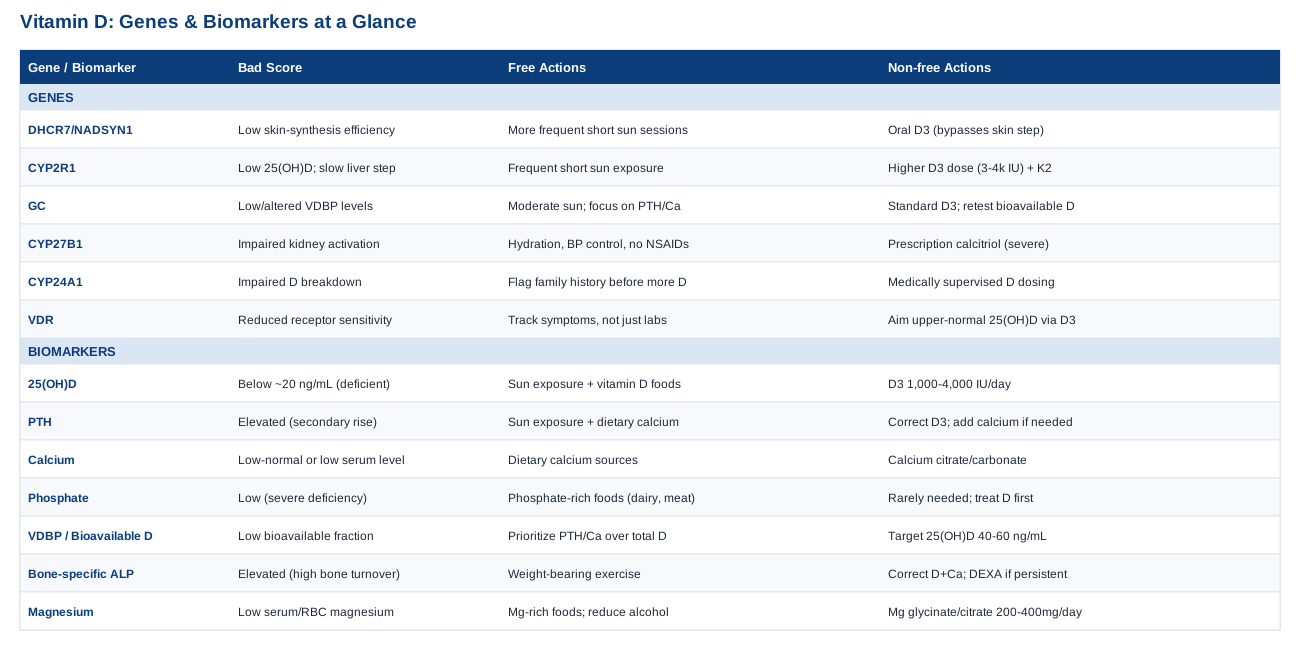
7 Biomarkers That Tell the Real Story of Your Vitamin D Status
A single 25(OH)D result tells you whether your total vitamin D pool is low, adequate, or high. It does not tell you why, whether your body can actually use what it has, or whether the low number is even the primary problem. The panel below is built around the logic that clinicians like Peter Attia and lipidologists such as Thomas Dayspring and Allan Sniderman apply to other hormone and mineral systems: don't just measure the endpoint, measure the pathway. For vitamin D, that means looking at the feedback hormone that responds to it, the minerals it regulates, the protein that carries it, and the cofactor that activates it.
[TITLE level="3"]25-Hydroxyvitamin D [25(OH)D]: The Core Status Marker
Why it matters: 25(OH)D is the storage form of vitamin D and the standard clinical marker of overall status, because it reflects both sun-derived and dietary/supplemental vitamin D and has a long enough half-life (around 2–3 weeks) to represent weeks of intake. The 2011 Institute of Medicine report on dietary reference intakes for calcium and vitamin D set the widely used clinical thresholds: deficient below roughly 20 ng/mL (50 nmol/L), and sufficient above that for most people, though many functional-medicine practitioners aim higher, in the 30–50 ng/mL range, for non-skeletal benefits that remain less firmly established.
How to measure it: A standard blood draw processed by LC-MS/MS (the gold-standard method) or immunoassay. Cost ranges from about 40 to 130 US dollars out of pocket depending on lab and whether it's bundled into a broader panel; it's covered by insurance in most countries when ordered with a relevant diagnosis.
If the score is bad, the plan without supplements: Increase sensible, unprotected sun exposure — roughly 10–30 minutes of midday sun on arms and legs, several times a week, adjusted for skin tone and latitude, since darker skin and higher latitudes both reduce cutaneous synthesis substantially. Add vitamin D–rich foods (fatty fish, egg yolks, fortified dairy or plant milk, UV-exposed mushrooms). This approach is slow, seasonal, and often insufficient on its own in winter months or for people who are largely indoors, which is why it's usually paired with supplementation rather than used alone.
If the score is bad, the plan with supplements or equipment: Vitamin D3 (cholecalciferol) 1,000–4,000 IU daily is the typical maintenance-to-correction range for adults; more severe deficiency is sometimes corrected with a higher loading protocol (e.g., 50,000 IU weekly for 6–8 weeks) under medical supervision, followed by a lower maintenance dose. Retest 25(OH)D after 8–12 weeks, not sooner, since it takes that long to reach a new steady state. Side effects at recommended doses are rare; excessive supplementation (sustained intakes above 10,000 IU/day) can raise blood calcium and, rarely, cause kidney stones or hypercalcemia, so very high doses should only be used under supervision with periodic calcium monitoring.
[TITLE level="3"]Parathyroid Hormone (PTH): The Feedback Signal
Why it matters: PTH rises when the body senses that active vitamin D and calcium are insufficient to maintain normal blood calcium — a state called secondary hyperparathyroidism. Several studies show that PTH often starts climbing before 25(OH)D drops into the officially "deficient" range, which makes it a useful early-warning marker and a way to judge whether a given 25(OH)D level is functionally adequate for that individual. Souberbielle and colleagues proposed using the point where PTH plateaus as a more physiological definition of vitamin D sufficiency than an arbitrary 25(OH)D cutoff, and later work confirmed the inverse relationship holds across large population samples, with seasonal variation in both markers tracking together.
How to measure it: Intact PTH via blood draw, ideally drawn alongside calcium and 25(OH)D in the morning after an overnight fast for consistency. Cost is roughly 50 to 120 US dollars.
If the score is bad, the plan without supplements: Because elevated PTH in this context is almost always secondary to low vitamin D or calcium intake rather than a primary parathyroid problem, the non-supplement lever is the same as above — sun exposure and dietary calcium (dairy, leafy greens, fortified foods) — plus ruling out chronic kidney disease, which independently raises PTH regardless of vitamin D status and should be checked with a basic kidney panel if PTH stays elevated after vitamin D correction.
If the score is bad, the plan with supplements or equipment: Correcting 25(OH)D typically brings PTH down within 2–3 months; if it doesn't, adding calcium citrate or carbonate (500–1,200 mg/day depending on dietary intake) alongside vitamin D is standard. Retest PTH no sooner than 3 months after starting correction, since it lags behind 25(OH)D changes. Persistently high PTH despite normalized 25(OH)D and calcium warrants referral to endocrinology to rule out primary hyperparathyroidism, which is a distinct condition.
[TITLE level="3"]Serum Calcium: The Downstream Effect
Why it matters: Calcium is the variable vitamin D and PTH are ultimately trying to protect. Chronically low vitamin D can eventually contribute to low-normal or frankly low calcium, while over-aggressive vitamin D supplementation (especially at very high doses) can push calcium too high. Tracking it alongside 25(OH)D and PTH turns three isolated numbers into a coherent picture of calcium homeostasis rather than three disconnected data points.
How to measure it: Total serum calcium is part of any basic or comprehensive metabolic panel, typically 10–30 US dollars; ionized calcium (more accurate but requires careful sample handling) costs somewhat more and is mainly used when total calcium is borderline or albumin is abnormal.
If the score is bad, the plan without supplements: For low-normal calcium, prioritize dietary sources — dairy, canned fish with bones, tofu set with calcium, leafy greens — spread across the day, since absorption is more efficient at doses under roughly 500 mg at a time.
If the score is bad, the plan with supplements or equipment: Calcium supplementation (citrate absorbs well with or without food; carbonate needs food and stomach acid) is added when diet alone doesn't close the gap, generally 500–1,000 mg/day in divided doses. This should always be paired with adequate vitamin D, since calcium absorption depends on active vitamin D. Side effects include constipation and, in some studies, a possible small increase in cardiovascular risk with high-dose calcium supplements taken without adequate vitamin D or magnesium — another reason this is best done as part of a full panel rather than in isolation, and re-checked every 3–6 months during active correction.
[TITLE level="3"]Serum Phosphate: The Overlooked Partner
Why it matters: Vitamin D increases intestinal absorption of both calcium and phosphate, and severe deficiency (as in rickets or osteomalacia) classically presents with low phosphate alongside low calcium. Phosphate is also regulated by FGF23 and the same kidney enzymes that activate vitamin D, so an unexpected phosphate abnormality can point toward a kidney-related cause of poor vitamin D activation rather than a simple intake problem.
How to measure it: Included in most comprehensive metabolic panels; standalone cost is roughly 20–40 US dollars.
If the score is bad, the plan without supplements: Phosphate deficiency from low vitamin D alone is uncommon outside of severe, prolonged deficiency; correcting the underlying vitamin D status through sun and diet (dairy, meat, fish, legumes, nuts — all naturally phosphate-rich) usually resolves mild cases without targeted phosphate supplementation.
If the score is bad, the plan with supplements or equipment: True phosphate supplementation is rarely warranted for garden-variety vitamin D deficiency and is generally reserved for confirmed osteomalacia or specific renal phosphate-wasting conditions under specialist care, since inappropriate phosphate supplementation can itself disturb calcium balance. For most people, the right move is to treat the vitamin D deficiency and recheck phosphate in 2–3 months rather than supplementing phosphate directly.
[TITLE level="3"]Vitamin D Binding Protein and Bioavailable Vitamin D: The Advanced Layer
Why it matters: Roughly 85–90% of circulating 25(OH)D is bound to vitamin D binding protein (VDBP, encoded by the GC gene), with most of the remainder loosely bound to albumin and less than 1% freely circulating. Only the free and albumin-bound fraction — the "bioavailable" portion — is thought to be readily accessible to tissues. Because VDBP levels vary by genotype and by ethnicity, two people with identical total 25(OH)D can have meaningfully different bioavailable vitamin D. Genome-wide association work on circulating VDBP and studies on genetic and nongenetic predictors of the supplementation response both support this — it's a meaningful part of why some people respond poorly to standard dosing despite normal total 25(OH)D.
How to measure it: Direct VDBP immunoassay plus albumin, used to calculate bioavailable and free 25(OH)D, is a specialty test available through select reference labs; cost runs roughly 100–250 US dollars and it's not yet routine in most primary care settings. GC genotype (via a genetic panel, see the gene section below) is a cheaper proxy that estimates whether you're likely to run high or low VDBP without a direct assay.
If the score is bad, the plan without supplements: There's no lifestyle lever that directly raises VDBP; the practical response to low bioavailable vitamin D with normal total 25(OH)D is to interpret your existing total number more cautiously and prioritize the functional markers (PTH, calcium) over the total 25(OH)D alone when judging whether you're actually replete.
If the score is bad, the plan with supplements or equipment: Because a lower bioavailable fraction means a given total 25(OH)D delivers less usable hormone, some clinicians target the higher end of the normal 25(OH)D range (40–60 ng/mL) for people with known low-VDBP genotypes, using the same 1,000–4,000 IU daily D3 protocol described above, with retesting of PTH and calcium (not just 25(OH)D) every 3 months to judge whether tissue-level sufficiency is actually improving.
[TITLE level="3"]Bone-Specific Alkaline Phosphatase: The Turnover Marker
Why it matters: Bone-specific alkaline phosphatase (BAP) rises when bone turnover increases, which can happen with prolonged vitamin D deficiency as the skeleton loses mineral density. It's a useful downstream check for whether deficiency has already started affecting bone metabolism, particularly in people with long-standing low 25(OH)D or additional risk factors like older age or postmenopausal status.
How to measure it: A blood draw specifically for bone-specific ALP (distinct from the liver-inclusive total alkaline phosphatase on a standard panel), costing roughly 50–90 US dollars.
If the score is bad, the plan without supplements: Weight-bearing exercise (walking, resistance training) supports bone remodeling independent of vitamin D status and is worth adding regardless of lab results, alongside the sun and dietary measures already described.
If the score is bad, the plan with supplements or equipment: Correct vitamin D and calcium as above; BAP typically normalizes over 6–12 months as bone turnover settles, which is a slower timeline than 25(OH)D or PTH, so retesting sooner than 6 months is unlikely to show much change. If BAP stays elevated despite corrected vitamin D and calcium, a bone density scan (DEXA) and referral to endocrinology or a bone specialist is the appropriate next step rather than further supplementation.
[TITLE level="3"]Serum Magnesium: The Silent Cofactor
Why it matters: Every enzyme involved in vitamin D metabolism — the ones that activate it in the liver and kidney, and the one that clears it — requires magnesium as a cofactor. Uwitonze and Razzaque's review lays this out clearly, and Rosanoff and colleagues note that low magnesium can blunt the response to vitamin D supplementation, meaning some people who "don't respond" to standard dosing are actually magnesium-limited rather than vitamin-D-resistant. This is one of the most commonly missed pieces of the vitamin D picture in routine care.
How to measure it: Standard serum magnesium is inexpensive (20–30 US dollars) but only reflects about 1% of total body magnesium, since most is stored intracellularly and in bone; RBC (red blood cell) magnesium is a better proxy for tissue stores and costs roughly 60–100 US dollars.
If the score is bad, the plan without supplements: Magnesium-rich foods — pumpkin seeds, almonds, spinach, black beans, dark chocolate — can meaningfully improve intake, and reducing alcohol (which increases magnesium excretion) helps as well.
If the score is bad, the plan with supplements or equipment: Magnesium glycinate or citrate, 200–400 mg elemental magnesium daily, is a common and well-tolerated starting protocol, generally taken in the evening since it can have a mild relaxing effect. Magnesium oxide is cheaper but poorly absorbed and more likely to cause loose stools, which is the main side effect to watch for across forms — reducing the dose usually resolves it. Retest RBC magnesium after about 8–12 weeks. People with significant kidney disease should only supplement magnesium under medical guidance, since impaired kidneys can't clear excess magnesium efficiently.
Taken together, this panel — 25(OH)D, PTH, calcium, phosphate, VDBP/bioavailable D, bone-specific ALP, and magnesium — gives a genuinely functional picture rather than a single snapshot. It also sets up the next question naturally: if two people can have identical labs and respond completely differently to the same correction plan, genetics is very often why.
[TITLE level="2"]What Your Genes May Be Telling You About Vitamin D
Genome-wide association studies have repeatedly converged on a small set of genes that shape vitamin D status, largely by affecting synthesis, transport, activation, or breakdown rather than by changing how much sun or supplement someone takes in. Researchers like Ali Torkamani, who has written extensively on using genomic data to personalize preventive health decisions, and practitioners like Gary Brecka, known for popularizing accessible genetic panels covering nutrient-metabolism genes, both treat this kind of genetic information as a starting point for a plan — not a diagnosis, and not a reason to abandon standard testing. The evidence below ranges from strong (large GWAS with replication) to preliminary (smaller candidate-gene studies), and that distinction matters for how much weight to put on any single result.
[TITLE level="3"]GC (Vitamin D Binding Protein Gene)
What it may affect: GC encodes the vitamin D binding protein discussed above. Certain common variants (rs2282679, rs7041, rs4588) are associated with lower circulating 25(OH)D and altered VDBP levels in the large Wang et al. GWAS of over 33,000 people, one of the most replicated findings in this field. Carrying a lower-VDBP variant doesn't necessarily mean less usable vitamin D — some research suggests it may actually free up more bioavailable hormone per unit of total 25(OH)D — but it does mean your total 25(OH)D number should be interpreted differently than a textbook reference range assumes.
If the gene is bad, the plan without supplements: Focus on the functional markers (PTH, calcium) rather than fixating on hitting a specific total 25(OH)D target, since the "right" number is genuinely more individual here. Regular, moderate sun exposure remains the most gene-agnostic way to support synthesis.
If the score is bad, the plan with supplements or equipment: Standard D3 dosing (1,000–4,000 IU/day) still applies, but retesting should include PTH and ideally bioavailable vitamin D rather than total 25(OH)D alone, checked every 3 months during correction. There's no special supplement that "fixes" a GC variant — this is a case where the plan is more about interpretation than intervention.
[TITLE level="3"]CYP2R1 (25-Hydroxylase)
What it may affect: CYP2R1 encodes the primary liver enzyme that converts vitamin D3 into 25(OH)D — the first activation step. Variants here, also identified in the Wang et al. GWAS and confirmed in later replication studies, are associated with lower baseline 25(OH)D and can partly explain why some people need meaningfully more input (sun or supplement) to reach the same blood level as someone without the variant.
If the gene is bad, the plan without supplements: More consistent, frequent sun exposure (short sessions several times weekly rather than occasional long ones) gives this rate-limited enzyme more substrate to work with over time, though it won't fully compensate for a slow-converting enzyme.
If the score is bad, the plan with supplements or equipment: Higher maintenance doses of D3 (often toward the 3,000–4,000 IU/day end of the standard range, or higher under medical supervision) are commonly needed. Because this is a hydroxylation bottleneck rather than a transport or clearance issue, some clinicians use vitamin D3 combined with a small amount of vitamin K2 (90–180 mcg/day) to support proper calcium handling as intake rises — evidence for K2's role here is suggestive rather than definitive, so treat it as a reasonable adjunct rather than a required fix. Retest 25(OH)D at 12 weeks; side effects mirror standard D3 supplementation (rare hypercalcemia at high sustained doses).
[TITLE level="3"]CYP27B1 (1-Alpha-Hydroxylase — the Activation Enzyme)
What it may affect: This kidney enzyme converts 25(OH)D into calcitriol, the biologically active hormone. Rare, severe mutations here cause vitamin D–dependent rickets type 1, a well-established monogenic condition; common, milder variants have a more modest, less consistently replicated association with vitamin D status in the general population, so the evidence for everyday relevance is weaker than for GC or CYP2R1.
If the gene is bad, the plan without supplements: Since this enzyme is kidney-based, general kidney-supportive habits — adequate hydration, blood pressure control, avoiding chronic NSAID overuse — support the organ responsible for this conversion step, though this is a general health measure rather than a gene-specific fix.
If the score is bad, the plan with supplements or equipment: For the rare, severe monogenic form, treatment is prescription calcitriol (active vitamin D) itself, since standard D3 supplementation can't be activated properly — this requires specialist diagnosis and monitoring, not self-directed supplementation. For common, mild variants, there is no established specific protocol beyond standard D3 dosing and monitoring kidney function annually; this is an area where the evidence is still early enough that specific recommendations would outrun the data.
[TITLE level="3"]CYP24A1 (24-Hydroxylase — the Breakdown Enzyme)
What it may affect: CYP24A1 degrades active vitamin D, acting as the body's brake on the system. Loss-of-function mutations (well documented in case studies) impair this clearance and can cause vitamin D–induced hypercalcemia even at normal or modest supplement doses, because the "off switch" doesn't work properly. This is less common than the genes above but clinically important when it's the explanation for otherwise unexplained hypercalcemia during supplementation.
If the gene is bad, the plan without supplements: If you have a personal or family history of hypercalcemia with standard-dose vitamin D supplementation or sun exposure, this is worth flagging to a physician before increasing intake through any route, including diet.
If the score is bad, the plan with supplements or equipment: For confirmed CYP24A1 variants, vitamin D supplementation and even high sun exposure should be approached cautiously and under medical supervision, with periodic calcium and 25(OH)D monitoring rather than a fixed dosing protocol — this is one of the few situations in this article where the standard advice to "just increase vitamin D" doesn't safely apply, and a specialist should set the plan.
[TITLE level="3"]DHCR7/NADSYN1 (Skin Synthesis Pathway)
What it may affect: This gene region sits at the skin-synthesis step, competing for the same cholesterol-pathway substrate used to make vitamin D3 from sunlight exposure. Variants here, identified in the same GWAS work, are associated with lower baseline 25(OH)D, essentially meaning some people convert sunlight into vitamin D3 less efficiently at the skin level regardless of how much sun they get.
If the gene is bad, the plan without supplements: Because skin synthesis itself is the limiting step, more sun exposure has diminishing returns compared to someone without the variant — this is one of the clearer cases where dietary and supplemental sources are likely to matter more than sun optimization.
If the score is bad, the plan with supplements or equipment: Standard oral D3 supplementation bypasses the skin-synthesis bottleneck entirely, which makes it a particularly appropriate primary strategy (rather than a backup to sun exposure) for people who know they carry this variant. Typical dosing and retesting intervals match the general 25(OH)D protocol described earlier.
[TITLE level="3"]VDR (Vitamin D Receptor Polymorphisms)
What it may affect: VDR variants (commonly studied as FokI, BsmI, TaqI, and ApaI) don't change how much vitamin D is in your blood — they affect how well the receptor inside cells responds once vitamin D gets there. A 2022 review of vitamin D pathway gene polymorphisms and a meta-analysis of the FokI variant and hypertension both illustrate why this is the most complex gene in the group: individual VDR studies are often small, findings don't always replicate across populations, and associations tend to be modest — so this is genuinely the "early evidence, use cautiously" category, more than the GC or CYP2R1 findings above.
If the gene is bad, the plan without supplements: Since VDR variants affect receptor sensitivity rather than blood levels, someone with a less responsive VDR variant may feel better at a higher 25(OH)D target than the standard reference range suggests; tracking symptoms (energy, mood, muscle function) alongside labs is more informative here than chasing a specific number.
If the score is bad, the plan with supplements or equipment: There's no supplement that directly improves VDR sensitivity with solid clinical evidence behind it; the most defensible approach is to aim for the upper-normal end of 25(OH)D (40–60 ng/mL) through standard D3 dosing, monitor PTH and calcium as the functional check, and treat any claims about "VDR-boosting" supplements with real skepticism until better trials exist.
Genetics explains predisposition, not destiny — and the honest caveat across all six genes is that most of this evidence comes from population-level association studies, not individual predictive trials, so a "bad" variant is a reason to test and monitor more carefully, not a reason to assume a fixed outcome. With both the biomarker panel and the genetic landscape covered, it's worth stepping back to see how one of the field's most influential researchers has synthesized decades of this evidence into practical guidance.
[TITLE level="2"]Ten Lessons From Michael Holick's Vitamin D Research
Few researchers have shaped — and challenged — mainstream vitamin D thinking as much as Dr. Michael Holick, the Boston University endocrinologist whose decades of research culminated in his widely read book, The Vitamin D Solution. His broader body of work, including his well-known contributions to the 2011 IOM guideline discussion, pushed back against decades of blanket sun-avoidance advice and argued that vitamin D deficiency was both more common and more consequential than conventional practice assumed. Below are ten of the most useful, still-relevant takeaways from that body of work.
[TITLE level="3"]Deficiency Is Far More Common Than Most People Assume
Holick's research repeatedly found that a large share of adults and children — across age groups, and even in sunny climates — have insufficient 25(OH)D levels, largely due to modern indoor lifestyles, sunscreen use, and clothing that blocks UVB. This challenged the older assumption that deficiency was mainly a concern for housebound elderly patients.
[TITLE level="3"]Sunscreen Blocks Vitamin D Synthesis Almost Completely
An SPF of 30 or higher reduces cutaneous vitamin D production by more than 95%, according to Holick's lab work — a fact that sits in real tension with skin-cancer prevention advice. His resolution isn't to abandon sun protection but to argue for brief, deliberate unprotected exposure on smaller areas of skin (arms and legs) before applying sunscreen for extended time outdoors.
[TITLE level="3"]Skin Pigmentation Dramatically Changes Sun-Exposure Needs
Melanin acts as a natural sunscreen, meaning individuals with darker skin may need three to ten times longer sun exposure to generate the same amount of vitamin D as someone with fair skin — a major factor behind well-documented population differences in vitamin D status.
[TITLE level="3"]Latitude and Season Can Make Sun Exposure Irrelevant
Above roughly 35 degrees latitude (much of the northern United States, all of Canada and northern Europe), UVB rays are too weak to produce meaningful vitamin D synthesis for several winter months regardless of time spent outdoors — a geographic reality that makes year-round reliance on sun exposure alone impractical for a large share of the population.
[TITLE level="3"]Obesity Sequesters Vitamin D in Fat Tissue
Holick's research found that vitamin D is fat-soluble and gets sequestered in adipose tissue, meaning people with higher body fat percentages often need meaningfully higher doses to achieve the same blood level as leaner individuals — a nuance often missing from standard dosing charts.
[TITLE level="3"]The Standard RDA May Be Too Conservative for Many Adults
Holick was one of the more prominent voices arguing that the official recommended intakes, built primarily around bone health endpoints, may underestimate what many adults need to reach and maintain sufficient blood levels — a position that remains debated, since evidence for benefits beyond bone health is less firmly established than the skeletal data.
[TITLE level="3"]Vitamin D Toxicity Is Rare But Real at Extreme Doses
Despite arguing for higher targets than conventional guidelines, Holick's work is also clear that sustained very high doses (chronically well above 10,000 IU/day without monitoring) can cause hypercalcemia and toxicity — the goal is correcting deficiency, not maximizing the number indefinitely.
[TITLE level="3"]Aging Skin Produces Vitamin D Less Efficiently
Skin's capacity to synthesize vitamin D from UVB declines substantially with age — Holick's research estimated a several-fold reduction by the seventh and eighth decades of life compared to younger adults — meaning older adults relying on sun exposure alone are working against a biological headwind that supplementation can more reliably address.
[TITLE level="3"]Certain Medical Conditions Silently Block Absorption
Conditions affecting fat absorption — Crohn's disease, celiac disease, gastric bypass surgery, chronic pancreatic insufficiency — can significantly impair oral vitamin D absorption, meaning standard doses may not work at all for these patients without addressing the underlying malabsorption or using alternative routes.
[TITLE level="3"]A Single Test Often Isn't Enough to Guide Treatment
Consistent with the biomarker section above, Holick's clinical approach has long emphasized pairing 25(OH)D with calcium and PTH rather than treating the vitamin D number in isolation — an approach that was somewhat ahead of mainstream primary-care practice when he began advocating for it and remains underused today.
These lessons reinforce a theme that runs through the whole article: the standard single-number approach to vitamin D misses most of the nuance that actually determines whether someone gets better. That same theme extends to a few complementary approaches worth knowing about, even though their evidence base is narrower than the core biomarker and genetic strategies above.
[TITLE level="2"]Complementary Approaches Worth Knowing About
Most complementary and lifestyle modalities don't have direct, condition-specific evidence for vitamin D deficiency — this isn't a condition where mind-body practices are commonly studied. Two approaches stand out as exceptions with genuine, targeted human evidence: phototherapy, which is a direct mechanistic overlap with the skin-synthesis pathway, and gut-microbiome-directed approaches, which affect absorption and metabolism in ways researchers are only recently starting to quantify.
[TITLE level="3"]Light Therapy (Phototherapy)
Light therapy in this context refers to medically supervised ultraviolet B (UVB) exposure, most commonly narrowband UVB units originally developed to treat skin conditions like psoriasis and vitiligo. Because UVB is the specific wavelength range responsible for cutaneous vitamin D3 synthesis, it's directly and mechanistically relevant to vitamin D deficiency in a way most complementary approaches aren't.
The clearest evidence comes from dermatology: a study of narrowband UVB treatment in patients with chronic plaque psoriasis found meaningful increases in serum 25(OH)D over the course of treatment, and a comparison of NB-UVB exposure against oral vitamin D supplementation found phototherapy could raise levels at least as effectively as standard oral dosing in the populations studied. Most of this evidence comes from patients already receiving phototherapy for a skin condition, so it's not yet established as a first-line, standalone treatment for vitamin D deficiency in people without a dermatologic indication.
Realistically, this is most relevant if you already have a skin condition being treated with phototherapy — in which case it's reasonable to ask your dermatologist whether your vitamin D status is being tracked alongside treatment — or if you have a documented reason sun exposure and oral supplementation aren't working (severe malabsorption, for instance). It requires medical-grade equipment and supervision, isn't appropriate as a casual home intervention given skin-cancer risk with UVB overexposure, and should never replace standard blood monitoring.
[TITLE level="3"]Microbiome-Directed Therapies
The gut microbiome influences vitamin D status in two directions: certain bacterial populations affect how efficiently dietary and supplemental vitamin D is absorbed in the small intestine, and vitamin D receptor activity in gut lining cells in turn shapes microbiome composition — making this a two-way relationship rather than a one-off effect.
A Mendelian randomization study examining the causal relationship between gut microbiota and serum vitamin D found specific bacterial taxa associated with vitamin D levels, suggesting the gut environment is a genuine contributing factor rather than just a correlate. Separately, a review on probiotics and bone health discusses how probiotic supplementation may support calcium and vitamin D-related bone outcomes, though this evidence is still early-stage and the effect sizes are modest compared to direct vitamin D correction.
The realistic application here is to treat gut health as a supporting factor rather than a primary fix: addressing diagnosed conditions that impair fat absorption (celiac disease, IBD, SIBO) is far more consequential for vitamin D status than general probiotic use, since vitamin D is fat-soluble and depends on adequate bile and intestinal function for absorption. For someone without a diagnosed GI condition, a fiber-diverse diet and, if desired, a general-purpose probiotic are reasonable low-risk additions — but they should be viewed as a minor complement to the core testing-and-supplementation approach, not a substitute for it.
[TITLE level="2"]Conclusion
Vitamin D deficiency looks simple from the outside — one blood test, one supplement — but the biology underneath is a small system of checks and balances involving a transport protein, two activating enzymes, a receptor, and a mineral cofactor, any of which can quietly determine whether a standard fix actually works for you. The seven-biomarker panel gives you a functional read on that system rather than a single snapshot, the six genes explain why identical doses produce different results in different people, and Holick's research is a reminder that even well-established clinical guidance has been revised before and may be again.
None of this replaces a conversation with a physician, especially around dosing, genetic test interpretation, or any lab value that comes back significantly abnormal. But it does give you a more precise starting point than "take a supplement and check back in a few months." A reasonable next step is a focused one: get the core panel — 25(OH)D, PTH, calcium, and magnesium — drawn together, track how you actually feel alongside the numbers, and bring both to whoever manages your care.
Musculoskeletal: Bone Conditions