This article contains AI generated content.
· UpdatedWinchester Syndrome Genes and Biomarkers: 2 Genes and 7 Biomarkers to Track
Introduction
If you or your child has been given a diagnosis of Winchester syndrome, you've probably already noticed that most of what's written about "bone health" or "joint pain" online simply doesn't apply. Generic advice about calcium, exercise, and posture is written for people whose skeletons are structurally normal. Winchester syndrome is different: it's caused by a specific, identifiable defect in how the body remodels bone and connective tissue, and that defect behaves the same way whether you searched for it in a pediatric rheumatology clinic or on page one of Google.
That's precisely why broad wellness content falls short here. A condition this rare — fewer than a hundred documented cases worldwide — doesn't get the benefit of large clinical trials, consensus treatment guidelines, or a dedicated pharmaceutical pipeline. Families and adult patients are often left assembling their own picture from genetics papers, orthopedic case reports, and whatever their specialist has time to explain in a fifteen-minute appointment.
This article takes a more deliberate approach. Instead of vague reassurance, it walks through the actual molecular biology behind Winchester syndrome — the MMP14 gene and its downstream partner MMP2 — and then translates that biology into a concrete set of biomarkers you can track over time with your medical team. Tracking the right numbers, at the right intervals, is one of the few levers patients and caregivers can actually pull between specialist visits.
None of this replaces genetic counseling or a metabolic bone disease specialist, and there is no supplement or protocol that reverses a structural collagenase mutation. But better information changes decisions: it changes which questions you ask at your next appointment, which labs you request, and how you interpret a bone density report that would otherwise just be a stack of numbers. The sections below cover the biomarkers worth tracking in detail, what current genetics research actually shows about MMP14 and MMP2, a set of ideas from longevity research that apply surprisingly well to skeletal fragility, and a short review of complementary approaches with real supporting evidence.
Summary
Winchester syndrome is caused almost entirely by biallelic mutations in one gene — MMP14, which encodes a membrane-anchored enzyme (MT1-MMP) responsible for activating a second enzyme, MMP2, and for remodeling the collagen scaffold that keeps bone and joint tissue intact. When MMP14 loses function, bone in the hands, feet, and elsewhere is progressively resorbed while very little new bone is laid down to replace it — a process visible years before it's fully understood. The genetics section below explains exactly how this mutation disrupts that pathway, what a "hypomorphic" (partially working) mutation means for severity, and why consumer DNA tests will never catch it. The biomarker section that follows is the practical core of this article: seven specific lab and imaging markers — from bone-specific alkaline phosphatase to CTX-1, P1NP, the calcium-phosphate-PTH axis, vitamin D, and structural imaging — that let a care team see, in numbers, whether the disease is actively resorbing bone or holding steady, and whether an intervention is working. Further down, a set of ideas borrowed from longevity medicine reframes how to think about fragile bone over a lifetime, and a short review covers complementary therapies with genuine (if modest) evidence for the chronic pain and mobility challenges that come with this condition.
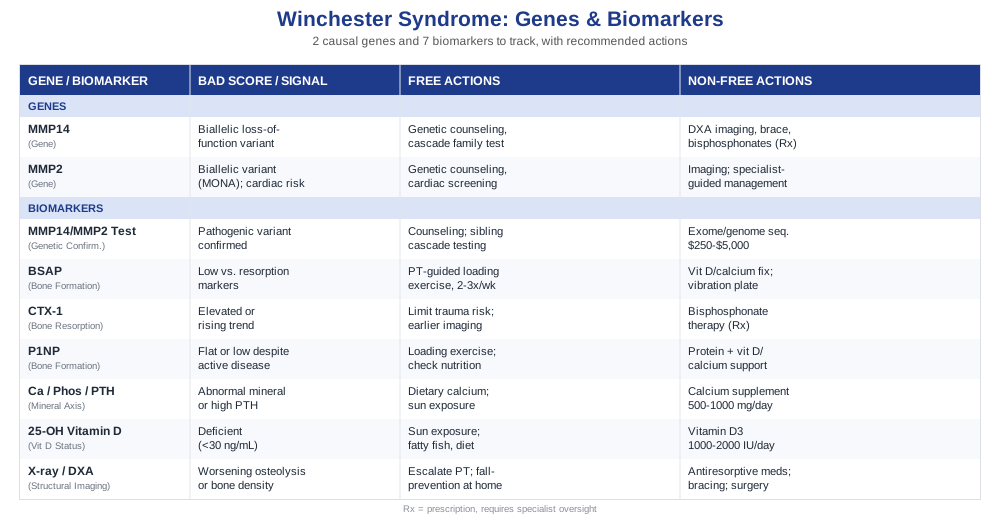
7 Biomarkers That Matter Most in Winchester Syndrome
Because Winchester syndrome is a disorder of bone and connective tissue turnover, the most useful biomarkers are the ones that reveal turnover directly: how fast bone is being broken down, how much is being rebuilt, and whether the minerals needed for that rebuilding are actually available. Genetic confirmation anchors the diagnosis; the remaining six markers are things you and your specialist can realistically recheck every six to twelve months to see whether the disease is quiet or active. Thomas Dayspring and Allan Sniderman have spent careers arguing, in the cardiometabolic world, that clinicians should track the marker that reflects the actual mechanism of disease rather than a cruder proxy — the same logic applies here: a single alkaline phosphatase value tells you less than a formation-resorption pair measured together.
1. MMP14 (and MMP2) Genetic Confirmation
Genetic testing isn't a "biomarker" in the traditional blood-test sense, but it functions as one: it's the single data point that confirms the diagnosis, distinguishes Winchester syndrome from the closely related multicentric osteolysis, nodulosis, and arthropathy (MONA), and tells you whether relatives should be tested. Winchester syndrome is caused by biallelic (both copies) pathogenic variants in MMP14, as first shown by Evans and colleagues, who identified a homozygous signal-peptide mutation (p.Thr17Arg) that impairs MMP14's ability to reach the cell membrane and activate MMP2. A separate condition in the same family of disorders, MONA, can instead be caused by mutations directly in MMP2 itself, which is why accurate gene-level testing — not just a clinical label — matters for prognosis and family planning.
How to measure it
This requires clinical-grade sequencing: a targeted skeletal dysplasia gene panel, clinical exome, or genome sequencing ordered through a medical geneticist, typically confirmed by Sanger sequencing of the specific variant. Cost ranges from roughly $250–$500 for a targeted panel to $1,000–$5,000 for exome/genome sequencing, though many academic medical centers and rare disease research programs (including NIH-affiliated studies) offer this at no cost to confirmed or suspected cases. Consumer ancestry or wellness DNA kits do not reliably detect these variants and should not be used for diagnosis.If the score is bad: the plan without supplements
A confirmed pathogenic MMP14 (or MMP2) result doesn't change with lifestyle, but it does change management: it justifies referral to a metabolic bone disease specialist, baseline ophthalmology exam for corneal involvement, a baseline cardiology work-up for the EKG changes reported in some patients, and cascade testing of siblings and parents (who are typically unaffected heterozygous carriers). Genetic counseling — ideally revisited annually as the child grows or family planning questions arise — costs nothing beyond the appointment and has no side effects.If the score is bad: the plan with supplements or equipment
There is no supplement, device, or biohack that alters a structural loss-of-function mutation. Where "equipment" genuinely helps is downstream: DXA imaging equipment to track bone density trends (below), custom orthotics or bracing from an orthopedic team to protect resorbing carpal and tarsal bones, and, in select cases guided by a specialist, prescription antiresorptive therapy such as bisphosphonates — a medical decision, not a supplement, that should only be pursued with a pediatric or adult metabolic bone specialist weighing fracture risk against known side effects (GI irritation, rare jaw osteonecrosis with long-term use, and the need for periodic drug holidays or "cycling" typically every 3–5 years on therapy).2. Bone-Specific Alkaline Phosphatase (BSAP)
BSAP is produced by active osteoblasts — the cells that build new bone — and is one of the most accessible markers of bone formation activity. In a disease defined by an imbalance between resorption and formation, a BSAP value that's disproportionately low relative to resorption markers is a signal that the skeleton isn't keeping up with the bone being lost, which is exactly the imbalance documented in children with secondary osteoporosis in the pediatric literature.
How to measure it
A standard fasting blood draw processed by most hospital or reference labs; total alkaline phosphatase is inexpensive (around $15–$30) but non-specific, while the bone-specific isoform assay runs roughly $40–$90 and is preferred because it isn't confounded by liver enzyme activity, which matters given how often young patients get routine metabolic panels drawn anyway.If the score is bad: the plan without supplements
Weight-bearing and resistance activity, adapted to joint limitations, is the single most evidence-backed non-pharmacological stimulus for osteoblast activity. This doesn't require impact loading that risks fracture — physical therapist-guided isometric and light resistance work two to three times per week is a reasonable starting cadence, adjusted upward only with a specialist's sign-off given the fragility involved.If the score is bad: the plan with supplements or equipment
If vitamin D and calcium status (markers 5 and 6 below) are also low, correcting those deficiencies first is what actually gives osteoblasts the raw material to act on — supplementing formation markers directly doesn't exist as a strategy. Equipment-wise, a vibration plate or supervised resistance-band program can supplement PT sessions between visits; side effects are minimal but should be cleared with an orthopedist first given skeletal fragility.3. Serum CTX-1 (C-Telopeptide)
CTX-1 is a fragment released when collagen is broken down, making it the most direct available readout of bone resorption — the process most clearly implicated in Winchester syndrome given MMP14's role in collagen and matrix turnover. The International Osteoporosis Foundation and European Calcified Tissue Society specifically recommend pairing CTX-1 with P1NP as reference markers for monitoring skeletal turnover, and that combination is far more informative here than either marker alone.
How to measure it
A morning fasting blood draw is essential, since CTX-1 has meaningful daytime variation and is typically 20–30% higher overnight than in the afternoon. Cost runs approximately $50–$120 depending on the lab, and results should always be interpreted against the same lab's reference range and, ideally, the same time of day each time it's rechecked.If the score is bad: the plan without supplements
Since CTX-1 tracks active bone breakdown, an elevated or rising trend is a reasonable trigger to revisit activity restrictions, minimize high-impact trauma risk, and schedule an earlier-than-planned imaging check rather than waiting for the next routine interval.If the score is bad: the plan with supplements or equipment
Antiresorptive medication (typically a bisphosphonate) is the only intervention with a plausible mechanism to blunt elevated CTX-1, and it is a prescription decision made jointly with a bone specialist — not a supplement. When used, CTX-1 itself becomes the follow-up marker: a fall toward the lab's target threshold (often cited around 0.25 µg/L or lower) after 3–6 months indicates the medication is working; lack of change prompts a dose or agent review.4. P1NP (Procollagen Type 1 N-Propeptide)
P1NP is the mirror image of CTX-1: it's released when new type 1 collagen is being formed, and it's considered by bone metabolism researchers to be one of the most reliable single markers of osteoblast output. Tracking P1NP alongside CTX-1 lets you see the actual ratio of building to breaking down, which is more clinically meaningful than either number in isolation — a principle longevity-focused clinicians like Peter Attia apply broadly by favoring mechanistic pairs of markers over single snapshots.
How to measure it
Also a fasting morning blood draw, often ordered alongside CTX-1 from the same sample; cost is typically $60–$150. Because assay methods differ between labs, consistency in where the test is run matters more for trend-tracking than the absolute number itself.If the score is bad: the plan without supplements
A P1NP that stays flat or low despite active disease suggests the skeleton isn't compensating for losses — this is a signal to prioritize physical therapy-supervised loading exercise (as above) and to ensure growth and nutrition are on track in pediatric patients, since undernutrition independently suppresses bone formation markers.If the score is bad: the plan with supplements or equipment
Adequate protein intake (roughly 1.0–1.2 g/kg/day, adjusted by a dietitian for growing children) provides the amino acid substrate for collagen synthesis; vitamin D and calcium repletion (below) support the same pathway. There's no supplement that directly raises P1NP independent of these underlying inputs, and claims to the contrary aren't supported by evidence.5. Calcium, Phosphorus, and Parathyroid Hormone (PTH)
This trio governs the mineral supply chain that bone remodeling depends on. In a disease where bone is already being resorbed faster than it's rebuilt, an undetected mineral or parathyroid abnormality compounds the problem — either by starving new bone formation of raw material or, if PTH rises secondarily, by accelerating resorption further.
How to measure it
A basic metabolic panel covers calcium and phosphorus for roughly $20–$40; intact PTH is a separate assay, usually $50–$100. These are often already included in the routine labs ordered for a patient with a known bone disorder, so the marginal cost of adding them is minimal.If the score is bad: the plan without supplements
Mild secondary hyperparathyroidism from correctable causes (low sun exposure, low dietary calcium) often improves with diet and lifestyle adjustment alone — increasing dietary calcium sources (dairy, fortified alternatives, leafy greens) and safe, sensible sun exposure, reassessed after 8–12 weeks.If the score is bad: the plan with supplements or equipment
If dietary correction isn't sufficient, calcium supplementation (typically 500–1,000 mg/day in divided doses, since absorption saturates above ~500 mg per dose) is standard, generally well tolerated aside from occasional constipation or, at high doses, kidney stone risk — which is why supplementation should be guided by repeat labs rather than taken indefinitely without monitoring.6. 25-Hydroxyvitamin D
Vitamin D status determines how efficiently calcium is absorbed and used for bone formation, and deficiency is common enough in the general population that it's worth ruling out as a compounding factor rather than assuming all bone loss in Winchester syndrome is purely genetic in origin.
How to measure it
A standard 25-OH vitamin D blood test costs roughly $40–$100 and is widely available; most labs consider 30–50 ng/mL sufficient, though bone specialists managing a skeletal disorder often target the upper half of that range.If the score is bad: the plan without supplements
Regular, moderate sun exposure (roughly 10–20 minutes several times a week, skin-tone and geography dependent) and dietary sources like fatty fish and fortified foods are reasonable first steps for mild insufficiency, rechecked in 2–3 months.If the score is bad: the plan with supplements or equipment
For confirmed deficiency, vitamin D3 supplementation (typically 1,000–2,000 IU/day for maintenance, or a higher supervised repletion dose for several weeks if levels are very low) is inexpensive and low-risk, though very high doses without monitoring can cause hypercalcemia — another reason to recheck levels rather than supplement indefinitely at a fixed dose. There is no cycling requirement; it's typically taken daily and reassessed twice a year.7. Structural Imaging: Hand-Wrist Radiographs and DXA Bone Density
Blood markers show activity; imaging shows accumulated damage and structural change over time, which is ultimately what determines function. In Winchester syndrome specifically, hand and wrist films track the carpal and tarsal osteolysis that defines the disease, while whole-body or spine DXA quantifies the generalized osteoporosis reported in most patients.
How to measure it
Plain radiographs of the hands, wrists, and feet cost roughly $100–$300 depending on region and insurance; DXA scans run approximately $150–$500 out of pocket, though both are frequently covered when ordered for a documented skeletal disorder. Most specialists repeat hand-wrist films annually and DXA every 1–2 years unless symptoms change faster.If the score is bad: the plan without supplements
A worsening scan is the clearest trigger to escalate physical therapy intensity for joint preservation, revisit fall-prevention and activity modification at home and school, and bring forward the next specialist visit rather than waiting for the scheduled one.If the score is bad: the plan with supplements or equipment
This is the imaging result most likely to prompt a bone specialist to consider antiresorptive medication, bracing, or orthopedic surgical consultation for severe joint instability. None of these are self-directed decisions — they depend on the full clinical picture, not the scan alone.What the Genetics Research Actually Shows About MMP14 and MMP2
Biomarkers tell you what's happening right now; genetics explains why it's happening at all. Researchers like Ali Torkamani, who has spent much of his career at Scripps Research studying how whole-genome sequencing uncovers rare disease-causing variants that standard panels miss, and Gary Brecka, who has popularized the idea that everyone should understand their own genetic blueprint before making health decisions, both make the same broader point: acting on real genetic data beats acting on assumptions. For a condition as rare as Winchester syndrome, that principle matters even more than usual, because the causal biology is unusually well characterized for such a rare disease.
MMP14 (MT1-MMP): The Primary Causal Gene
MMP14 encodes a membrane-anchored enzyme that does two jobs: it directly degrades components of the extracellular matrix around bone and cartilage cells, and it activates a second enzyme, pro-MMP2, converting it into its functional form. Loss of MMP14 function breaks both jobs at once. The condition is autosomal recessive, meaning it only appears when both copies of the gene carry a pathogenic variant — a single carrier copy (as seen in unaffected parents) causes no disease. Researchers first confirmed this mechanism by identifying a homozygous signal-peptide mutation (p.Thr17Arg) that prevents the protein from reaching the cell membrane where it needs to work, and a later functional study using a hypomorphic (partially functional) allele demonstrated that the degree of remaining catalytic activity, not just the presence of a mutation, is what determines how severe the phenotype turns out to be — a genotype-severity relationship that's unusually well documented for such a rare disorder.
If the gene is bad, the plan without supplements
Because this is a structural enzyme defect and not a modifiable risk allele, the realistic "plan" is clinical rather than nutritional: confirm zygosity and the specific variant with a genetics team, obtain cascade testing for full siblings, establish a baseline multidisciplinary team (orthopedics, ophthalmology, cardiology, dermatology for skin findings), and revisit that team's monitoring schedule yearly. Genetic counseling before future pregnancies is the single highest-value, zero-cost action available to carrier parents.If the score is bad, the plan with supplements or equipment
No supplement compensates for a nonfunctional collagenase. The equipment-based interventions that matter are diagnostic and supportive rather than corrective: DXA and radiograph imaging to track disease activity (as above), orthopedic bracing or assistive devices as joint involvement progresses, and — for select, severely affected patients — surgical consultation for joint stabilization. Framing this honestly matters more than offering false reassurance.MMP2: The Downstream Partner Gene
MMP2 sits immediately downstream of MMP14 in the same pathway — MT1-MMP's main job on the cell surface is converting inactive pro-MMP2 into active MMP2, which then goes on to remodel collagen in the matrix. In Winchester syndrome itself, MMP2 is usually structurally normal but functionally under-activated because its activator (MMP14) is broken. In the closely related MONA, some families instead carry pathogenic variants directly in MMP2, including one hemopexin-domain mutation associated with cardiac defects in addition to the skeletal findings — which is precisely why accurate gene-level diagnosis, not just a clinical label, changes what a care team screens for.
If the gene is bad, the plan without supplements
When MMP2 itself carries the pathogenic variant (as in some MONA families), the same non-nutritional plan applies: multidisciplinary monitoring, with particular attention to cardiac screening given the reported association, and genetic counseling for the family.If the score is bad, the plan with supplements or equipment
As with MMP14, there is no supplement that restores MMP2 activation. Management is imaging- and specialist-driven, following the same biomarker panel described above.Epigenetic and Modifier Factors: The Honest Uncertainty
Even among patients who share an identical MMP14 genotype, disease severity can vary — a pattern that researchers attribute, tentatively, to modifier genes, mechanical loading differences, and possibly epigenetic regulation of matrix remodeling genes, though this remains an area of early, ongoing research rather than settled science. If you read claims online about specific epigenetic "fixes" for Winchester syndrome, treat them with real skepticism: at this stage, no human study has identified a reliable epigenetic lever for this specific condition, and it would be misleading to suggest otherwise.
The Longevity Book That Reframes How to Think About Fragile Bone
Peter Attia's Outlive: The Science and Art of Longevity isn't written about rare genetic bone disease, but its central argument — that bone and muscle health deserve the same proactive, data-driven attention as heart disease — maps unusually well onto a condition where skeletal fragility is the central problem. It's worth reading not for miracle claims, since it makes none, but for the mindset shift it argues for: measure before you have to, and treat function, not just lab values, as the goal.
1. Medicine 3.0 Means Acting Before the Crisis, Not After
Attia's core argument is that conventional medicine waits for disease to become symptomatic before intervening, while a more proactive approach tracks the underlying markers years earlier. For a progressive condition like Winchester syndrome, this directly supports building a biomarker-tracking habit rather than waiting for a fracture or a functional decline to prompt action.2. Define Your "Centenarian Decathlon"
Rather than vague goals like "stay healthy," Attia recommends defining the specific physical tasks you want to be able to do decades from now — carrying groceries, getting up off the floor, playing with grandchildren — and reverse-engineering training from there. For a patient managing joint and bone fragility, this reframes physical therapy from a chore into a concrete, motivating target.3. Bone Is a Living Organ With a Narrowing Window
The book emphasizes that peak bone mass is substantially built in childhood and adolescence, and that losses sustained early are disproportionately hard to reverse later. This is a strong argument for aggressive monitoring and early specialist involvement in pediatric Winchester syndrome patients specifically, rather than a "wait and see" approach.4. Muscle Is the Organ of Longevity
Attia argues that muscle mass and strength predict long-term function and survival better than almost any other single measure. Preserved muscle also mechanically protects and loads bone, which is one of the few non-pharmacological stimuli for bone formation available to someone with a resorption-driven skeletal disease.5. Exercise Is the Most Potent Legal "Drug" for Bone Density
Beyond medication, the book is unambiguous that mechanical loading through resistance and weight-bearing exercise is the single most effective modifiable driver of bone density in the general population. In fragile-bone conditions this has to be adapted and supervised, but the underlying mechanism — bone responds to load — still applies.6. Stability and Balance Training Prevent the Falls That Cause Fractures
Attia points out that it's often the fall, not just the low bone density, that causes a fracture — which makes balance and stability training a distinct, underrated intervention. For a patient with already-compromised carpal and tarsal bones, reducing fall risk is arguably as protective as any lab value on this list.7. Nutrition Should Serve a Specific Purpose, Not a Trend
Rather than following generic diet trends, the book argues nutrition should be evaluated against specific physiological goals — in this case, adequate protein and micronutrient intake to support the collagen and mineral demands of bone remodeling discussed earlier in this article.8. Track Objective Data, Not How You Feel
A recurring theme is that subjective feeling is a poor guide to slow-moving disease processes; objective markers catch change long before symptoms do. This is the same argument underlying the seven-biomarker panel above.9. The "Marginal Decade" Is About Quality, Not Just Quantity, of Life
Attia distinguishes lifespan from healthspan, arguing that maintaining function in later years matters as much as living longer. For a chronic condition diagnosed early in life, this reframes the goal as sustained mobility and independence, not just avoiding worst-case outcomes.10. Build a Team, Don't Go It Alone
The book repeatedly emphasizes that proactive, data-driven health management works best with a coordinated team rather than a single generalist. For a rare disease like Winchester syndrome, this validates what specialists already recommend: a coordinated geneticist, orthopedist, ophthalmologist, and physical therapist team, rather than fragmented, one-off care.Complementary Approaches Worth Considering
No complementary therapy changes the underlying genetics or bone biology of Winchester syndrome, and evidence specific to this exact condition doesn't exist given how rare it is. What follows instead is evidence drawn from closely related contexts — chronic musculoskeletal pain, pediatric procedural distress, and rare disease coping — applied cautiously and honestly rather than oversold.
Massage Therapy
Massage therapy is a hands-on manipulation of soft tissue that may help manage the chronic joint pain and muscle guarding that often accompany progressive joint involvement, without placing direct load on fragile bone. A large systematic review and meta-analysis of randomized controlled trials found that massage therapy improved function in populations with musculoskeletal pain, though effect sizes were modest and study quality varied. For someone with Winchester syndrome, this means seeking a licensed therapist experienced with fragile or connective-tissue conditions, communicating clearly which joints and bones require avoided pressure, and treating it as an adjunct to physical therapy rather than a replacement for it.Mindfulness Meditation / MBSR
Mindfulness-based stress reduction is a structured meditation practice originally developed for chronic pain management, and it's relevant here because living with a progressive, rare, incompletely treatable condition carries a real psychological burden alongside the physical one. A systematic review and meta-analysis of 38 randomized controlled trials found that mindfulness meditation produced small but statistically significant improvements in pain and quality of life, while noting substantial heterogeneity across studies. A realistic starting point is an 8-week structured MBSR course, either in person or via a validated app-based program, practiced for 20–30 minutes daily; there are no physical side effects, though it should be viewed as a coping tool rather than a treatment for the underlying disease.Biofeedback
Biofeedback uses real-time physiological signals — often heart rate variability or muscle tension — to teach self-regulation skills that can reduce the perceived intensity of chronic pain. A systematic review and meta-analysis of psychological therapies for children with chronic pain found that biofeedback, alongside relaxation therapy and cognitive-behavioral therapy, produced meaningful reductions in pain among pediatric patients, though the authors also noted a continued need for larger, higher-quality trials. This is particularly relevant for younger Winchester syndrome patients navigating recurring medical procedures and appointments; a typical protocol involves 6–8 weekly sessions with a trained clinician, with no meaningful side effects reported.Music Therapy
Music therapy — whether active (with a trained therapist) or passive (structured listening) — has the most direct pediatric evidence base of the four approaches here, specifically around reducing distress during medical procedures, which are common for patients undergoing repeated imaging and specialist evaluations. A systematic review of randomized controlled trials on music for pain and anxiety in children undergoing medical procedures found consistent reductions in both outcomes. In practice, this can be as simple as a curated playlist during blood draws or imaging appointments, or a formal referral to a certified music therapist for children facing frequent, anxiety-provoking procedures; there are no known risks.Conclusion
Winchester syndrome comes down to a single, well-characterized genetic defect — a broken MMP14 enzyme that fails to activate MMP2 and keep the collagen scaffold of bone properly remodeled — but managing it well comes down to something more practical: tracking the right numbers consistently enough to catch change early. Genetic confirmation anchors the diagnosis. Bone-specific alkaline phosphatase, CTX-1, and P1NP reveal whether formation is keeping pace with resorption. Calcium, phosphorus, PTH, and vitamin D confirm the raw materials are available. Imaging shows what's actually happened structurally over time. None of these numbers, alone or together, offer a cure — but they turn an otherwise opaque, slowly progressing disease into something visible and, to some degree, manageable.
The next concrete step is a conversation, not a purchase: bring this list of seven markers to your next appointment with your geneticist or metabolic bone specialist, ask which of them are already being tracked, and which aren't. If you're a parent of a newly diagnosed child, ask specifically about cascade genetic testing for siblings and a baseline multidisciplinary evaluation. Better information, used consistently, is what actually moves the needle here — not certainty, but fewer blind spots.