This article contains AI generated content.
Fibular Stress Fracture Genes And Biomarkers - 5 Genes And 7 Biomarkers To Track
You've been told to rest, then you've been told to "just build up mileage slowly," and somewhere in between you've been left wondering why your shin pain keeps coming back on the outside of your lower leg instead of healing like everyone said it would. A fibular stress fracture is a small, specific injury, but the advice around it is usually generic: reduce load, wear supportive shoes, take calcium, wait six to eight weeks. That advice isn't wrong, but it treats every fibula and every runner as interchangeable, when the reason one person develops a stress reaction at 20 miles a week and another tolerates 60 miles a week without incident is rarely explained by training volume alone.
The more useful question is what is different about your bone, your hormones, your recovery capacity, and your biomechanics that made this particular bone, at this particular time, unable to keep up with the load you placed on it. That answer lives in a combination of measurable blood markers, bone density data, gait mechanics, and in some cases inherited variation in how your body builds and remodels collagen and mineral. None of this is exotic or expensive to start investigating, and a lot of it is checked far less often than it should be for people who develop repeat stress injuries.
This article takes that more specific approach. It walks through the blood and imaging markers most worth tracking if you've had a fibular stress fracture or keep getting close to one, what each one reveals, and what a sensible response looks like with and without supplements. It also looks at the genetic and epigenetic research behind bone stress injuries, because for some people repeated fractures are not a training error at all, but a signal worth investigating further. Better information here doesn't guarantee an injury-free future, but it does turn a frustrating guessing game into a short list of concrete, checkable things.
Summary
If you keep circling back to the same shin or lower leg pain no matter how carefully you adjust your training, this is likely not just a mileage problem. The article ahead breaks down seven blood and imaging markers, from vitamin D and calcium regulation to bone turnover proteins and sex hormones, that quietly determine how well your fibula can absorb repetitive load, along with realistic costs and both supplement-free and supplement-based paths to improve each one. It then goes further into the genetic layer, covering five genes tied to collagen strength, bone density regulation, and folate metabolism, showing which variants raise risk and what can realistically be done about a "bad" result. Beyond the lab work, it summarizes the ten most useful ideas from Dr. Stacy Sims' research on female-specific training physiology, and closes with complementary approaches, like gait-retraining biofeedback and photobiomodulation, that have actual human evidence behind them for bone stress injuries. Read on before you assume your next training block just needs to be "more careful."
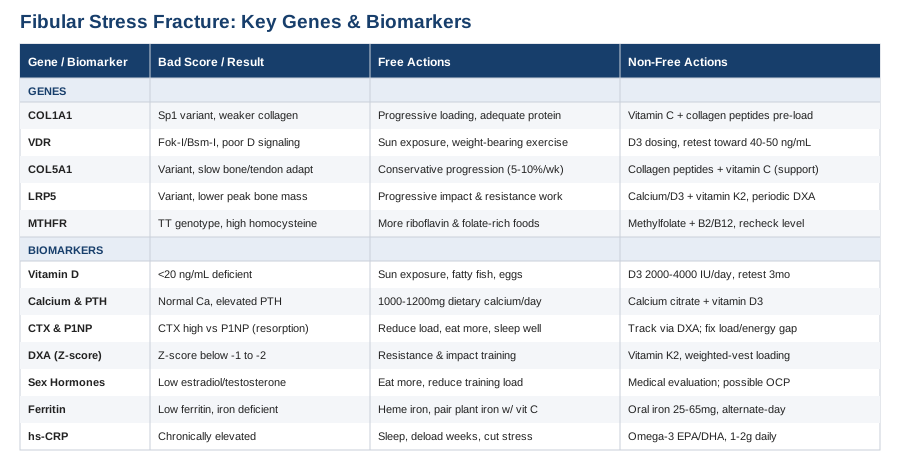
The 7 Biomarkers Worth Tracking For Fibular Stress Fracture Risk
Bone is living tissue that is constantly being broken down and rebuilt, and a stress fracture happens when the breakdown side of that equation temporarily wins, usually because of a combination of mechanical load, insufficient recovery, and a nutritional or hormonal environment that isn't supporting repair fast enough. Blood and imaging markers let you see which part of that equation is off before it turns into another fracture. The seven below are the ones with the most direct relevance to bone stress injury risk, ordered roughly from most affordable and well-established to more specialized.
1. Serum 25-Hydroxyvitamin D
Vitamin D status is the single most studied nutritional factor in stress fracture research, and for good reason. Low 25-hydroxyvitamin D impairs intestinal calcium absorption, which pushes the body to pull calcium from bone to maintain blood levels, weakening the exact structure that needs to handle repetitive impact. Military recruit studies, which involve large groups suddenly exposed to high, uniform training loads, have repeatedly found that recruits with lower vitamin D status are more likely to develop stress fractures, including tibial and fibular fractures.
How To Measure It
A serum 25-hydroxyvitamin D blood test is inexpensive and widely available, typically costing between 15 and 50 dollars out of pocket in the US when not covered by insurance, or included free in some direct-to-consumer panels. A level below 20 ng/mL is generally considered deficient, 20 to 30 ng/mL insufficient, and most bone-health-focused clinicians aim for 30 to 50 ng/mL in physically active people, though there's no universal consensus above that range.
If The Score Is Bad: The Plan Without Supplements Or Equipment
Sensible, regular sun exposure on bare skin, roughly 15 to 20 minutes several times a week around midday depending on latitude and skin tone, is the free option, though it becomes unreliable in winter months at higher latitudes. Increasing dietary intake of fatty fish, egg yolks, and fortified dairy or plant milks helps marginally but rarely closes a real deficiency on its own. Retesting after 8 to 12 weeks of consistent sun exposure is reasonable before assuming this route has failed.
If The Score Is Bad: The Plan With Supplements Or Equipment
Vitamin D3 supplementation is one of the better-studied interventions for stress fracture prevention specifically; a randomized trial in female Navy recruits found that daily supplementation combining vitamin D and calcium meaningfully reduced stress fracture incidence, particularly at the tibia, over an 8-week training period, as documented in a controlled trial on nutritional supplementation in female military recruits (stress fracture prevention trial in female recruits). A typical protocol is 2,000 to 4,000 IU of D3 daily for someone who is deficient, taken with a meal containing fat for absorption, retested at 3 months, then maintained at a lower daily dose (1,000 to 2,000 IU) once in range. Side effects are rare at these doses but very high, unsupervised doses (over 10,000 IU/day for months) can cause hypercalcemia, so retesting rather than guessing is worth the small cost.
2. Calcium And Parathyroid Hormone (PTH)
Calcium and PTH work as a pair: when dietary calcium or vitamin D is inadequate, PTH rises to pull calcium out of bone and keep blood levels stable. A normal serum calcium with an elevated PTH is actually the more informative pattern here, because it can reveal a compensated deficiency that a calcium test alone would miss.
How To Measure It
Both are standard blood draws, often bundled into a metabolic panel; combined, they typically run 30 to 100 dollars depending on whether they're ordered together or separately. Intact PTH is the version to request, not the older, less specific assays.
If The Score Is Bad: The Plan Without Supplements Or Equipment
Prioritizing dietary calcium from dairy, canned fish with bones, tofu set with calcium sulfate, and leafy greens across the day (rather than one large dose, which absorbs less efficiently) is the first move, aiming for roughly 1,000 to 1,200 mg total daily intake for most active adults. Weight-bearing training itself, done progressively rather than in sudden jumps, is also a direct stimulus for bone remodeling that supports this axis.
If The Score Is Bad: The Plan With Supplements Or Equipment
Combined calcium and vitamin D supplementation has direct trial support for reducing stress fracture risk during high-load training blocks, shown in a randomized, double-blind, placebo-controlled trial during military training (calcium and vitamin D supplementation trial maintaining PTH and bone density). A reasonable approach is 500 to 600 mg of calcium citrate or carbonate with meals, twice daily, alongside vitamin D3 as above, for the duration of a heavy training block, then reassessing need. Excess supplemental calcium (well above 2,000 to 2,500 mg/day total) has been associated with kidney stone risk and possibly cardiovascular concerns in some studies, so this is a "correct the gap, don't stack indefinitely" situation.
3. Bone Turnover Markers: CTX And P1NP
CTX (C-terminal telopeptide) reflects the rate of bone breakdown, while P1NP (procollagen type 1 N-terminal propeptide) reflects new bone formation. Looking at both together shows whether your bone remodeling cycle is in a healthy, coupled state or whether resorption is outpacing formation, which is a plausible mechanistic reason some people develop repeat stress injuries even with reasonable training loads.
How To Measure It
These require a specialty lab and are less commonly offered by default; expect 80 to 180 dollars combined, and note that CTX in particular is sensitive to time of day and fasting status, so morning, fasted draws are important for consistent tracking over time.
If The Score Is Bad: The Plan Without Supplements Or Equipment
Elevated CTX relative to P1NP often tracks with under-fueling or high training stress without adequate recovery; the most direct free fix is a deliberate reduction in training load for 2 to 4 weeks combined with an increase in total caloric intake, particularly around training sessions. Sleep consistency matters here too, since a meaningful share of bone remodeling signaling happens overnight.
If The Score Is Bad: The Plan With Supplements Or Equipment
There isn't a supplement that directly "fixes" bone turnover markers independent of addressing the underlying energy balance and training load, so this is one of the few markers where equipment (a DXA scan, discussed next, to track trends) is more useful than a pill. If vitamin D and calcium are also low, correcting those (as above) is the supportive step, retested alongside CTX/P1NP every 3 to 6 months rather than more frequently, since short-term fluctuation is normal.
4. DXA Bone Mineral Density (Z-Score)
A DXA scan doesn't just diagnose osteoporosis in older adults; the Z-score, which compares your bone density to age- and sex-matched peers, is a meaningful data point for younger athletes with repeat stress injuries, since a Z-score below -1 to -2 suggests structurally low bone density relative to peers regardless of the cause.
How To Measure It
A DXA scan typically costs 100 to 400 dollars without insurance depending on region and whether it includes hip, spine, and whole-body sites; some sports medicine and endocrinology clinics offer it at the lower end of that range for athletes. This is a once-a-year-or-less test, not something to repeat monthly.
If The Score Is Bad: The Plan Without Supplements Or Equipment
Progressive, varied weight-bearing and impact loading (not just steady-state running, which is a relatively low osteogenic stimulus compared to jumping or resistance training) is the best-supported non-pharmacological lever for bone density. Two to three sessions a week of resistance training targeting the lower body and core, progressed over months, is a reasonable structure.
If The Score Is Bad: The Plan With Supplements Or Equipment
Beyond calcium and vitamin D correction, some clinicians add vitamin K2 (MK-7, 90 to 180 mcg daily) based on its role directing calcium into bone rather than soft tissue, though the direct trial evidence in athletes specifically is thinner than for D3 and calcium. Weighted vests or resistance machines used for structured loading protocols are the "equipment" version of the free option above. Repeat DXA no sooner than 12 months later, since meaningful change takes time and more frequent scans mostly add radiation exposure and cost without new information.
5. Sex Hormones: Estradiol Or Testosterone
Low estradiol in women (often from low energy availability, heavy training load, or menstrual irregularity) and low testosterone in men are both linked to reduced bone formation and higher stress fracture risk. This marker is especially relevant if periods have become irregular or absent, or if libido, recovery, and mood have quietly declined alongside training volume.
How To Measure It
A basic panel (estradiol, or total and free testosterone, plus LH/FSH for context) runs roughly 100 to 200 dollars, and is best drawn in the morning; for women with cycles, timing relative to cycle phase should be discussed with whoever orders the test.
If The Score Is Bad: The Plan Without Supplements Or Equipment
The most evidence-backed fix when low hormones stem from under-fueling is simply eating more relative to training load, sometimes substantially more than feels intuitive, and reducing training volume temporarily until cycles or normal hormone patterns return. This is discussed at length in the Relative Energy Deficiency in Sport framework, which directly links low energy availability to impaired bone health and stress injury risk in athletes (relative energy deficiency in sport and bone stress injury research).
If The Score Is Bad: The Plan With Supplements Or Equipment
Hormonal correction in this context is a medical decision, not a supplement-shelf one; oral contraceptives are sometimes prescribed for menstrual irregularity but do not reliably restore bone density and shouldn't be assumed to "fix" the underlying issue. This is a marker where the right next step is a conversation with a sports medicine physician or endocrinologist rather than self-directed supplementation, given the complexity and individual variation involved.
6. Ferritin (Iron Status)
Ferritin is easy to overlook in a bone conversation, but iron deficiency is common in endurance athletes, especially menstruating women, and contributes to the broader pattern of fatigue and impaired recovery that makes bone stress injury more likely, partly by compounding low energy availability.
How To Measure It
A ferritin test is inexpensive, typically 20 to 50 dollars, and worth pairing with a full iron panel if ferritin comes back low, since ferritin alone can be misleadingly elevated by inflammation.
If The Score Is Bad: The Plan Without Supplements Or Equipment
Increasing dietary intake of heme iron sources (red meat, poultry, fish) or pairing plant iron sources with vitamin C at meals, and avoiding coffee or tea directly alongside iron-rich meals, are the practical free levers.
If The Score Is Bad: The Plan With Supplements Or Equipment
Oral iron supplementation (ferrous sulfate or a gentler bisglycinate form, typically 25 to 65 mg elemental iron every other day, which recent research suggests absorbs better than daily dosing) is standard for confirmed deficiency, retested at 8 to 12 weeks. Side effects include constipation and gastrointestinal discomfort, which is part of why alternate-day dosing is often better tolerated; iron should not be supplemented without a confirmed low ferritin result, since excess iron has its own risks.
7. High-Sensitivity C-Reactive Protein (hs-CRP)
hs-CRP is a general marker of systemic inflammation, and while it isn't fibula-specific, chronically elevated levels alongside heavy training can signal that recovery is falling behind load, which is the same underlying pattern that predisposes to bone stress injury.
How To Measure It
This is a cheap, common test, usually 15 to 40 dollars, often included in broader wellness panels.
If The Score Is Bad: The Plan Without Supplements Or Equipment
Addressing sleep debt, adding structured deload weeks every 4 to 6 weeks of hard training, and reducing concurrent life stress where possible are the highest-leverage free interventions, since chronic under-recovery is the most common driver in active people who aren't sick or injured elsewhere.
If The Score Is Bad: The Plan With Supplements Or Equipment
Omega-3 fatty acids (roughly 1 to 2 grams combined EPA/DHA daily) have modest evidence for reducing inflammatory markers in athletes and are generally low-risk, though high doses can mildly increase bleeding risk and should be flagged before surgery. This is a supportive measure, not a substitute for actually reducing training load if hs-CRP stays elevated for more than a few weeks.
With the measurable side of the picture covered, it's worth stepping back to ask why some people run into these deficits more easily than others in the first place, which is where genetic variation becomes relevant.
What Genetics And Epigenetics Add To The Picture
Genetic testing for bone stress injury risk is still an emerging field, and researchers like Ali Torkamani, whose work at Scripps Research has focused heavily on translating genomic data into practical risk information, and functional-health educators like Gary Brecka, who popularized broader consumer gene-panel testing, have both pushed the idea that a handful of well-studied SNPs are worth knowing even when the evidence isn't as mature as it is for something like cholesterol genetics. The honest caveat upfront: most of the variants below have modest, sometimes inconsistent effect sizes in human studies, and none of them determine your fate on their own. They shift probability, not certainty, and in several cases the research base is still small candidate-gene studies rather than large-scale replicated trials.
COL1A1 (Collagen Type 1 Alpha 1)
COL1A1 encodes a key structural protein in bone collagen, and the Sp1 promoter polymorphism (rs1800012) has been studied for its effect on collagen quality and bone strength. A systematic review and meta-analysis of candidate gene studies in physically active populations found associations were suggestive for some variants but overall inconsistent and limited by study quality (candidate gene meta-analysis on fracture risk in physically active participants), so this is evidence worth knowing about rather than acting on aggressively.
If The Gene Variant Is Unfavorable: The Plan Without Supplements
Since COL1A1 affects collagen quality rather than mineral content, the most relevant lever is graded mechanical loading, progressive resistance and impact training over months rather than weeks, which gives collagen fibers time to adapt, combined with adequate protein intake (roughly 1.6 to 2.0 g/kg bodyweight daily) to supply raw material for collagen synthesis.
If The Gene Variant Is Unfavorable: The Plan With Supplements Or Equipment
Vitamin C (part of collagen cross-linking) and collagen peptide supplementation (typically 15 g taken 30-60 minutes before loading activity) have some mechanistic and early human evidence for supporting collagen synthesis around exercise, though direct stress-fracture-outcome trials are lacking; this is a low-risk, low-certainty addition rather than a proven fix. No significant side effects are expected at standard doses; cycling isn't necessary since it's essentially a dietary protein source.
VDR (Vitamin D Receptor)
VDR polymorphisms, particularly Fok-I and Bsm-I variants, affect how effectively vitamin D signaling translates into calcium absorption and bone mineral density, even when blood 25-hydroxyvitamin D levels look adequate. This means two people with identical vitamin D blood levels can have meaningfully different bone outcomes depending on VDR genotype, a nuance covered in the same candidate gene meta-analysis referenced above.
If The Gene Variant Is Unfavorable: The Plan Without Supplements
Regular weight-bearing activity and sun exposure remain relevant regardless of genotype, but someone with a less favorable VDR variant may need to aim for the higher end of the normal vitamin D range (closer to 40-50 ng/mL) rather than the low end to get the same functional effect.
If The Gene Variant Is Unfavorable: The Plan With Supplements Or Equipment
This is a case where retesting matters more than dosing harder blindly: supplementing D3 as described in the biomarker section, then confirming with a follow-up blood test rather than assuming a "normal" dose is working, is the sensible approach for someone who knows they carry a less efficient VDR variant. There's no separate VDR-specific supplement; it's about not under-treating based on population-average dosing.
COL5A1
COL5A1 is involved in regulating collagen fibril structure and has been studied more extensively in tendon and ligament injury (like Achilles tendinopathy) but also appears in stress fracture candidate gene research given its role at bone-tendon interfaces. Evidence here is earlier-stage and less consistent than for COL1A1.
If The Gene Variant Is Unfavorable: The Plan Without Supplements
Because COL5A1-related tissue may adapt more slowly to sudden loading changes, the practical response is more conservative progression rates when increasing training volume or intensity, for example capping weekly mileage increases at 5 to 10 percent rather than pushing faster.
If The Gene Variant Is Unfavorable: The Plan With Supplements Or Equipment
There is no strong direct supplement protocol tied specifically to COL5A1; the same collagen-supportive nutrition (adequate protein, vitamin C, gelatin or collagen peptides pre-loading) applies as a general, low-risk supportive measure rather than a targeted fix.
LRP5
LRP5 regulates a Wnt-signaling pathway central to osteoblast activity, and its polymorphisms are among the more consistently replicated genetic findings for bone mineral density, including in physically active men, as shown in the Odense Androgen Study cohort (LRP5 polymorphisms and peak bone mass in physically active men) and in a broader review of LRP5 variants and fracture risk (common LRP5 polymorphism and bone fracture risk). This is one of the stronger genetic signals on this list.
If The Gene Variant Is Unfavorable: The Plan Without Supplements
Since LRP5 activity is influenced by mechanical loading signals, structured, progressive impact and resistance training is a particularly relevant lever here, more so than for some of the other genes, since it works through the same biological pathway the gene affects.
If The Gene Variant Is Unfavorable: The Plan With Supplements Or Equipment
Calcium and vitamin D optimization as described earlier remain foundational, and some clinicians add vitamin K2 for its role in calcium utilization, though LRP5-specific supplement trials don't exist; a DXA scan every 12 to 24 months is the most useful "equipment" investment to track whether the loading strategy is working for this genotype.
MTHFR (C677T Variant)
MTHFR affects folate metabolism and, when the enzyme is less efficient (particularly the TT genotype), can lead to mildly elevated homocysteine, which has been associated with increased fracture risk, especially when riboflavin intake is also low (synergistic effect of MTHFR polymorphism on fracture risk, MTHFR and riboflavin interaction on bone mineral density). This is a nutrient-gene interaction rather than a fixed risk, which makes it one of the more directly actionable findings here.
If The Gene Variant Is Unfavorable: The Plan Without Supplements
Increasing dietary riboflavin (found in eggs, dairy, lean meats, and fortified grains) and folate-rich foods (leafy greens, legumes) directly addresses the mechanism described in the research above, and is the lowest-risk first step.
If The Gene Variant Is Unfavorable: The Plan With Supplements Or Equipment
For confirmed TT genotype carriers with elevated homocysteine, supplementing with methylated B vitamins (methylfolate rather than folic acid, plus B2/riboflavin and B12) is a common approach, typically at standard multivitamin-level doses, rechecking homocysteine after 8 to 12 weeks. Very high-dose folic acid supplementation (as opposed to methylfolate) has some concern around masking B12 deficiency, so using the methylated form and checking B12 alongside it is the more careful path; side effects at standard doses are minimal.
The genetic layer explains predisposition, but day-to-day physiology, especially around training load, fueling, and hormones, is where a lot of the actionable insight lives, which is exactly the territory one influential body of research has focused on.
What ROAR By Stacy Sims Reveals About Bone Stress Injuries In Runners
Dr. Stacy Sims' book ROAR draws on exercise physiology research to argue that a large share of standard training and recovery advice, including around bone stress injuries, was built on studies of male physiology and applied to everyone by default. For anyone dealing with recurrent fibular stress fractures, especially women, this reframing is directly relevant, since hormonal fluctuation, energy availability, and training periodization interact with bone health in ways generic advice tends to flatten out. Below are ten of the most consequential ideas from that body of work.
1. Women Are Not Small Men, Physiologically
Training plans, recovery windows, and fueling guidelines built around male physiology don't automatically transfer, and applying them without adjustment can under-fuel and under-recover female athletes in ways that quietly erode bone health over a season.
2. The Menstrual Cycle Is A Vital Sign
Cycle regularity is treated in this framework as a meaningful health indicator, not a side issue; a disrupted or absent cycle in an athlete is a signal worth investigating rather than a convenient side effect of "being lean and fit."
3. Low Energy Availability Is Often Invisible
An athlete doesn't need to have a diagnosed eating disorder to be under-fueling relative to training demand; simply not adjusting intake upward as training volume climbs is enough to create the deficit that impairs bone remodeling.
4. Carbohydrate Needs Shift Across The Cycle
The book argues for adjusting carbohydrate and overall caloric intake across the menstrual cycle phases rather than eating identically every day, since hormonal shifts change substrate use and recovery capacity.
5. Strength Training Is Protective, Not Optional
Heavy, low-repetition resistance training is framed as essential rather than supplementary for bone density and injury resilience, particularly for women, who often under-lift relative to what their bones and connective tissue can adapt to.
6. Sleep And Stress Hormones Interact With Bone Repair
Chronic under-recovery, driven by poor sleep or high life stress layered on training stress, is treated as directly relevant to injury risk rather than a separate wellness issue.
7. Post-Exercise Nutrition Timing Matters More For Some Athletes
The recovery window after hard training is emphasized as a distinct opportunity for tissue repair, particularly for athletes already running an energy deficit, where missing this window compounds an existing shortfall.
8. Heat And Altitude Adaptation Differ By Sex
While more relevant to performance than bone health directly, this idea reinforces the book's broader argument: physiological responses to training stress are not uniform, and generic protocols miss meaningful individual variation.
9. Bone Density Peaks Young And Must Be Protected, Not Just Built
Peak bone mass is largely established by the mid-twenties to early thirties, which reframes bone stress injuries later in life less as a building problem and more as a protection and maintenance problem tied to ongoing hormone and nutrition status.
10. Standard Return-To-Run Protocols May Not Address The Root Cause
A protocol that simply reduces mileage and rebuilds it slowly, without addressing an underlying energy deficit, hormonal disruption, or strength deficit, treats the symptom and leaves the door open for the exact same injury to recur.
These ideas point toward addressing the underlying physiological environment rather than only the training log, and several complementary approaches have direct evidence for supporting that same goal.
Complementary Approaches That Support Bone Healing And Prevention
Beyond blood work, genetics, and training structure, a small number of complementary techniques have real, condition-relevant human evidence behind them, rather than being generically "good for health." The three below are worth knowing about specifically because they address mechanisms directly tied to bone stress injury: impact loading patterns, tissue healing signaling, and bone-supportive movement.
Biofeedback (Running Gait Retraining)
Biofeedback in this context means giving a runner real-time information, usually through an accelerometer or visual/audio cue, about the impact forces traveling through their tibia and fibula with each stride, so they can consciously adjust their gait to reduce those forces. This matters directly for fibular stress fracture risk because peak tibial and fibular loading rates are one of the more consistent biomechanical predictors of bone stress injury in runners.
A systematic review and meta-analysis of real-time tibial acceleration feedback found consistent reductions in peak tibial acceleration and vertical loading rates across studies, with effects that in some cases persisted after the feedback was removed (systematic review of real-time tibial acceleration feedback in gait retraining), building on earlier foundational work showing runners could reduce loading rates by roughly 20 to 30 percent over eight retraining sessions and maintain the change a month later (gait retraining to reduce lower extremity loading in runners).
Realistically, this requires access to a running lab or sports physical therapist with wearable accelerometer feedback equipment, typically over 6 to 8 sessions; some newer wearable devices and apps aim to bring a simplified version of this to runners without lab access, though they vary in validation quality. This is best pursued after acute pain has resolved, as a prevention and return-to-run strategy rather than a treatment for an active fracture.
Low-Level Laser Therapy (Photobiomodulation)
Photobiomodulation uses specific wavelengths of red or near-infrared light applied to injured tissue, with proposed mechanisms including improved mitochondrial energy production in cells and enhanced angiogenesis, both relevant to bone healing speed after a stress fracture is diagnosed.
Human trial evidence in bone fracture healing is still more limited than the mechanistic and animal literature, but existing studies suggest a role in early callus formation and functional recovery; a review on photobiomodulation for acute tissue injury and sport recovery outlines this evidence base (photobiomodulation for acute tissue injury and sport performance recovery), and an earlier clinical study specifically examined its effect on the fracture healing process (effect of low-level laser therapy on fracture healing). The evidence is promising but not yet definitive for stress fractures specifically, as most trials involve traumatic rather than overuse fractures.
In practice, this means treatment sessions administered by a physical therapist or sports medicine clinic, typically 2 to 3 times weekly for several weeks during the healing phase, used alongside (not instead of) standard load management and the nutritional corrections described earlier. It is low-risk with minimal reported side effects, though it should be viewed as a supportive adjunct rather than a primary treatment.
Yoga
Yoga is relevant here less for the fracture itself and more for the broader bone health and body-awareness context around it, particularly for athletes whose stress fractures are tied to under-fueling or menstrual irregularity, where yoga has been studied specifically for its effects on bone metabolism markers.
A systematic review of randomized controlled trials examining yoga's effects on balance, falls, and bone metabolism found mixed but occasionally favorable results on bone turnover markers, alongside more consistent benefits for balance and fall risk (systematic review of yoga effects on bone metabolism and falls), while noting that effects on bone mineral density specifically were inconsistent across trials and shorter programs often showed no measurable BMD change.
A realistic approach is two to three weight-bearing or standing-pose-focused sessions weekly, treated as a complement to resistance training rather than a replacement for it, since the bone-density evidence alone doesn't support yoga as a standalone bone-building strategy. It's a reasonable, low-risk addition particularly for stress management and body awareness, but expectations about direct bone density gains should stay modest.
Conclusion
A fibular stress fracture rarely has a single cause, and the most useful shift you can make is treating it as a signal to investigate rather than an event to simply recover from and forget. The seven biomarkers here, vitamin D, calcium and PTH, bone turnover markers, DXA density, sex hormones, ferritin, and hs-CRP, give a practical, mostly affordable starting map of where your bone's remodeling capacity might be falling short. The genetic layer adds context for why two people with similar training loads can have very different outcomes, though it should inform your approach rather than dictate it, given how early much of this research still is. And the training and recovery philosophy behind work like Stacy Sims', along with targeted complementary approaches like gait-retraining biofeedback, add the behavioral and biomechanical piece that lab values alone can't capture.
None of this replaces a proper evaluation from a sports medicine physician, especially if you're dealing with an active fracture or repeated injuries. But walking into that conversation with actual numbers, rather than just a description of your symptoms, changes what kind of conversation it can be. A sensible next step is picking two or three of the biomarkers above that you've never actually had tested, getting them checked, and bringing the results to whoever is helping manage your training and recovery.
Women's Health Endocrine & Metabolic
Musculoskeletal: Bone Conditions