This article contains AI generated content.
Hip Flexor Tendinopathy: 6 Genes and 7 Biomarkers to Track
If you've been told to "just rest it," "stretch more," or "strengthen your hip flexors" and the deep, nagging ache at the front of your hip still hasn't budged, you already know that generic advice runs out fast. Hip flexor tendinopathy — whether it's the iliopsoas tendon catching and aching with every step up, every sprint start, every kick — doesn't behave the same way in every body, and it doesn't respond to the same fix in every body either. Two people with an almost identical MRI can have completely different trajectories: one recovers in ten weeks of loading, the other lingers for a year despite doing "everything right."
Part of that difference is mechanical — hip position, training load, technique. But part of it is also biological, and this is the part generic advice never touches. Chronic low-grade inflammation, how your body handles glucose, how your cholesterol particles behave, your vitamin D status, even variants in the genes that build and remodel your tendon's collagen — all of these shape how resilient a tendon is and how well it heals. A rehab plan that ignores this internal environment is working with half the picture.
This article works with the other half. Instead of another list of stretches, it looks at the measurable biomarkers and the genetic variants that research has linked to tendon health, tendon injury risk, and tendon repair capacity — and turns each one into something you can actually act on, with and without supplements.
None of this replaces a proper diagnosis or a loading program built with a physiotherapist. But better information tends to produce better decisions, and knowing which internal levers are worth pulling — and which are probably not the problem — is a meaningful head start. The sections ahead cover the biomarkers worth tracking first, the genetic variants worth knowing about, ten evidence-based ideas from tendon researcher Dr. Keith Baar's work, and a short review of complementary approaches with real supporting evidence.
Summary
Hip flexor tendinopathy sits at the intersection of mechanical overload and internal biology, and the biology part is where most people never look. Elevated LDL cholesterol and ApoB particles can physically infiltrate tendon tissue. A prediabetic HbA1c can nearly triple your odds of a lower-limb tendon injury. Uric acid crystals can quietly inflame tendon tissue years before a gout diagnosis ever shows up. And genetic variants in collagen-building genes like COL5A1 and COL1A1 can make some tendons inherently stiffer, slower to remodel, or more prone to breakdown under repeated load.
This piece walks through seven of the most useful blood biomarkers to test, what each one reveals about your tendon's internal environment, how to measure it (with real cost ranges), and specific plans — with and without supplements — for improving a bad score. It then covers six genes with real human evidence in tendon and connective tissue research, what a risk variant may mean, and how to train around it. A dedicated section distills ten of the most useful, evidence-grounded ideas on tendon loading and collagen synthesis from tendon physiologist Dr. Keith Baar's research and public talks, including the specific nutrient-timing protocol that measurably doubles collagen synthesis. Finally, a short review covers which complementary approaches — photobiomodulation, massage, and mindfulness-based practices — actually have supporting human evidence for tendinopathy, and which don't.
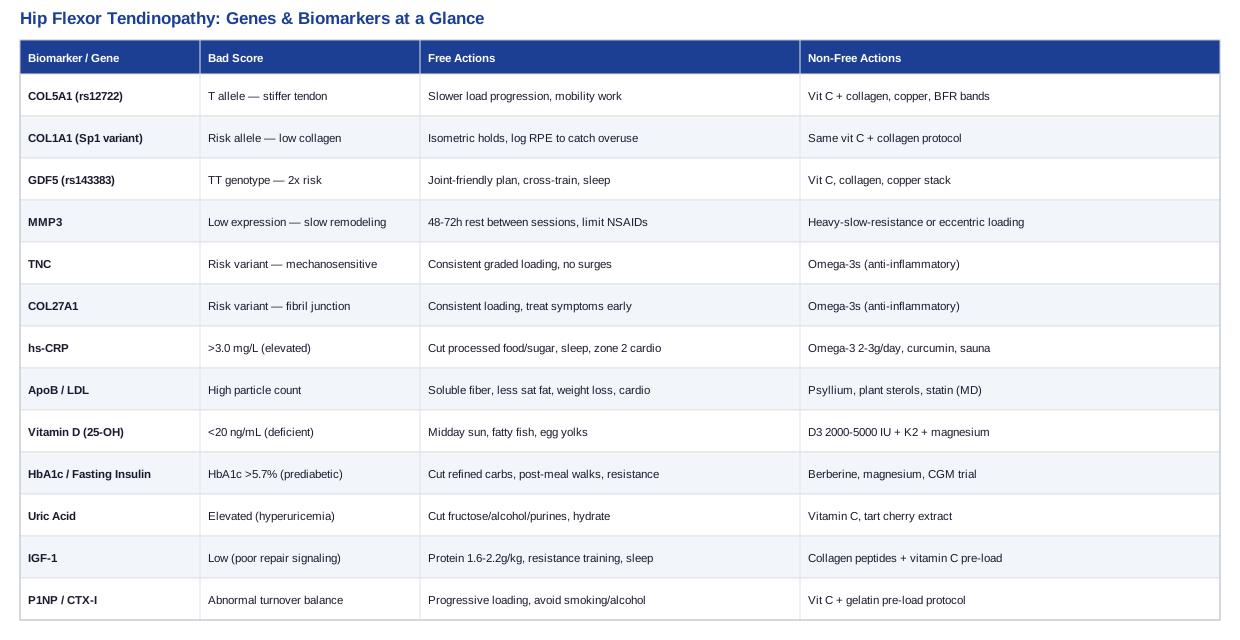
Seven Biomarkers Worth Tracking For Hip Flexor Tendinopathy
Tendon tissue has poor blood supply and a slow metabolic turnover rate, which is exactly why it responds so strongly to the surrounding biochemical environment — inflammation, blood sugar, lipids, and hormones all move faster than tendon collagen does, and they all leave a mark on it. The biomarkers below aren't a diagnostic panel for hip flexor tendinopathy specifically — no blood test can see the iliopsoas tendon directly — but each one has documented links to tendon pathology, tendon healing capacity, or both. Testing them turns a vague "my tendon isn't healing" into a specific, addressable list.
1. High-Sensitivity C-Reactive Protein (hs-CRP)
Why it matters: Tendinopathy was once thought to be a purely degenerative, non-inflammatory condition, but that view has shifted. Systemic low-grade inflammation is now understood to interact with local tendon pathology, and elevated hs-CRP has been specifically associated with tendon tearing — a study on the long head of the biceps tendon found a clear association between high-sensitivity CRP and tendon damage in patients with biceps tendon tearing. A body running "hot" with background inflammation is a worse environment for a tendon trying to remodel itself.
How to measure it
A standard hs-CRP blood draw costs roughly $15 to $40 through direct-to-consumer labs (Quest, LabCorp, or similar), or is often included free in an annual physical panel. Optimal is generally considered under 1.0 mg/L, moderate risk 1.0–3.0 mg/L, and elevated above 3.0 mg/L (values above 10 usually indicate acute infection rather than baseline inflammation and should be retested).If the score is bad, the plan without supplements
Reduce ultra-processed food and added sugar, which are reliably associated with higher CRP. Prioritize 7–9 hours of sleep, since even a few nights of poor sleep measurably raises inflammatory markers. Add 150 minutes per week of zone 2 cardio. Address visceral fat, which is metabolically active and a direct contributor to systemic inflammation. Treat any lingering gum disease or dental infection, both are underrated CRP drivers.If the score is bad, the plan with supplements or equipment
Omega-3 EPA/DHA, 2–3 g/day combined, taken daily with food (fish-burp and mild blood-thinning effects are the main side effects; avoid or discuss with a doctor first if on anticoagulants). Curcumin with piperine, 500–1,000 mg/day, cycled 8–12 weeks on, 2–4 weeks off (can cause GI upset and is best avoided with gallstones). Infrared sauna, 15–20 minutes, 3 times a week (avoid if pregnant or if you have uncontrolled low blood pressure). Retest hs-CRP after 8–12 weeks to confirm direction of change before continuing any protocol indefinitely.2. ApoB and LDL Cholesterol
Why it matters: This is the biomarker lipidologists like Thomas Dayspring and Allan Sniderman, and physicians like Peter Attia, spend the most time on — and it turns out to matter directly for tendons, not just arteries. LDL particles can physically infiltrate tendon tissue, and a clinical study found a clear positive correlation between serum LDL-cholesterol levels and Achilles tendon thickness in patients with hypercholesterolemia, with HDL and ApoA-I acting as protective factors. Sniderman's long-standing argument is that ApoB — the actual count of atherogenic particles — is a better risk marker than LDL-C alone, and that logic extends naturally to tendon tissue, since it's particle number, not just cholesterol content, that drives infiltration.
How to measure it
A standard lipid panel (total cholesterol, LDL-C, HDL-C, triglycerides) costs $10–$30 and is usually covered by insurance. ApoB specifically requires asking for it by name — it's not automatically included — and costs $50–$120 out of pocket through Quest, LabCorp, Boston Heart Diagnostics, or direct-to-consumer platforms.If the score is bad, the plan without supplements
Increase soluble fiber intake, reduce saturated and trans fat, lose excess weight if present, and add regular aerobic exercise — all of which lower ApoB particle number through well-established mechanisms.If the score is bad, the plan with supplements or equipment
Psyllium husk, 5–10 g/day with water, daily, well tolerated but should be introduced gradually to avoid bloating. Plant sterols/stanols, around 2 g/day with meals. If ApoB or LDL is very high, especially alongside visible tendon thickening (a possible sign of tendon xanthoma and familial hypercholesterolemia), this is a case for a physician referral and possible statin or ezetimibe therapy — not self-treatment. Worth noting: statins themselves carry a rare, well-documented association with tendinopathy and tendon rupture, so lipid management in someone with active tendon symptoms should be discussed with a doctor rather than self-directed.3. Vitamin D (25-Hydroxyvitamin D)
Why it matters: Vitamin D receptors are present in tenocytes, and vitamin D plays a role in regulating collagen synthesis and protecting tendon cells from oxidative stress. A large retrospective study found that vitamin D deficiency was significantly associated with distal biceps tendon injury, with deficient patients showing meaningfully higher incidence rates than matched controls.
How to measure it
A standalone 25-OH vitamin D test costs $40–$70, or $60–$80 through an at-home fingerstick kit. Target range is generally 40–60 ng/mL; under 20 ng/mL is considered deficient.If the score is bad, the plan without supplements
15–20 minutes of midday sun exposure on bare skin several times a week (adjusted for skin tone and season), plus dietary sources like fatty fish and egg yolks.If the score is bad, the plan with supplements or equipment
Vitamin D3, 2,000–5,000 IU/day, ideally with 100–200 mcg of vitamin K2 (MK-7) to support proper calcium utilization, and magnesium to support D3 conversion. Retest after 8–12 weeks. Side effects at high sustained doses (above 10,000 IU/day long-term) include nausea and elevated calcium; more is not better here — the goal is a healthy range, not a ceiling.4. HbA1c and Fasting Insulin
Why it matters: Elevated blood glucose drives the formation of advanced glycation end-products (AGEs), which stiffen and embrittle collagen fibers. This isn't a theoretical concern for people with a diabetes diagnosis only — a large 19-year randomized controlled trial follow-up found that people with HbA1c in the prediabetic range (above 5.7%) had three times higher odds of lower-extremity tendon injury than those with normal levels.
How to measure it
HbA1c costs $10–$20; fasting insulin, needed to calculate HOMA-IR and catch insulin resistance before HbA1c rises, costs $20–$40. A continuous glucose monitor (Levels, Stelo, Libre) is a more advanced option at roughly $50–$100/month and shows real-time glucose spikes that a single blood draw misses.If the score is bad, the plan without supplements
Reduce refined carbohydrate and added sugar intake, take a 10–15 minute walk after meals, add resistance training 2–3 times a week, and prioritize protein-forward meals to blunt glucose spikes.If the score is bad, the plan with supplements or equipment
Berberine, 500 mg two to three times daily with meals, cycled 8–12 weeks on and 2–4 weeks off (GI upset is common; check for interactions if on other glucose-lowering medication). Magnesium glycinate, 200–400 mg/day, to support insulin sensitivity. A CGM for 2–4 weeks can be a genuinely useful diagnostic tool even without ongoing use.5. Uric Acid
Why it matters: Hyperuricemia leads to monosodium urate crystal deposition in tendon tissue, triggering an inflammasome-driven inflammatory response well before a clinical gout flare appears. Case-control research found hyperuricemia to be an independent risk factor for Achilles tendon rupture, and laboratory work has shown uric acid directly impairs tendon stem and progenitor cell function, reducing collagen expression and increasing matrix-degrading enzyme activity.
How to measure it
Serum uric acid costs $10–$20 standalone, or is often bundled into a comprehensive metabolic panel.If the score is bad, the plan without supplements
Reduce fructose, alcohol (especially beer), and purine-dense foods like organ meats and certain shellfish. Increase water intake and address excess body weight, which independently raises uric acid.If the score is bad, the plan with supplements or equipment
Vitamin C, 500–1,000 mg/day, has a mild uricosuric effect (avoid high doses if prone to kidney stones). Tart cherry extract, cycled 6–8 weeks, has some supporting evidence for lowering uric acid. If levels are high alongside a gout history, this is a case for physician-guided urate-lowering therapy rather than a self-directed supplement stack.6. IGF-1 (Insulin-Like Growth Factor 1)
Why it matters: IGF-1 is a central driver of tenocyte proliferation and collagen synthesis during tendon repair, acting through the PI3K/AKT and ERK signaling pathways at every stage of the healing response, as described in a recent review on IGF-1's role in tendon regenerative therapy. It's important to be upfront here: most of the strongest evidence is preclinical and animal-based, and IGF-1's benefit in human chronic tendinopathy specifically — as opposed to acute injury — has not been clearly established in clinical trials. Treat this biomarker as informative, not as a treatment target.
How to measure it
Serum IGF-1 costs $50–$100, usually ordered as part of a broader hormone panel.If the score is bad, the plan without supplements
Adequate protein intake (1.6–2.2 g/kg bodyweight) to support the raw material IGF-1 acts on, progressive resistance training, and 7–9 hours of sleep, since IGF-1 and growth hormone are both released in pulses during deep sleep.If the score is bad, the plan with supplements or equipment
Collagen peptides, 15–20 g, taken with vitamin C 30–60 minutes before loading (this overlaps directly with the Keith Baar protocol discussed later in this article). Unregulated IGF-1 or growth hormone injections are not a reasonable response to a low lab value — they are illegal without a prescription and carry meaningful risks, including insulin resistance and theoretical cancer-promoting effects. This is a marker to track, not to force upward artificially.7. Collagen Turnover Markers (P1NP and CTX-I)
Why it matters: P1NP (procollagen type I N-terminal propeptide) and CTX-I (C-terminal telopeptide of type I collagen) reflect the balance between collagen synthesis and collagen breakdown throughout the body. Worth being honest about their limits: these markers are validated primarily for bone metabolism, and while type I collagen propeptides are also produced by tendon and other soft tissues, most of the circulating pool comes from bone, which turns over faster than tendon. In practice, these markers function as an indirect proxy for whole-body collagen metabolism rather than a tendon-specific readout — still useful context, especially if bone and tendon issues are both present, but not a direct window into the iliopsoas tendon.
How to measure it
These are specialty tests, $80–$150, not routinely ordered by a general practitioner. Sports medicine clinics, endocrinologists, or functional medicine practitioners are the most likely to offer them.If the score is bad, the plan without supplements
Progressive tendon loading is the single strongest lever here — mechanical loading directly drives collagen remodeling. Avoid smoking, which impairs collagen cross-linking, and limit excess alcohol.If the score is bad, the plan with supplements or equipment
The vitamin C and gelatin/collagen pre-loading protocol described in the next section. Because bone and tendon collagen turnover cycles are slow, retesting every 3–6 months is appropriate — there's no benefit to frequent retesting or aggressive supplement cycling here.Biomarkers tell you about the internal environment your tendon is healing in today. Genetics tell you about the structural blueprint that environment is working with — a different, longer-term layer of the same picture.
What Genetics And Epigenetics Research Suggests About Tendon Resilience
Consumer genomics has made variants that used to live only in research papers into something people can actually look up in their own raw DNA data. Scripps Research geneticist Ali Torkamani has spent years working on translating raw genomic data into actionable health insight, and figures like Gary Brecka have brought mainstream attention to the idea that a single-letter DNA variant can meaningfully shift injury risk or recovery capacity. That attention is a double-edged sword: it's genuinely useful when grounded in real studies, and misleading when it isn't. The six genes below all have actual human research behind them in tendon or connective tissue injury — some with fairly consistent replication, others from a single case-control study that needs more confirmation. Both categories are noted honestly below.
COL5A1
COL5A1 encodes type V collagen, which nucleates and regulates the diameter of type I collagen fibrils — essentially setting how thick and how densely packed your tendon's structural fibers are. The rs12722 variant has been repeatedly linked to tendon and ligament injury risk: a British case-control study found specific COL5A1 allele combinations modified the risk of Achilles tendon pathology, and a separate study found this variant interacting with COL1A1 to affect musculoskeletal injury risk in physically active adults. This is one of the better-replicated findings in the tendon genetics literature, though effect sizes are modest and this is one contributing factor among many, not a diagnosis.
If the gene variant is unfavorable, the plan without supplements is to be more conservative with loading progression than a generic program suggests — smaller volume jumps, longer adaptation windows between phases, and strict adherence to a roughly 10% weekly load increase rather than aggressive ramping. Prioritizing hip mobility and movement mechanics reduces the chance that a structurally stiffer tendon is asked to absorb load it isn't shaped for.
If the gene variant is unfavorable, the plan with supplements or equipment includes the vitamin C plus collagen peptide protocol before loading sessions (detailed in the next section), along with copper, 1–2 mg/day, which acts as a cofactor for lysyl oxidase, the enzyme responsible for collagen cross-linking (stay under the 10 mg/day upper limit — copper toxicity is rare but real at high doses). Blood flow restriction (BFR) bands, $30–$60, allow tendon-stimulating loading at lower absolute weights, useful when pain limits how much load a stiffer tendon can otherwise tolerate. No cycling is needed for the nutrition side — apply it on training days only.
COL1A1
COL1A1 codes for the primary structural protein in tendon — type I collagen. A regulatory polymorphism near the Sp1 binding site affects how much of this collagen gets expressed, and the same study referenced above found COL1A1 and COL5A1 variants interacting to shape overall connective tissue injury risk.
If the gene variant is unfavorable, the plan without supplements centers on tendon-specific isometric loading — 30–45 second holds, five repetitions, several times a week — which has been shown to stimulate tendon adaptation without provoking flare-ups, plus a simple training log or RPE rating to catch overuse before it becomes symptomatic.
If the gene variant is unfavorable, the plan with supplements or equipment is largely the same collagen-and-vitamin-C nutritional support described for COL5A1, since both genes act on the same structural protein pool.
GDF5
GDF5 (growth differentiation factor 5) is a master regulator of joint, tendon, and ligament development. The rs143383 variant in its regulatory region has been shown to reduce GDF5 expression, and carriers of the TT genotype have roughly twice the risk of developing Achilles tendon pathology compared to other genotypes.
Because GDF5 expression is largely fixed by development rather than lifestyle, there isn't a direct way to "raise" it. If the gene variant is unfavorable, the plan without supplements is to lean harder on the levers that are controllable: joint-friendly progression, cross-training to reduce repetitive hip flexion load, and full sleep, since growth hormone pulses during deep sleep support general tissue regeneration.
If the gene variant is unfavorable, the plan with supplements or equipment is the same general connective-tissue-support stack (vitamin C, collagen, copper) rather than anything GDF5-specific — be skeptical of any product marketed as "boosting GDF5," since no such supplement has real supporting evidence.
MMP3
MMP3 (matrix metalloproteinase 3) breaks down and remodels the extracellular matrix — it's the demolition crew that clears damaged collagen so new collagen can be laid down. Specific MMP3 genotypes have been shown to interact with COL5A1 to modify Achilles tendinopathy risk, and genotypes associated with lower MMP3 expression appear to leave damaged matrix uncleared for longer, contributing to degenerative changes.
If the gene variant is unfavorable, the plan without supplements is built around recovery timing rather than nutrition: allow 48–72 hours between tendon-specific loading sessions rather than daily work, since remodeling — MMP3's job — takes time. It's also worth limiting routine NSAID use for tendon pain unless medically necessary, since NSAIDs can blunt the same remodeling signaling this gene already under-produces.
If the gene variant is unfavorable, the plan with supplements or equipment favors structured heavy-slow-resistance or eccentric loading protocols (Alfredson-style), done in periodized blocks of around 12 weeks with a scheduled deload week, which has been shown to improve tendon remodeling markers regardless of genotype.
TNC and COL27A1
TNC (tenascin-C) is an extracellular matrix glycoprotein specifically induced by mechanical stress, and COL27A1 is involved in collagen fibrillogenesis at the cartilage-tendon junction. A case-control study in high-level Croatian athletes found variants in both genes associated with tendinopathy risk. This is more recent, earlier-stage evidence than the COL5A1 or GDF5 findings above, and it hasn't yet been replicated across multiple independent cohorts — worth knowing, but held more loosely.
If either gene variant is unfavorable, the plan without supplements is consistent, graded mechanical loading rather than sporadic high-intensity sessions, since TNC expression itself is mechanically triggered — steady loading may matter more for this genotype than for others. Avoiding sudden training surges and addressing early symptoms quickly, rather than pushing through, is the more conservative and currently better-supported approach.
If either gene variant is unfavorable, the plan with supplements or equipment doesn't currently have anything gene-specific to recommend — general anti-inflammatory nutrition (omega-3s, as described in the hs-CRP section) is a reasonable default until more targeted research exists.
A broader review of the genetics of sports injury by Collins and colleagues is a useful next read for anyone who wants the full context on how these variants were discovered and how they're currently used in practice — the honest summary across that literature is that genetic variants shift risk at the margins; they don't determine outcomes.
Biomarkers and genetics both describe internal biology. The next piece of the puzzle is what you actually do with a tendon day to day — and here, one researcher's work stands out for directly challenging how most clinicians think about tendon rehab.
Ten Ideas From Dr. Keith Baar's Tendon Research That Are Worth Knowing
Dr. Keith Baar is a muscle and connective tissue physiologist at UC Davis whose lab studies exactly the mechanisms this article has been discussing — collagen synthesis, mechanical loading, and nutrient timing. His research and public talks, including a widely discussed Huberman Lab podcast episode and a detailed conversation on The Tim Ferriss Show, challenge a few assumptions that are still standard in a lot of physical therapy clinics. Below are ten of the most useful, evidence-grounded takeaways.
1. Tendon adapts far slower than muscle
Muscle protein turns over in days; tendon collagen turns over far more slowly. This is the core reason tendon rehab timelines frustrate people used to muscle-building timelines — a tendon genuinely needs months, not weeks, to remodel meaningfully.2. Collagen synthesis has a real, measurable response window after loading
Mechanical loading triggers a measurable spike in collagen synthesis in the hours that follow, which is precisely the window nutrient timing is designed to exploit.3. Vitamin C plus gelatin before exercise measurably increases collagen synthesis
This is the most concrete, human-trial-backed finding in this entire section. A randomized, double-blind, crossover study found that participants who consumed 15 g of vitamin C-enriched gelatin one hour before a bout of intermittent exercise had roughly double the blood marker of collagen synthesis compared to placebo. The practical protocol: 15 g of gelatin or unflavored collagen with 50 mg of vitamin C, consumed about 60 minutes before tendon-loading exercise, on training days only.4. Isometrics offer a lower-flare-up way to keep loading a painful tendon
Sustained isometric holds appear to allow continued tendon loading — which is what drives adaptation — while reducing the acute pain flare-ups that dynamic loading can trigger in an irritable tendon.5. The collagen synthesis window doesn't necessarily stack within the same day
Baar's research suggests the post-loading synthesis response operates on a several-hour cycle, which is part of why cramming multiple hard loading bouts into one day may not produce proportionally more benefit than one well-timed session — an idea worth knowing, though it's less rigorously established than the vitamin C-gelatin finding above.6. Heavy, slow loading may rival or outperform eccentric-only protocols
While eccentric-only programs (like the Alfredson protocol) became a rehab standard, heavy-slow-resistance training — controlled loading through both the lengthening and shortening phase — has performed comparably in tendon research and may be easier for many people to tolerate and progress consistently.7. Caffeine's effect on local tendon fibroblasts is worth being aware of
Baar has discussed caffeine potentially blunting local collagen synthesis around a training session — this is a more preliminary, mechanistic observation from his lab's broader work rather than a large confirmed human trial, so it's worth knowing rather than acting on aggressively.8. Passive rest and ice may not be the best default for a healing tendon
The "anti-RICE" framing that comes up in Baar's interviews reflects a broader shift in tendon science: controlled, progressive loading generally outperforms prolonged rest and ice for building the tendon back up, once acute inflammation has settled.9. Blood flow restriction can let you load a tendon meaningfully at lower absolute weights
For a painful hip flexor tendon that can't yet tolerate heavy load, BFR training is a way to get a meaningful mechanical and metabolic stimulus without the joint stress of near-maximal loads. This dovetails directly with the COL5A1 and MMP3 discussion above.10. Consistency beats intensity for long-term tendon resilience
Regularly repeated moderate loading, tracked over months, builds more durable tendon adaptation than sporadic maximal efforts — a finding echoed in the broader systematic review of tendon adaptation research, which found tendon stiffness improvements were driven primarily by consistent loading over time, not by peak session intensity.Nutrition and loading strategy address the tendon directly. A few complementary approaches also have genuine — if more limited — supporting evidence, and they're worth knowing about even though they aren't a primary treatment.
Complementary Approaches Worth Considering
These are not substitutes for progressive loading, which remains the best-supported intervention for tendinopathy. But each of the three below has actual human evidence in tendinopathy specifically, and each fills a slightly different gap — pain modulation, local tissue work, or the psychological load of a slow-healing injury.
Photobiomodulation (Low-Level Laser Therapy)
Photobiomodulation uses low-level red or near-infrared light applied directly over the affected tendon, with the proposed mechanism being improved mitochondrial function and reduced local inflammatory signaling in tendon cells. For hip flexor tendinopathy, where the iliopsoas tendon sits fairly deep, penetration depth is a real practical limitation worth being aware of.
A systematic review and meta-analysis of randomized controlled trials found that low-level red and near-infrared photobiomodulation produced meaningful improvements in pain and function across tendinopathy studies, though the authors also noted that treatment parameters (wavelength, dose, session count) varied widely between trials, making it hard to specify one universal protocol.
Realistically, this is best used as an adjunct to a loading program rather than a replacement — a course of 8–12 sessions, 2–3 times a week, delivered by a practitioner using published dosing parameters, alongside continued tendon loading. It is not a substitute for addressing the biomarkers or training errors that may be driving the tendinopathy in the first place.
Massage Therapy (Deep Friction Massage)
Deep transverse friction massage applies focused pressure across the fibers of the tendon, with a proposed rationale of increasing local blood flow, mobilizing adhesions, and encouraging a controlled inflammatory response that may support remodeling — a mechanism that fits current tendinopathy models reasonably well even though the technique predates them.
A clinical review of deep transverse friction massage for tendinitis found it produced short-term pain relief in some trials, though the overall evidence base remains limited in size and quality, and its effect isolated from concurrent exercise therapy hasn't been clearly established.
A realistic application is as a short-term pain-relief tool before a loading session, done by a trained physiotherapist, rather than as standalone treatment — a few minutes of focused friction massage directly over the tender portion of the tendon, followed immediately by the prescribed loading exercises, is a reasonable combination given current evidence.
Mindfulness Meditation (MBSR)
Chronic tendinopathy that lingers for months takes a real psychological toll, and pain catastrophizing has been shown to worsen both pain perception and rehab adherence in chronic musculoskeletal conditions. Mindfulness-based stress reduction (MBSR) targets exactly that layer of the problem.
A systematic review and meta-analysis of mindfulness meditation for chronic pain found a small but statistically significant reduction in pain across studies, along with improvements in depression symptoms and quality of life — modest effects, but real ones, and notably safer than most pharmacological options for long-term pain management.
A practical starting point is a structured 8-week MBSR course, or a daily 10–15 minute guided practice using any reputable app, with the realistic goal of reducing pain-related anxiety and improving adherence to the loading program — not eliminating tendon pain directly.
Conclusion
Hip flexor tendinopathy that doesn't respond to generic advice is usually telling you something specific, not something mysterious. The biomarkers in this article — inflammation, lipid particles, vitamin D, glucose control, uric acid, growth factor signaling, and collagen turnover — describe the biochemical environment your tendon is trying to heal inside of, and most of them are cheap to test and genuinely modifiable. The genetic variants describe the structural blueprint underneath that environment, useful context for how conservatively to progress loading, even though they aren't destiny. And the loading and nutrient-timing research from Keith Baar's lab fills in the piece both of those leave out: what to actually do, day to day, to get a slow-healing tissue moving in the right direction.
None of this is a substitute for a proper clinical evaluation of your hip and tendon. The next useful step is a practical one: get the biomarker panel drawn, bring the results to a physician or physiotherapist who's willing to look at the whole picture, and use a structured loading program as the backbone of recovery — with these findings as the map for adjusting everything around it.
Musculoskeletal Endocrine & Metabolic
Musculoskeletal: Tendon & Ligament Conditions