This article contains AI generated content.
Knee Accessory Ossicle Syndrome: 4 Genes And 7 Biomarkers To Track
If you've been told you have an accessory ossicle near your knee — a fabella, a bipartite patella, a cyamella, or one of the smaller sesamoid bones that occasionally show up on an X-ray — you've probably also noticed how thin the follow-up advice tends to be. Rest it. Ice it. See how it feels in a few weeks. That advice isn't wrong, but it isn't built for someone who wants to understand what's actually happening in the joint and what, specifically, can be tracked and influenced.
Generic knee advice is written for the average knee, and an accessory ossicle isn't average. It's a small anatomical variant with its own biomechanics, its own inflammatory triggers, and — increasingly — its own links to broader joint health, including a documented association with osteoarthritis. Treating it like ordinary knee pain misses the parts of the picture that actually explain why it flares, why it sometimes settles, and why two people with the same variant can have completely different experiences.
This article takes a more specific approach. Instead of general knee-care tips, it looks at the biomarkers that reflect what's going on in and around the ossicle — inflammation, bone turnover, cartilage stress, mineral status — and at the genetic and developmental factors that may explain why some knees form these extra bones in the first place. Neither of these is a cure. But both give you something more useful than reassurance: a way to measure, monitor, and make informed decisions with a clinician.
None of this requires giving up on standard orthopedic care — it's meant to sit alongside it. Better information, tracked consistently, tends to produce better decisions. The sections below walk through the biomarkers worth checking first, the genetic and developmental research behind accessory ossicle formation, a longevity-science perspective that reframes how to think about joint durability, and a set of complementary approaches with real supporting evidence.
Summary
Here's the short version before the deep dive. Accessory ossicles around the knee — most commonly the fabella behind the outer knee, but also the bipartite patella and rarer sesamoids — aren't just incidental X-ray findings. Research now links their presence to a measurably higher rate of knee osteoarthritis, which means the biomarkers that track inflammation, bone remodeling, and cartilage stress are far more relevant here than most people realize. Seven of them are covered in detail below, each with how to test it, what a cost range looks like, and two concrete improvement paths — one using only habits and rehab, one adding supplements or equipment, always with frequency and safety notes.
The genetics side is more limited than most "gene-fix" articles let on, and this one says so plainly: there's no single confirmed gene for accessory ossicles in humans. But the developmental biology pointing to RUNX2, the SCX/TNC mechanotransduction pathway, COL2A1, and the vitamin D receptor gene is genuinely informative, and it's covered honestly — including where the evidence is thin. A longevity-science reframe, drawn from Peter Attia's Outlive, adds ten practical ideas for thinking about joint durability over decades rather than weeks. And four complementary approaches — tai chi, yoga, massage therapy, and low-level laser therapy — each have real human trial evidence for the knee osteoarthritis picture this condition is tied to.
Read on for the specifics: what to test, what the numbers mean, and what to actually do about them.
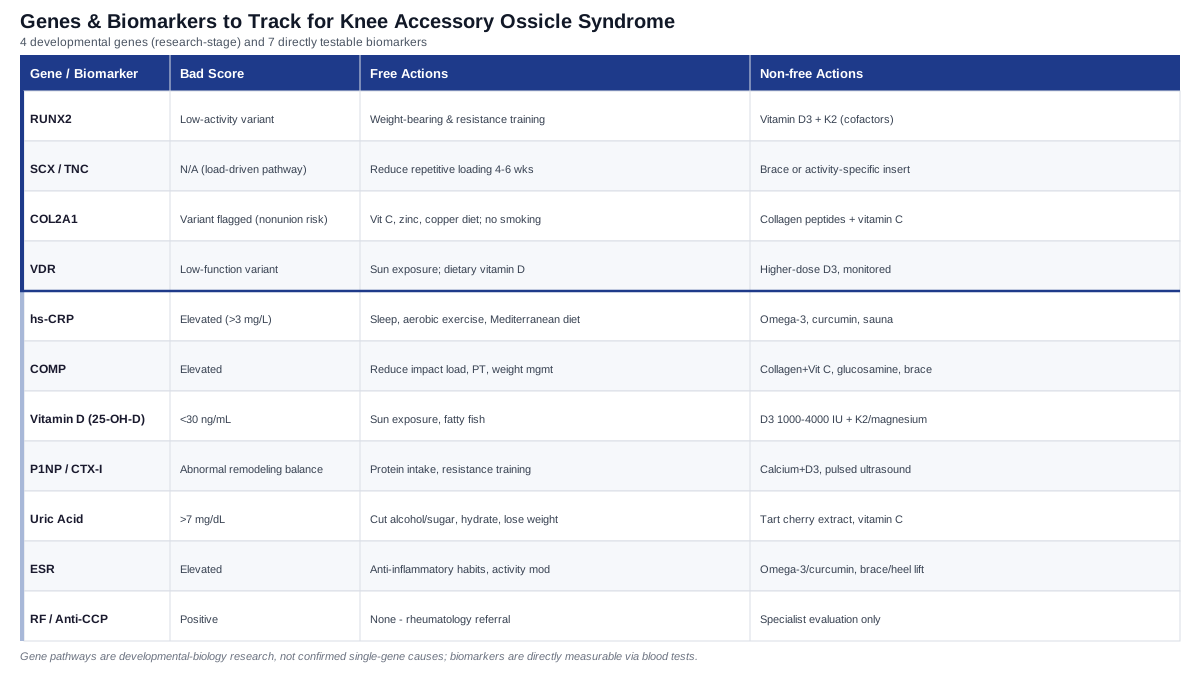
The Biomarkers Worth Tracking When You Have a Symptomatic Accessory Ossicle
Accessory ossicles are common — the fabella alone is now found in roughly a third to over half of adult knees depending on the population studied, and its prevalence has more than tripled over the past century. Most people with one never notice it. The ones who do — with posterolateral knee pain, popliteal tenderness, or clicking that worsens with deep flexion — are dealing with what's sometimes informally called fabella syndrome, or a symptomatic bipartite patella if the extra ossification center is at the kneecap instead.
What makes biomarkers relevant here is a finding that surprised a lot of orthopedic researchers: a large systematic review found that people with a fabella have a meaningfully higher rate of radiographic knee osteoarthritis than people without one — some estimates put the association at more than three times higher odds (Berthaume et al., Journal of Anatomy, 2019). That doesn't mean the ossicle causes arthritis, or the reverse — the relationship is still being worked out — but it does mean the biomarkers that track joint inflammation, cartilage turnover, and bone metabolism are more than academic curiosities for someone with a known accessory ossicle. They're a reasonable way to keep an eye on the broader joint environment the ossicle sits in.
High-Sensitivity CRP (hs-CRP)
Hs-CRP is a general marker of systemic low-grade inflammation, produced by the liver in response to interleukin-6 signaling. It doesn't tell you specifically what's happening at the fabella or the patella, but persistently elevated levels correlate with more active synovitis and worse pain flares in osteoarthritic and peri-articular conditions generally, and it's one of the more sensitive general-purpose markers for tracking whether an anti-inflammatory strategy is working.
How to measure it
It's a standard blood draw, run at almost any lab or as part of a cardiovascular risk panel. Expect to pay somewhere between $15 and $40 out of pocket if it's not bundled into insurance-covered bloodwork; direct-to-consumer lab services often price it similarly.If the score is bad, the plan without supplements
Prioritize sleep consistency (7-9 hours, consistent timing), because poor sleep independently raises CRP within days. Add 150 minutes per week of moderate aerobic activity — walking, cycling, swimming — spread across most days rather than clustered on weekends. Shift toward a Mediterranean-style eating pattern, cutting refined sugar and ultra-processed foods, which measurably lowers CRP over 8-12 weeks in multiple trials. Address any untreated dental or gum disease, a commonly overlooked chronic inflammatory source. Recheck hs-CRP after 8-12 weeks of consistent habit change, not sooner — CRP is noisy week to week.If the score is bad, the plan with supplements or equipment
Omega-3 fish oil at 2-3 g/day combined EPA/DHA is the best-supported supplement option for lowering CRP; take it with food, daily, and reassess at 12 weeks. Curcumin with piperine (500-1000 mg, twice daily) has moderate evidence for lowering inflammatory markers but can cause GI upset and interacts with blood thinners — avoid combining with anticoagulants without medical guidance. On the equipment side, regular sauna use (3 sessions/week, 15-20 minutes) has shown CRP reductions in cardiovascular studies and is a reasonable adjunct if accessible. Cycle any supplement trial for 8-12 weeks, then retest before deciding whether to continue.Cartilage Oligomeric Matrix Protein (COMP)
COMP is a structural cartilage protein released into circulation when cartilage matrix is actively breaking down. It's one of the more specific serum markers for cartilage stress and has been studied as an early indicator of osteoarthritis progression — relevant given the fabella-OA association above, and worth knowing if you're trying to understand whether joint loading patterns around an accessory ossicle are contributing to cartilage wear.
How to measure it
COMP isn't part of routine panels; it requires a specialty or research-oriented lab (sports medicine clinics and some rheumatology labs offer it). Cost typically runs $80-150 and isn't usually covered by insurance for this indication.If the score is bad, the plan without supplements
Reduce high-impact loading (running on hard surfaces, deep repetitive squatting) while a physical therapist addresses quadriceps and gluteal strength deficits, which change how load is distributed across the joint. Weight management matters disproportionately here — every pound of body weight translates to roughly four pounds of additional load across the knee with each step. Cross-train with low-impact modalities (cycling, swimming, elliptical) 3-4 times weekly for 8-12 weeks before retesting.If the score is bad, the plan with supplements or equipment
Collagen peptides (10 g/day) paired with vitamin C have modest supporting evidence for cartilage-related outcomes. Glucosamine sulfate (1500 mg/day) and chondroitin (1200 mg/day) show mixed but occasionally positive results in trials, particularly the prescription-grade glucosamine sulfate formulation used in European studies — treat this as a 3-6 month trial, not a guaranteed fix, and stop if no subjective change by month three. Shellfish-derived glucosamine should be avoided with shellfish allergies. An unloading or offloading knee brace is a reasonable equipment option to reduce lateral or patellofemoral load while cartilage-supportive habits take effect.Vitamin D (25-Hydroxyvitamin D)
Vitamin D governs calcium absorption and bone mineralization, and low levels are consistently associated with worse osteoarthritis pain scores. There's a plausible, though not yet proven, extension of this to accessory ossicles: ossification is a mineralization-dependent process, and it's reasonable to think mineral status plays some role in whether a secondary ossification center — like the one behind a bipartite patella — completes fusion cleanly or persists as an irritated, incompletely fused fragment. This is a biologically sound hypothesis rather than an established fact, and it's worth treating it that way.
How to measure it
A standard 25(OH)D blood test, widely available, typically $30-60 out of pocket.If the score is bad, the plan without supplements
10-20 minutes of midday sun exposure on bare skin several times weekly (adjusted for skin tone and latitude), plus dietary sources — fatty fish, egg yolks, fortified dairy or plant milk. Retest in 8-12 weeks.If the score is bad, the plan with supplements or equipment
Vitamin D3 at 1000-4000 IU/day, dosed according to how deficient the baseline reading is (a clinician can calculate this more precisely from your actual number). Many practitioners pair it with vitamin K2 and magnesium as cofactors for proper calcium utilization. Retest at 8-12 weeks; sustained doses above 10,000 IU/day without monitoring can cause hypercalcemia, so this isn't a supplement to megadose casually.Bone Turnover Markers: P1NP and CTX-I
P1NP reflects bone formation activity and CTX-I reflects bone resorption. Together they give a picture of remodeling balance — genuinely useful if there's a suspected nonunion, such as a symptomatic bipartite patella where the secondary ossification center never fully fused to the main patella, or if a stress reaction near an accessory ossicle is suspected after a change in training load.
How to measure it
Both require a specialty endocrine or bone-metabolism lab; expect $50-100 per marker, sometimes bundled together for a combined price.If the score is bad, the plan without supplements
Adequate protein intake (1.2-1.6 g/kg body weight daily) supports healthy bone matrix, and regular weight-bearing or resistance training 2-3 times weekly stimulates favorable remodeling. Avoid smoking and excess alcohol, both of which measurably impair bone healing and union.If the score is bad, the plan with supplements or equipment
Calcium (1000-1200 mg/day, food-first where possible) and vitamin D as above support the mineral side of remodeling. For a suspected nonunion under orthopedic supervision, low-intensity pulsed ultrasound devices (the same class used for fracture nonunions, applied roughly 20 minutes daily for 9-20 weeks) have supporting evidence for stimulating union, though this should be a clinician-guided decision, not a self-directed one — it's not a substitute for surgical evaluation if symptoms are severe or persistent.Serum Uric Acid
Uric acid matters here mainly as a differential-diagnosis tool. Gout and pseudogout can both produce peri-patellar or posterolateral knee pain that mimics an irritated accessory ossicle, and ruling this out before attributing symptoms entirely to the ossicle avoids months of misdirected treatment. Elevated uric acid is also independently tied to metabolic syndrome and low-grade joint inflammation.
How to measure it
Part of a standard metabolic panel, $10-20.If the score is bad, the plan without supplements
Reduce alcohol, especially beer; cut sugary and high-fructose beverages; maintain adequate hydration; and address excess weight, all of which lower uric acid meaningfully over weeks to months.If the score is bad, the plan with supplements or equipment
Tart cherry extract (roughly 480 mg of concentrated anthocyanins daily) has modest evidence for reducing gout flare frequency. Vitamin C (500 mg/day) has a mild uricosuric effect but can raise kidney stone risk in susceptible individuals at higher doses. If uric acid is markedly elevated with crystal-confirmed gout, that's a medical treatment path (allopurinol or similar), not a supplement-manageable one.Erythrocyte Sedimentation Rate (ESR)
ESR is an older, nonspecific inflammation marker that still has practical value alongside CRP — the two don't always move together, and tracking both gives a fuller picture of whether a knee is in an active inflammatory flare or a quieter phase.
How to measure it
Standard blood test, $10-20, run at essentially any lab.If the score is bad, the plan without supplements
The same anti-inflammatory lifestyle bundle described under hs-CRP applies here, plus activity modification — avoiding the deep flexion or repetitive impact positions that specifically provoke ossicle-related pain (deep squatting for a fabella, kneeling or stair descent for a bipartite patella).If the score is bad, the plan with supplements or equipment
The same omega-3 and curcumin regimen described above applies. A hinged knee brace or gait-correcting heel lift can reduce mechanical provocation while inflammation settles; reassess ESR alongside CRP at the same 8-12 week interval.Rheumatoid Factor and Anti-CCP
These two are worth a single, one-time check rather than ongoing tracking. Their purpose is to rule out an inflammatory arthritis, like rheumatoid arthritis, as the real driver of peri-ossicle synovitis before assuming the accessory ossicle itself is the whole story. A positive result changes the management path entirely — toward rheumatology referral rather than orthopedic or biomechanical management.
How to measure it
Standard blood tests, typically $40-100 combined, usually ordered together.If the score is bad, the plan without supplements
There isn't a self-directed lifestyle plan here — a positive result warrants a rheumatology referral rather than home management.If the score is bad, the plan with supplements or equipment
Same as above: this is a "see a specialist" result, not a supplement-and-equipment result. Don't substitute anti-inflammatory supplements for a rheumatology evaluation if these markers come back positive.Taken together, these seven markers won't diagnose an accessory ossicle — imaging does that — but they give a genuinely useful read on the inflammatory and metabolic environment the ossicle sits in, which is often what determines whether it stays silent or becomes a recurring problem.
What the Genetics Research Actually Shows
It's worth being upfront about something most articles on this topic gloss over: there is no confirmed single gene for having a fabella, a bipartite patella, or any other knee accessory ossicle. The best available evidence — including the large systematic review referenced above — actually points away from a simple genetic explanation. The researchers found fabella prevalence tripled over roughly 150 years, far too fast for population-level genetic drift, and concluded the more likely driver is environmental: modern humans are taller, heavier, and have more calf muscle mass than a century ago, all of which increase mechanical loading on the tendon where the fabella forms (Berthaume et al., Journal of Anatomy, 2019).
That doesn't mean genetics is irrelevant — it means the honest framing is "developmental and mechanotransduction biology with early or indirect human evidence," not "here is the bad gene and here is how to fix it." Genetic testing services popularized by researchers like Ali Torkamani and educators like Gary Brecka are a reasonable starting point if you want to look at your own variants in these pathways, but treat what follows as directional, not diagnostic.
RUNX2 — The Master Ossification Switch
RUNX2 is the primary transcription factor that drives osteoblasts to differentiate and mineralize bone, including at sesamoid and accessory ossification centers. Variants affecting RUNX2 activity are well established in rare skeletal disorders (like cleidocranial dysplasia) but haven't been specifically linked to fabella or bipartite patella formation in human studies — the connection is inferred from developmental biology, not confirmed by a targeted human genetic study on this condition.
If you carry a variant associated with lower RUNX2 activity, the plan without supplements centers on adequate weight-bearing loading — resistance training and impact activity within a tolerable range — since mechanical stress upregulates RUNX2 expression naturally. The plan with supplements adds vitamin D3 and vitamin K2 as cofactors for the mineralization RUNX2 initiates, typically 1000-2000 IU D3 and 100 mcg K2 daily, reassessed via the vitamin D biomarker above after 8-12 weeks. There's no equipment-based fix specific to this gene; side effects are limited to standard vitamin D/K2 cautions (avoid high-dose K2 on warfarin without medical supervision).
SCX and TNC — The Tendon-to-Bone Mechanotransduction Pathway
Scleraxis (SCX) and tenascin-C (TNC) are involved in the developmental process by which repetitively loaded tendon tissue gradually transforms into fibrocartilage and then bone — precisely the process thought to underlie fabella formation within the lateral gastrocnemius tendon. This is animal and developmental-biology evidence primarily; direct human genetic association data specific to accessory ossicles is sparse to nonexistent, and this should be read as a plausible mechanism rather than a proven one.
Because this pathway is activated by mechanical load rather than by a fixable "deficiency," the practical takeaway isn't a supplement protocol — it's load management. If an accessory ossicle is newly symptomatic, the without-supplements plan is a temporary reduction in the specific loading pattern implicated (repetitive resisted calf raises or deep-flexion loading for the fabella, kneeling-heavy activity for a bipartite patella) for 4-6 weeks, followed by gradual reintroduction guided by symptoms. There isn't a credible supplement-based intervention for this pathway specifically; equipment-based load modification (a brace, an activity-specific insert) is more relevant than any pill here.
COL2A1 — Cartilage Collagen and Nonunion Risk
COL2A1 encodes type II collagen, the primary structural protein in cartilage, including the cartilaginous precursor tissue at secondary ossification centers like the one involved in a bipartite patella. Rare COL2A1 mutations cause well-documented skeletal dysplasias with abnormal cartilage-to-bone conversion; whether common, subtler variants influence the likelihood of a secondary ossification center failing to fuse is a reasonable hypothesis but not something confirmed by large human studies specific to this condition.
The without-supplements plan focuses on collagen synthesis support through diet — adequate vitamin C, zinc, and copper intake, all essential cofactors for collagen cross-linking — plus avoiding smoking, which measurably impairs collagen synthesis and fracture/nonunion healing. The with-supplements plan adds collagen peptides (10 g/day) with vitamin C (500 mg), taken together since vitamin C is required for collagen synthesis to occur; cycle for 3 months and reassess symptoms rather than expecting a lab marker to move. No significant side effects at these doses; those with hemochromatosis should be cautious with any supplement regimen that increases mineral absorption generally.
VDR — The Vitamin D Receptor Gene
VDR polymorphisms affect how efficiently vitamin D signaling translates into calcium absorption and bone mineralization downstream. This is one of the more human-evidence-backed genes on this list — VDR variants are well studied in relation to bone mineral density generally — though again, not specifically in relation to accessory ossicle formation.
If a genetic report flags a lower-function VDR variant, the without-supplements plan is simply more consistent sun exposure and dietary vitamin D sources, since the goal is raising circulating 25(OH)D enough to compensate for reduced receptor efficiency. The with-supplements plan uses a higher target range for vitamin D3 supplementation (often 2000-4000 IU/day) guided by actual blood levels rather than a fixed dose, since VDR variants can mean higher circulating vitamin D is needed to achieve the same downstream effect. Retest 25(OH)D at 8-12 weeks; the main caution is the same hypercalcemia risk noted earlier if supplementing without periodic monitoring.
The honest summary of the genetics picture: it's a promising research direction, not yet a source of confirmed, individually actionable "bad gene" fixes for this specific condition. The biomarker panel above remains the more immediately useful tool.
A Longevity-Science Reframe Worth Borrowing
Peter Attia's book Outlive: The Science and Art of Longevity isn't written about accessory ossicles or knee anatomy specifically, but its central argument reframes joint issues in a way that's directly useful here: instead of asking "how do I make this pain go away," it asks "what does this joint need to still function well in twenty or thirty years." That shift in framing changes which biomarkers and habits actually matter. Below are ten of its most transferable ideas for someone managing a knee accessory ossicle.
1. Medicine 3.0 Means Acting Before the Crisis
Attia distinguishes reactive medicine (treating a knee once it's badly arthritic) from a more proactive approach that intervenes on risk factors — like the inflammatory and cartilage biomarkers above — years before a joint becomes symptomatic enough to need surgery.2. The "Centenarian Decathlon" Concept
Instead of vague fitness goals, Attia recommends defining the specific physical tasks you want to still perform late in life (carrying groceries, getting up off the floor, hiking) and training backward from there — a useful frame for deciding how aggressively to protect a knee with a symptomatic ossicle rather than just avoiding pain in the moment.3. Muscle Mass Is a Joint-Protection Strategy, Not Just an Aesthetic One
Quadriceps and hamstring strength directly reduce load transmitted through the knee joint; Attia treats resistance training as close to non-negotiable for long-term joint health, not an optional add-on.4. Stability and Balance Work Deserve Equal Billing With Strength
Falls and awkward loading moments — a misstep on stairs, a sudden pivot — are disproportionately damaging to an already-irritated ossicle; Attia's framework treats balance training as protective infrastructure, not just an afterthought for older adults.5. Zone 2 Cardio Supports Joint Tissue Indirectly
Sustained low-intensity aerobic work improves mitochondrial and metabolic health broadly, which Attia connects to lower systemic inflammation — the same inflammatory load that shows up in the hs-CRP and ESR markers discussed earlier.6. Rate of Decline Matters More Than a Single Data Point
Attia emphasizes tracking biomarker trends over years, not reacting to one test result — directly applicable to the bone and cartilage markers above, which are far more informative as a trend line than a single snapshot.7. Emotional Health Affects Physical Outcomes
Chronic stress elevates cortisol and systemic inflammation in ways that measurably worsen chronic pain conditions; Attia treats stress management as part of a physical health protocol, not a separate wellness category.8. Nutrition Should Be Personalized, Not Dogmatic
Rather than prescribing one diet, Attia argues for testing your own metabolic response (glucose, lipids, inflammatory markers) and adjusting — the same logic applied to the biomarker-driven approach in this article.9. Sleep Is a Primary Recovery Lever, Not a Luxury
Poor sleep worsens pain sensitivity and inflammatory marker levels within days; Attia treats consistent sleep as one of the highest-leverage, lowest-cost interventions available.10. Prevention Is Cheaper Than Repair, in Every Sense
The book's throughline is that addressing risk factors early — strength, metabolic health, inflammation — is far less costly, physically and otherwise, than waiting until a joint problem requires surgical intervention.None of these ideas are specific to knee ossicles, but applied consistently, they shift the goal from managing a single flare to protecting the joint's long-term trajectory — which is the more useful goal anyway.
Complementary Approaches With Real Supporting Evidence
The modalities below aren't marketed as ossicle-specific treatments — no complementary therapy has been studied on fabella or bipartite patella syndrome directly. What they do have is genuine human trial evidence for knee osteoarthritis, the condition most closely and consistently linked to symptomatic accessory ossicles. That makes them a reasonable, evidence-informed adjunct rather than a stretch.
Tai Chi
Tai chi is a slow, low-impact movement practice that builds quadriceps and postural control strength while keeping joint loading gentle — a combination that's particularly well suited to a knee that can't tolerate high-impact rehab yet still needs to get stronger.A well-designed comparative trial randomized 204 adults with symptomatic knee osteoarthritis to twice-weekly tai chi for 12 weeks versus standard physical therapy, and found tai chi produced equivalent improvements in pain and function compared to conventional physical therapy (Wang et al., Annals of Internal Medicine, 2016).
Realistically, this means a structured tai chi class (in person or a well-produced video series) twice weekly for at least 12 weeks is a reasonable substitute or complement to standard physical therapy for someone whose knee can't yet tolerate more aggressive loading — not a replacement for orthopedic evaluation if there's a suspected structural issue like a nonunited ossicle.
Yoga
Yoga combines controlled range-of-motion work, strengthening, and flexibility training in a format that's adjustable to how much knee flexion someone can currently tolerate — relevant for both fabella-related posterolateral pain (aggravated by deep flexion) and patellofemoral pain from a bipartite patella.An 8-week Hatha yoga program in women with knee osteoarthritis produced a significant reduction in pain and symptoms alongside improved daily function compared to a control group (Ghasemi et al., International Journal of Preventive Medicine, 2013).
In practice, this means choosing a gentle or restorative style initially, explicitly modifying or skipping deep-flexion poses (like full kneeling or deep squats) that provoke ossicle-specific pain, and progressing range of motion gradually under guidance from an instructor familiar with joint modifications.
Massage Therapy
Massage therapy targets the surrounding musculature and soft tissue rather than the ossicle itself, which can meaningfully reduce compensatory muscle tension and improve local circulation around an irritated area.A randomized dose-finding trial in adults with knee osteoarthritis found that 60-minute weekly Swedish massage sessions produced significantly greater improvement in WOMAC pain and function scores at 8 weeks compared to usual care, though the benefit wasn't sustained at 52 weeks without ongoing sessions (Perlman et al., PLoS One, 2012).
A realistic protocol is weekly 60-minute sessions for the first 8 weeks, focusing on the quadriceps, hamstrings, and calf (particularly relevant for fabella-related pain, given its location within the gastrocnemius tendon), then tapering to biweekly maintenance if it's helping, with the expectation that benefits fade without some ongoing frequency.
Low-Level Laser Therapy (Photobiomodulation)
Low-level laser therapy uses specific light wavelengths applied directly over a painful joint area, with proposed mechanisms including reduced local inflammatory signaling and modest pain-gating effects — plausible for the localized, superficial pain typical of an irritated fabella or bipartite patella.A systematic review and meta-analysis of 22 randomized placebo-controlled trials found that low-level laser therapy significantly reduced pain in knee osteoarthritis when dosing followed World Association for Laser Therapy recommendations, establishing a clear dose-response relationship (Stausholm et al., BMJ Open, 2019).
Practically, this means seeking a practitioner (physical therapist or sports medicine clinic) using validated dosing parameters rather than an underpowered consumer device, applied directly over the tender area for a course of sessions (commonly 2-3 times weekly over several weeks), with the understanding that dosing quality matters more than the general modality — underdosed treatment explains much of the mixed evidence in weaker trials.
Conclusion
A knee accessory ossicle isn't a diagnosis that ends with "wait and see." The biomarker panel above gives you a concrete way to track the inflammatory, cartilage, and bone-metabolism environment the ossicle sits in — arguably more useful day to day than the genetics, which point toward plausible mechanisms without yet offering a confirmed, individually fixable cause. The longevity-science framing and the complementary approaches round out a practical toolkit: strength and load management for the joint's long-term trajectory, and evidence-backed adjuncts for managing symptoms in the meantime.
The next smart step is a small one: get the biomarker panel drawn, track how symptoms correlate with activity and flares over a few weeks, and bring both to a conversation with an orthopedist or sports medicine physician who can put your specific imaging and history alongside the numbers. That combination — your data plus their clinical judgment — is a far better starting point than guessing.
Musculoskeletal: Bone Conditions Joint Conditions Sports Injuries