This article contains AI generated content.
Medial Inferior Genicular Nerve Entrapment - 3 Genes And 7 Biomarkers To Track
Introduction
Pain along the inner, lower edge of the knee that doesn't match what the MRI shows is one of the more disorienting experiences in orthopedic medicine. The scan looks reasonable, the joint moves the way it should, and yet a specific spot below the joint line burns, tingles, or aches in a way that standard knee advice never quite resolves. This is the territory of medial inferior genicular nerve entrapment: a small sensory nerve, easily irritated by surgery, trauma, or repetitive compression, causing symptoms far out of proportion to its size.
Generic knee advice tends to fail people with this problem, not because it's wrong, but because it's aimed at a different target. "Strengthen the quads," "lose a few pounds," "ice and rest" are reasonable defaults for joint-driven pain, but they say almost nothing about why one person's irritated nerve calms down in six weeks while another's persists for a year. Nerve tissue heals according to its own biochemical logic, shaped by blood sugar control, inflammation, thyroid status, and micronutrient availability, and that logic is invisible unless you actually measure it.
This article takes a more specific approach. Instead of repeating generic knee-pain advice, it looks at the bloodwork that reflects how well your nerves are equipped to recover, alongside the early genetic research that may explain why some people seem more prone to nerve compression injuries than others. It also draws on a Stanford pain specialist's take on why chronic nerve pain persists long after tissue has healed, and reviews the complementary approaches with genuine supporting evidence.
None of this replaces a proper diagnostic workup with a physician who can confirm the entrapment and rule out other causes of medial knee pain. But better information changes the conversation you can have with that physician. Knowing your biomarker numbers, understanding what the emerging genetic research does and doesn't say, and knowing which supportive therapies have real evidence behind them are all levers you can actually pull.
Summary
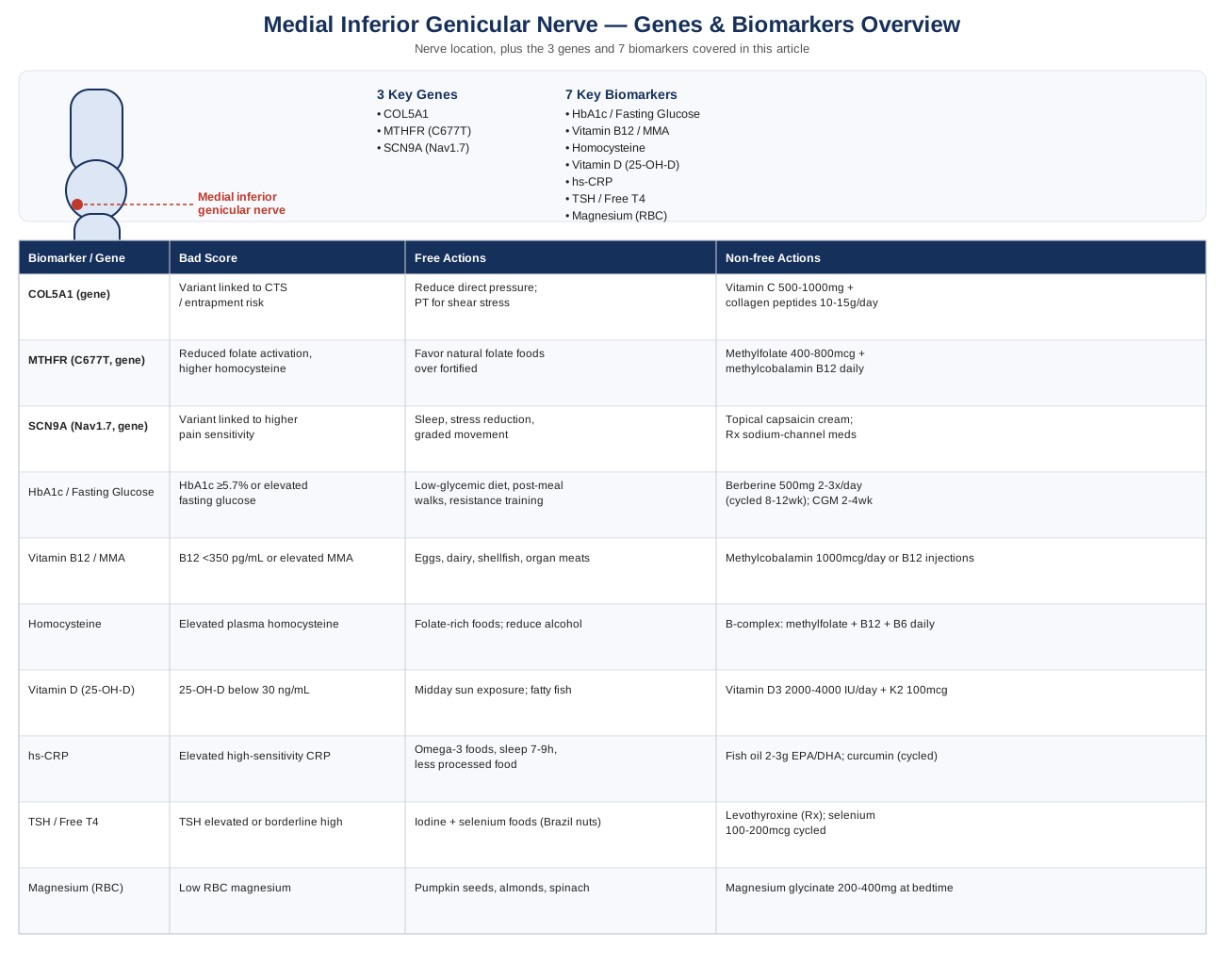
This article walks through the seven biomarkers most worth checking if you're dealing with a nerve entrapment around the knee, explaining what each one reveals about your nerve's ability to heal, how to test it, its cost, and a graded plan for correcting it, first without supplements, then with them, including frequency and cycling notes so you don't over-supplement. It then covers three genes with early but genuine evidence linking them to entrapment neuropathy risk, pain sensitivity, and nerve-related biochemistry, each with its own practical, non-prescription and supplement-based response plan. A summary of a widely discussed Stanford pain-medicine podcast follows, laying out ten ideas that push back against the standard "rest until it stops hurting" model of nerve pain. Finally, the article reviews complementary approaches, including one manual therapy technique studied specifically for this exact nerve, with an honest look at where the evidence is strong and where it's still thin.
7 Biomarkers Worth Tracking When a Genicular Nerve Won't Calm Down
Nerve entrapment is a mechanical problem at its origin, usually from scar tissue, surgical trauma, muscle compression, or a direct blow. But whether an irritated nerve recovers in weeks or stays inflamed for a year depends heavily on the internal environment it's healing in. Blood sugar, thyroid hormone, inflammatory tone, and specific micronutrients all directly affect how well peripheral nerves repair myelin, resolve local inflammation, and stop firing pain signals. These seven biomarkers give you a concrete read on that internal environment, and each one is something you can realistically discuss with a physician and retest over time.
HbA1c and Fasting Glucose
Why it matters: nerves are exquisitely sensitive to glucose exposure. Even blood sugar levels well below the diabetes threshold are associated with peripheral neuropathy. Research on idiopathic and cryptogenic sensory neuropathy has found that a substantial share of patients, in some series between one quarter and over half, have prediabetes they weren't previously aware of, and measurable nerve dysfunction shows up in roughly 10 to 25 percent of people with prediabetes peripheral neuropathy in prediabetes and metabolic syndrome. For an entrapped nerve, elevated glucose doesn't cause the compression, but it slows the nerve's ability to repair itself and can make an ordinary entrapment feel more severe and heal more slowly, an effect also seen with glycated hemoglobin as a marker of diabetic foot neuropathy severity HbA1c as a biomarker for peripheral neuropathy.
How to measure it: a fasting glucose and HbA1c panel through a primary care doctor or direct-to-consumer lab, typically 15 to 40 US dollars if paid out of pocket, often bundled into a standard metabolic panel at no extra cost when ordered by a physician. A continuous glucose monitor, roughly 50 to 90 US dollars per two-week sensor, is optional but gives a more granular picture of post-meal spikes than a single HbA1c value.
If the score is bad, the plan without supplements: prioritize a lower-glycemic-load diet built around protein, fiber, and non-starchy vegetables at each meal, walk for 10 to 15 minutes after meals to blunt glucose spikes, and add two to three resistance training sessions per week, since muscle is the body's primary glucose sink. Retest HbA1c every three months, since red blood cell turnover means it reflects roughly a 90-day average.
If the score is bad, the plan with supplements or equipment: berberine, 500 mg two to three times daily with meals, has glucose-lowering effects comparable to metformin in several trials, but should cycle on for 8 to 12 weeks with a break, and can cause gastrointestinal upset or interact with other glucose-lowering medications, so it needs physician sign-off if you're on any diabetes medication. A CGM used for 2 to 4 weeks at a time, a few times a year, is a reasonable equipment-based alternative to ongoing supplementation, letting you identify and remove the specific foods driving your highest spikes.
Vitamin B12 and Methylmalonic Acid
Why it matters: B12 is required for myelin synthesis, the fatty insulation around nerve fibers. Low B12 is one of the few reversible causes of peripheral neuropathy, and a systematic review and meta-analysis found a clear association between B-vitamin status and neuropathy risk and severity association between neuropathy and B-vitamins. For a nerve that's already mechanically irritated, marginal B12 status removes one of the raw materials it needs to repair itself.
How to measure it: a serum B12 test is inexpensive, usually 20 to 50 US dollars, but serum B12 alone can be misleading. Methylmalonic acid (MMA), 40 to 80 US dollars, is a more sensitive marker of functional B12 deficiency at the cellular level and is worth adding if serum B12 sits in the low-normal range (200 to 350 pg/mL).
If the score is bad, the plan without supplements: increase dietary intake through eggs, dairy, shellfish, and organ meats, which are the most concentrated natural sources. This works for mild insufficiency but is usually insufficient for a confirmed deficiency or for anyone on metformin or a proton pump inhibitor, both of which impair B12 absorption.
If the score is bad, the plan with supplements or equipment: methylcobalamin, 1000 mcg daily sublingually, is the standard oral correction for confirmed deficiency, taken continuously rather than cycled since B12 has no known upper toxicity limit and excess is simply excreted. For MMA-confirmed deficiency or malabsorption (post-bariatric surgery, pernicious anemia, long-term metformin use), intramuscular B12 injections, typically 1000 mcg weekly for four to eight weeks then monthly, bypass the absorption issue entirely and are the more reliable option; side effects are rare but can include mild injection-site soreness.
Homocysteine
Why it matters: homocysteine rises when B12 and folate are insufficient to clear it, and elevated levels are independently associated with more severe peripheral neuropathy, including in non-diabetic cases homocysteine and peripheral neuropathy in type 2 diabetes. High homocysteine is thought to contribute to microvascular damage around nerves, which can slow local healing at an entrapment site.
How to measure it: a plasma homocysteine test, generally 30 to 60 US dollars, is drawn fasting and is a useful companion test alongside B12 and folate rather than a standalone screen.
If the score is bad, the plan without supplements: increase folate-rich foods, leafy greens, lentils, and asparagus, and reduce alcohol intake, which depletes folate and B6.
If the score is bad, the plan with supplements or equipment: a B-complex containing methylfolate (400 to 800 mcg), methylcobalamin (500 to 1000 mcg), and B6 (25 to 50 mg) daily is the standard correction, taken continuously for 8 to 12 weeks before retesting. B6 above 100 mg daily for extended periods has been linked to sensory neuropathy in rare cases, so higher doses should not be taken indefinitely without monitoring.
Vitamin D (25-OH-D)
Why it matters: vitamin D receptors are present throughout peripheral nerve tissue, and deficiency has been associated with greater neuropathic pain intensity and worse pain outcomes across multiple pain populations, with proposed roles in nerve growth factor signaling, Schwann cell function, and remyelination vitamin D deficiency-associated neuropathic pain.
How to measure it: a standard 25-hydroxyvitamin D blood test, 40 to 80 US dollars, or often included free in an annual physical panel.
If the score is bad, the plan without supplements: 15 to 20 minutes of midday sun exposure on bare arms and legs several times weekly, where climate and season allow, along with fatty fish intake two to three times weekly.
If the score is bad, the plan with supplements or equipment: vitamin D3, 2000 to 4000 IU daily with a fat-containing meal, taken continuously rather than cycled, with retesting at 8 to 12 weeks to confirm you're in the 30 to 50 ng/mL range rather than overshooting. Doses above 10,000 IU daily for extended periods can cause hypercalcemia, so ongoing supplementation above 4000 IU should be guided by retesting, not guesswork. Pairing with vitamin K2 (100 mcg) is a common practice to support proper calcium utilization.
High-Sensitivity C-Reactive Protein (hs-CRP)
Why it matters: hs-CRP is a marker of systemic low-grade inflammation, and research on sciatic nerve root irritation found that pain intensity correlated with hs-CRP levels in acute nerve compression pain pain and high sensitivity C-reactive protein in sciatic pain. An entrapped nerve generates local inflammation, and higher background systemic inflammation appears to amplify how that local irritation is perceived and how slowly it resolves.
How to measure it: hs-CRP is a simple, inexpensive blood test, 15 to 35 US dollars, widely available and frequently included in cardiovascular risk panels.
If the score is bad, the plan without supplements: increase omega-3-rich fish intake, reduce ultra-processed food and added sugar, prioritize 7 to 9 hours of sleep, since sleep deprivation itself raises CRP, and address any underlying gum disease or chronic infection, both common silent contributors to elevated CRP.
If the score is bad, the plan with supplements or equipment: omega-3 fish oil, 2 to 3 grams daily of combined EPA/DHA, taken with food to reduce reflux, is the best-supported anti-inflammatory supplement and can be used continuously, though it can mildly increase bleeding risk at high doses and should be discussed with a physician if you're on blood thinners. Curcumin with piperine, 500 to 1000 mg daily, is a reasonable adjunct, best cycled 8 weeks on, 2 weeks off, as long-term high-dose use has been associated with mild liver enzyme elevation in rare cases.
TSH and Free T4
Why it matters: thyroid hormone affects nerve conduction velocity and connective tissue turnover, and a meta-analysis found a modest but real association between hypothyroidism and entrapment neuropathies such as carpal tunnel syndrome, particularly in people under 50 hypothyroidism and carpal tunnel syndrome meta-analysis. The mechanism, tissue swelling and connective tissue changes around nerve tunnels, is directly relevant to any nerve traveling through a narrow anatomical space, including the genicular nerves around the knee.
How to measure it: a TSH test alone is 20 to 40 US dollars; a fuller panel with free T4 and free T3 runs 60 to 120 US dollars and gives a more complete picture, especially if TSH is borderline.
If the score is bad, the plan without supplements: ensure adequate iodine (from iodized salt or seafood) and selenium (from Brazil nuts, two to three per day) intake, both required cofactors for thyroid hormone production and conversion, and get an autoimmune thyroid panel (TPO antibodies) to rule out Hashimoto's if TSH is elevated.
If the score is bad, the plan with supplements or equipment: for confirmed subclinical or overt hypothyroidism, this is a prescription-medication conversation (levothyroxine), not a supplement one; self-treating thyroid hormone is not appropriate. Selenium 100 to 200 mcg daily can support thyroid conversion but should be cycled for 8 to 12 weeks with breaks, since chronic high-dose selenium has been linked to toxicity and increased type 2 diabetes risk in some trials.
Magnesium (RBC Magnesium)
Why it matters: magnesium acts as a natural NMDA-receptor antagonist, meaning it dampens the nervous system's tendency toward hyperexcitability and central sensitization, a mechanism directly relevant to nerve pain amplification the role of magnesium in pain. A randomized clinical trial of oral magnesium in neuropathic pain patients did not show a significant advantage over placebo after one month oral magnesium treatment in neuropathic pain: a randomized clinical trial, so this is a case where the evidence is genuinely mixed, and any correction should be framed as a plausible support measure rather than a guaranteed fix.
How to measure it: serum magnesium is cheap (10 to 25 US dollars) but a poor reflection of body stores, since less than 1 percent of total magnesium is in the blood. Red blood cell (RBC) magnesium, 40 to 70 US dollars, is a more accurate marker of tissue-level status.
If the score is bad, the plan without supplements: increase intake of pumpkin seeds, almonds, spinach, and dark chocolate, and reduce alcohol, which increases magnesium excretion.
If the score is bad, the plan with supplements or equipment: magnesium glycinate, 200 to 400 mg before bed, is well absorbed and less likely than other forms to cause the diarrhea associated with magnesium citrate or oxide. It can be taken continuously, though very high doses (above 500 mg daily from supplements) can cause loose stools and, in people with impaired kidney function, should be avoided without medical supervision.
Taken together, these seven markers describe the biochemical backdrop your nerve is trying to heal within. None of them will diagnose or resolve the entrapment on their own, but a genuinely irritated genicular nerve sitting in a body that's glucose-dysregulated, B12-depleted, or chronically inflamed has a harder job than one healing in a well-supported metabolic environment. From here, it's worth looking at the genetic layer underneath these numbers, since some of it helps explain why certain people run into these deficiencies, or into entrapment neuropathies generally, more easily than others.
3 Genes That May Shape Entrapment Risk and Nerve Pain Sensitivity
Genetic research on medial inferior genicular nerve entrapment specifically does not exist yet; it's too narrow and too recently described a condition for dedicated genetic studies. What does exist is solid genetic research on closely related entrapment neuropathies, particularly carpal tunnel syndrome, and on the broader biology of nerve repair and pain sensitivity, which plausibly extends to any peripheral nerve running through a tight anatomical space, including the genicular nerves. Researchers like Ali Torkamani, whose work on actionable genomics emphasizes translating gene variants into concrete lifestyle responses, and figures like Gary Brecka who popularize gene-informed supplementation, both follow the same underlying logic used below: a gene variant is not a verdict, it's a nudge that can usually be offset with the right inputs.
COL5A1 (Collagen Type V Alpha 1)
What it may affect: COL5A1 encodes a component of type V collagen, which regulates how collagen fibrils assemble in tendons, fascia, and the connective tissue sheaths that nerves pass through. A specific COL5A1 variant has been associated with increased risk of carpal tunnel syndrome, an entrapment neuropathy with strong mechanical parallels to genicular nerve entrapment the COL5A1 gene and carpal tunnel syndrome risk, and a large genome-wide association study of over 50 genetic loci for carpal tunnel syndrome found that many of the implicated genes converge on extracellular matrix biology genome-wide meta-analysis of carpal tunnel syndrome. The proposed mechanism is that altered collagen fibril composition changes the stiffness and compliance of the tissue sheaths around a nerve, which may make it more prone to friction or compression at anatomically tight points, such as where the medial inferior genicular nerve crosses close to the tibial collateral ligament and pes anserinus.
If the gene is bad, the plan without supplements: since this pathway is about connective tissue quality rather than a nutrient deficiency, the most relevant non-supplement intervention is mechanical, reducing repetitive direct pressure or friction on the area (kneeling, tight bracing, repetitive deep knee flexion), and working with a physical therapist on movement patterns that reduce shear stress across the medial knee.
If the gene is bad, the plan with supplements or equipment: vitamin C (500 to 1000 mg daily) and collagen peptides (10 to 15 grams daily) are commonly used to support collagen synthesis generally; evidence for this specific application is indirect, extrapolated from tendon and connective tissue research rather than genicular nerve studies, so it should be framed as a plausible support measure, not a corrective one. These can be taken continuously, with vitamin C well tolerated at these doses and collagen peptides rarely causing anything beyond mild digestive upset.
MTHFR (C677T Variant)
What it may affect: the MTHFR gene encodes an enzyme required to convert folate into its active form, which is needed to clear homocysteine. The C677T variant reduces enzyme efficiency, and meta-analyses have linked MTHFR variants to increased risk and severity of diabetic peripheral neuropathy, through the resulting elevation in homocysteine and associated vascular damage to nerve tissue MTHFR and ACE gene polymorphisms in diabetic peripheral neuropathy. For someone with an already irritated nerve, carrying this variant may mean homocysteine creeps up more easily, compounding the biomarker picture described above.
If the gene is bad, the plan without supplements: emphasize naturally folate-rich foods (lentils, leafy greens, liver) over folic acid-fortified processed foods, since MTHFR-variant carriers convert synthetic folic acid less efficiently than natural folate.
If the gene is bad, the plan with supplements or equipment: methylfolate (L-5-MTHF), 400 to 800 mcg daily, bypasses the enzymatic step affected by this variant and is generally preferred over folic acid for known MTHFR carriers, paired with methylcobalamin B12 as described in the homocysteine section above. This is typically taken continuously for 8 to 12 weeks with a homocysteine retest to confirm effect, and is well tolerated, though very high folate intake can mask an underlying B12 deficiency on standard blood counts, which is why pairing the two is standard practice.
SCN9A (Nav1.7 Sodium Channel Gene)
What it may affect: SCN9A encodes the Nav1.7 sodium channel, which plays a central role in transmitting pain signals from peripheral nerves. Certain SCN9A variants have been found at higher frequency in people with neuropathic pain and are associated with greater pain severity in diabetic peripheral neuropathy SCN9A variants in neuropathic pain associated with diabetic peripheral neuropathy. This is not a variant that causes entrapment; it's one that may amplify how intensely a given amount of nerve irritation is felt, which is a meaningfully different problem to solve.
If the gene is bad, the plan without supplements: since this variant affects pain amplification rather than tissue healing, the most evidence-aligned non-supplement approach is behavioral and centers on down-regulating nervous system reactivity, consistent sleep timing, stress reduction practices, and graded, paced movement rather than complete avoidance of the painful motion, which tends to reinforce pain sensitivity over time.
If the gene is bad, the plan with supplements or equipment: there is no supplement that directly corrects sodium channel sensitivity; this is squarely medication territory (topical or oral sodium channel-modulating agents such as those used for neuropathic pain), and should be discussed with a physician or pain specialist rather than self-managed. Topical low-dose capsaicin cream, used two to four times daily for two to four weeks, is a reasonable non-prescription option in some regions for localized nerve pain, with the main side effect being a temporary burning sensation on application that typically diminishes with continued use.
It's worth being direct about the limits here: none of these three genes have been studied in medial inferior genicular nerve entrapment itself, and the evidence connecting them to entrapment neuropathies generally ranges from moderate (COL5A1, MTHFR) to early and mechanistic (SCN9A). They're useful for understanding predisposition and for prioritizing which biomarkers above are worth checking first, not for predicting outcomes with certainty. With both the biochemical and genetic pictures in view, it's worth turning to how pain science more broadly explains why an anatomically small nerve problem can produce disproportionately large and persistent symptoms.
10 Pain Science Lessons From a Leading Nerve Pain Researcher
In January 2024, the Huberman Lab podcast featured Dr. Sean Mackey, chief of the Division of Pain Medicine at Stanford, in an episode titled Dr. Sean Mackey: Tools to Reduce & Manage Pain. Mackey's research sits at the intersection of neuroscience and clinical pain management, and several of the ideas he lays out directly challenge the instinct to treat nerve pain purely as a tissue problem to be rested into submission. The following ten points summarize the parts most relevant to someone dealing with a persistent, localized nerve entrapment.
Pain Is Generated by the Brain, Not Just Reported by It
Pain is not a simple readout of tissue damage; it's an output the brain constructs using sensory input, past experience, emotional state, and context. Two people with an identical degree of nerve irritation can experience meaningfully different pain intensities, which is why identical MRI findings so often produce different symptom severities.
Chronic Pain Can Outlast the Original Injury
Once a nerve pain signal has been present long enough, the nervous system itself can become sensitized, continuing to fire pain signals even after the original tissue irritation has substantially resolved. This is a key reason a genicular nerve entrapment can feel just as intense at month nine as it did in week two, even if the mechanical problem has partly settled.
Central Sensitization Is a Real, Measurable Phenomenon
The spinal cord and brain can turn up the "gain" on pain signals over time, a process called central sensitization. This isn't a psychological explanation for pain being less "real"; it's a physiological change in how the nervous system processes signals, and it responds to different interventions than acute tissue injury does.
Sleep Is a Pain Treatment, Not Just a Pain Consequence
Poor sleep doesn't just result from pain, it actively lowers pain thresholds the following day, creating a bidirectional cycle. Prioritizing consistent, adequate sleep is framed as one of the higher-leverage, lowest-risk interventions available for chronic pain management.
Stress Physiology Directly Amplifies Pain Signaling
Chronic stress keeps the nervous system in a heightened state of reactivity, which lowers the threshold at which ordinary nerve signals are interpreted as painful. Addressing background stress load is treated as a legitimate part of a pain management plan, not a soft add-on.
Catastrophizing Measurably Worsens Pain Outcomes
The tendency to interpret pain as catastrophic or permanent is associated with worse pain outcomes across multiple conditions. This isn't about "thinking positive"; it's about recognizing that fear-driven interpretations of pain feed back into the nervous system's threat-response and can prolong sensitization.
Movement, Not Complete Rest, Is Usually the Better Default
Prolonged avoidance of movement around a painful area tends to reinforce pain sensitivity and can lead to deconditioning that makes recovery harder. Graded, paced reintroduction of movement is generally favored over strict rest once serious structural causes have been ruled out.
Multidisciplinary Treatment Outperforms Single-Modality Treatment
Pain conditions treated with a combination of physical therapy, psychological support, and medical management tend to do better than those treated with any single approach alone, reflecting pain's status as a biopsychosocial condition rather than a purely mechanical one.
Opioids Are a Poor Long-Term Tool for Chronic Nerve Pain
Opioids can be appropriate for acute, severe pain, but they are increasingly recognized as poorly suited to chronic neuropathic pain, both because of dependence risk and because they don't address the sensitization mechanisms driving persistent pain.
Mind-Body Practices Have a Measurable Physiological Effect on Pain
Practices like mindfulness and cognitive behavioral therapy are not framed as placebo or distraction; they engage top-down neural pathways that genuinely modulate how strongly pain signals are perceived, which is why they show up repeatedly in serious pain-management research.
These ideas reframe a stubborn nerve entrapment less as a single mechanical problem to force into submission and more as a nervous system state to be gradually recalibrated, alongside addressing the underlying mechanical irritation. That reframing also explains why several of the complementary approaches below, most of which work on nervous system regulation rather than direct tissue repair, have earned genuine research attention.
Complementary Approaches With Real Supporting Evidence
Complementary approaches shouldn't replace a proper diagnostic workup or the biomarker and lifestyle corrections above, but several have meaningful human evidence relevant to nerve entrapment and the pain sensitization processes described in the previous section. The following five are worth knowing about, with an honest read on how strong the evidence actually is.
Massage Therapy and Manual Nerve Mobilization
Manual therapy techniques aim to reduce local soft-tissue tension and improve gliding of a nerve within its surrounding fascia, which is directly relevant to a genicular nerve compressed or tethered by scar tissue or tight overlying muscle. Unlike most complementary approaches discussed for nerve pain generally, this one has direct, condition-specific evidence: a case report described ultrasound-guided manual therapy successfully resolving entrapment of the infrapatellar branch of the saphenous nerve, an anatomically adjacent nerve presenting with the same anterior/medial knee pain pattern, published as ultrasound-guided manual therapy for infrapatellar branch of the saphenous nerve entrapment. As a single case report, this is early evidence, not a guideline-level recommendation, but it's about as directly relevant as complementary evidence gets for this specific anatomical region.
A realistic application involves working with a physical therapist or manual therapist experienced in nerve mobilization techniques, typically one to two sessions weekly for four to six weeks, combined with gentle self-administered nerve gliding exercises at home. Anyone with confirmed entrapment should have imaging or ultrasound guidance involved in diagnosis before starting manual therapy, since overly aggressive manipulation of an already irritated nerve can worsen symptoms.
Low-Level Laser Therapy (Photobiomodulation)
Low-level laser therapy applies specific wavelengths of light to tissue with the aim of reducing local inflammation and potentially supporting nerve tissue repair, and it has been studied specifically in entrapment neuropathies. A network meta-analysis of six randomized controlled trials found it outperformed placebo for carpal tunnel syndrome symptoms in the short term low-level laser therapy for carpal tunnel syndrome: systematic review and network meta-analysis, while a separate meta-analysis of previously reported trials reached similarly favorable short-term conclusions effectiveness of low-level laser on carpal tunnel syndrome. The evidence is more mixed and short-lived than uniformly positive, with benefits generally fading within a few weeks of treatment ending.
Given this pattern, a realistic protocol involves a course of 8 to 12 treatments over four weeks, delivered by a clinician (physical therapist or sports medicine provider) using a class 3B or class 4 laser device, at a cost typically ranging from 40 to 90 US dollars per session. Given the mixed long-term data, it's best framed as a short-term symptom-reduction tool used alongside mechanical correction, not a standalone fix, and side effects are minimal, with mild transient warmth at the treatment site being the most commonly reported.
Mindfulness-Based Stress Reduction
Mindfulness-based stress reduction (MBSR) is a structured eight-week program combining meditation, body awareness, and gentle movement, and it directly targets the central sensitization and stress-amplification mechanisms described in the previous section. A landmark randomized clinical trial in JAMA found MBSR produced meaningful improvements in chronic pain and function compared to usual care, performing comparably to cognitive behavioral therapy mindfulness-based stress reduction versus cognitive behavioral therapy for chronic low back pain. This trial was conducted in chronic low back pain rather than knee nerve entrapment specifically, so the extrapolation is reasonable but not one-to-one.
A realistic approach is a structured eight-week MBSR course, available in-person through hospital pain programs or via well-validated apps, with daily practice of 20 to 45 minutes. This is essentially free of physical side effects, though people with significant untreated anxiety or trauma history sometimes find early sessions uncomfortable and should work with an instructor experienced in adapting the practice accordingly.
Tai Chi
Tai chi combines slow, controlled movement, weight shifting, and breath coordination, and it's one of the better-studied movement-based interventions for knee-region pain generally. A randomized trial published in Annals of Internal Medicine found tai chi performed as well as standard physical therapy for knee osteoarthritis pain and function comparative effectiveness of tai chi versus physical therapy for knee osteoarthritis. This evidence is specific to knee osteoarthritis rather than genicular nerve entrapment, so its relevance here is indirect, through improved knee mechanics, proprioception, and the graded-movement principle discussed earlier, rather than a direct nerve-specific mechanism.
A realistic starting point is a beginner tai chi class, twice weekly for 12 weeks, ideally taught by an instructor willing to modify movements that provoke sharp or radiating nerve symptoms rather than the dull ache typical of muscular fatigue. It's low-risk for most people, though anyone with significant balance impairment or acute severe nerve pain should get clearance from their treating clinician first.
Biofeedback
Electromyographic (EMG) biofeedback uses surface sensors to give real-time visual or auditory feedback on muscle activity, helping retrain neuromuscular control around an area affected by nerve injury or compensatory guarding. Clinical protocols for using surface EMG biofeedback in peripheral nerve injury rehabilitation have been described in detail rehabilitation of nerve injuries using surface EMG biofeedback: protocols for clinical application, though a broader integrative review of the literature noted that current evidence, while promising, remains limited by small study sizes and heterogeneous protocols across different nerve injury types.
A realistic application involves working with a physical therapist who has EMG biofeedback equipment, typically for 15 to 20 minutes per session, twice weekly for four to six weeks, focused on the muscles surrounding the affected knee region that may be over- or under-activating in response to nerve irritation. It carries essentially no side-effect risk beyond the time and cost commitment, generally 60 to 120 US dollars per clinical session.
Conclusion
Medial inferior genicular nerve entrapment is a mechanical problem, but how well it heals is shaped by biochemistry that a knee X-ray will never show. The seven biomarkers covered here, blood sugar control, B12 status, homocysteine, vitamin D, systemic inflammation, thyroid function, and magnesium, describe the internal environment your nerve is trying to repair itself within, and each one comes with a concrete, gradable plan for improvement. The genetic layer underneath, while not studied in this exact condition yet, offers a plausible explanation for why some people seem more prone to entrapment neuropathies or heightened pain sensitivity than others. Layered on top of both is the reminder from contemporary pain science that a small, localized nerve problem can become a larger, more persistent nervous system state, one that responds to sleep, stress regulation, and graded movement as much as it does to any single mechanical fix.
None of this is a substitute for a clinical diagnosis. The next useful step is a practical one: get the biomarker panel drawn, bring the results to a physician alongside a clear timeline of your symptoms, and ask specifically whether the entrapment diagnosis has been confirmed with a physical exam or diagnostic nerve block. Better numbers won't force a nerve to heal on a schedule, but they give you and your clinician something concrete to act on, and something worth retesting as you go.
Musculoskeletal: Joint Conditions Sports Injuries
Endocrine & Metabolic: Diabetes & Blood Sugar Thyroid Conditions