This article contains AI generated content.
Obturator Nerve Entrapment: 3 Genes And 7 Biomarkers To Track
Introduction
Groin and inner-thigh pain that flares with sprinting, cutting, or even just crossing your legs for too long has a way of getting misdiagnosed for months. You've probably already heard "adductor strain," maybe "athletic pubalgia," maybe "it's probably your hip." You've done the stretches, the rest weeks, the generic hip-mobility routine from a physio handout, and the deep, aching, sometimes electric pain along the inner thigh keeps coming back the moment you load the leg again.
That pattern is common with obturator nerve entrapment, a compressive neuropathy that standard imaging often misses because the nerve itself, not the muscle around it, is the problem. Generic groin-pain advice is built for the average case — a muscle strain that responds to rest and stretching. It isn't built for a nerve that's being pinched by a fibrous band, an enlarged adductor muscle, scar tissue from prior pelvic surgery, or a small obturator hernia. Treating the muscle when the nerve is the real issue explains why so many people plateau.
This article goes one layer deeper. Instead of repeating generic groin-pain advice, it looks at the metabolic, inflammatory, and genetic terrain that determines how vulnerable your obturator nerve is to compression in the first place, and how well it recovers once compression is addressed. Some of this research is well established — nerve conduction testing, thyroid and metabolic markers, hereditary neuropathy genetics. Some of it is early and mechanistic rather than proven. Both are worth knowing, as long as the distinction stays clear.
None of this replaces a correct structural diagnosis or a competent physical exam. But better information about what's happening inside the nerve, and inside your biochemistry, tends to lead to better decisions — about what to test, what to ask your doctor, and what's actually worth trying before considering more invasive options. The sections ahead cover the biomarkers worth tracking, the genetic factors with real (if often indirect) relevance, a pain-science podcast that reframes how nerve pain behaves over time, and a short set of complementary approaches with genuine supporting evidence.
Summary
Obturator nerve entrapment is mechanical at its core, but it doesn't happen in a vacuum. Two people with an identical fibrous band pressing on the nerve can have very different outcomes depending on their blood sugar control, thyroid function, B12 status, and baseline inflammation — all of which change how easily a nerve gets irritated and how fast it recovers once decompressed. This article walks through seven biomarkers worth checking before you assume the problem is "just structural," including which ones are cheap and routine versus which require a specialist referral, and exactly what to do — with or without supplements — if a result comes back off.
It also covers three genetic factors with real, if often indirect, relevance: a hereditary condition that makes nerves unusually vulnerable to pressure at multiple sites, connective tissue genes tied to joint hypermobility and altered pelvic mechanics, and a folate-metabolism variant that can compound a B12 problem. A pain-science podcast episode adds a different, often overlooked angle — why chronic nerve pain sometimes outlasts the original mechanical problem, and what that means for recovery. Finally, four complementary approaches with actual human evidence — not wellness-industry filler — round out a realistic, practical plan.
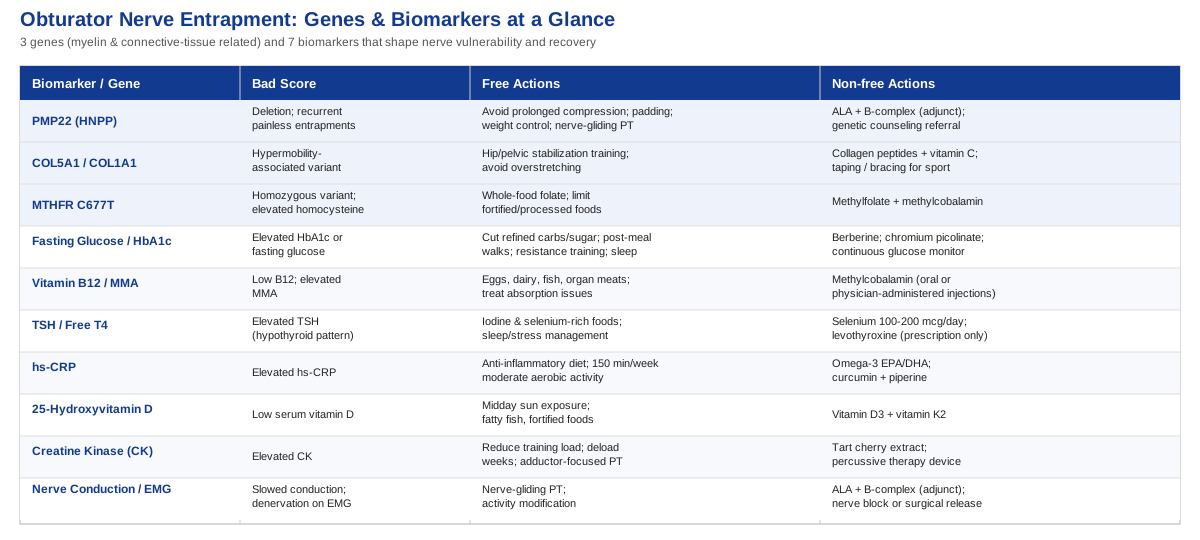
7 Biomarkers Worth Tracking For Obturator Nerve Health
Obturator nerve entrapment is usually described purely in structural terms — a fibrous band, an enlarged adductor longus, post-surgical scarring, or an obturator hernia compressing the nerve as it passes through the obturator canal. That's accurate, but it's incomplete. The same mechanical compression produces very different symptoms and recovery timelines depending on the metabolic and inflammatory environment the nerve is sitting in. This is the same logic Peter Attia and Thomas Dayspring apply to cardiovascular risk: don't just look at the obvious lesion, look at the biochemical terrain that determines how the body responds to it. Below are the seven markers worth checking, roughly in order of how often they're overlooked relative to how much they matter.
1. Fasting Glucose And HbA1c
Chronically elevated blood sugar damages the small blood vessels that feed peripheral nerves (the vasa nervorum), slows nerve conduction, and lowers the threshold at which mechanical compression becomes symptomatic. This relationship is best documented in carpal tunnel syndrome, where diabetics show markedly higher rates of entrapment, and the same vascular and glycation mechanisms apply to any peripheral nerve, including the obturator nerve.
How to measure it
Fasting glucose is a standard blood draw (roughly $10–$20, often bundled into routine panels). HbA1c runs about $15–$40. A continuous glucose monitor ($50–$100/month) is optional but useful if you want to see how specific meals and training sessions affect your glucose in real time.If the score is bad, the plan without supplements
Cut refined carbohydrates and added sugar, take a 10–15 minute walk after meals, add resistance training two to three times per week, prioritize seven to nine hours of sleep, and address excess body fat if present. These changes alone typically improve HbA1c within three months.If the score is bad, the plan with supplements or equipment
Berberine, 500 mg two to three times daily with meals, cycled eight to twelve weeks before reassessing bloodwork — it can cause GI upset and should not be combined with metformin without physician oversight. Chromium picolinate 200–400 mcg/day has modest supporting evidence and is generally well tolerated. A CGM can help identify which specific foods spike you the most.2. Vitamin B12 And Methylmalonic Acid (MMA)
B12 deficiency causes peripheral neuropathy and demyelination directly, which compounds any existing compression at the obturator canal. It's common in older adults, people on metformin or long-term proton pump inhibitors, and those eating largely plant-based diets.
How to measure it
Serum B12 costs about $20–$40. When B12 is borderline, methylmalonic acid (MMA, $40–$80) is a more sensitive marker of functional deficiency, and homocysteine ($30–$50) is a useful companion test.If the score is bad, the plan without supplements
Increase intake of eggs, dairy, fish, shellfish, and organ meats, and work with a physician to rule out absorption issues such as H. pylori infection or atrophic gastritis.If the score is bad, the plan with supplements or equipment
Methylcobalamin, 1000 mcg sublingually daily for eight to twelve weeks, then retest. If deficiency is severe or absorption is impaired, physician-administered B12 injections weekly for four to eight weeks, then monthly maintenance, are more reliable than oral dosing. Side effects are rare; avoid indefinite high-dose supplementation without periodic retesting.3. TSH And Free T4
Hypothyroidism is a well-documented risk factor for entrapment neuropathies — the evidence base is strongest for carpal tunnel syndrome — through tissue swelling and mucin deposition that reduces the space available for a nerve to move freely. It's worth ruling out in anyone with unexplained, persistent nerve-type groin or thigh symptoms.
How to measure it
TSH costs roughly $20–$40, free T4 (often run as a reflex test) another $20–$40; many labs bundle both for $50–$80.If the score is bad, the plan without supplements
Ensure adequate dietary iodine and selenium (seafood, a couple of Brazil nuts per day — not more), manage sleep and stress since cortisol interferes with thyroid hormone conversion, and moderate excessive raw goitrogen intake if levels are borderline.If the score is bad, the plan with supplements or equipment
Selenium 100–200 mcg/day, capped there since higher doses over time carry toxicity risk. If TSH confirms clinical hypothyroidism, levothyroxine is a prescription decision for an endocrinologist, not a supplement choice — this is one marker where self-directed supplementation should not substitute for medical management.4. High-Sensitivity CRP (hs-CRP)
hs-CRP reflects systemic low-grade inflammation. Elevated levels correlate with greater pain sensitization and slower soft tissue and nerve healing, making this a useful marker to track before and after you change diet, training load, or start an anti-inflammatory intervention.
How to measure it
A simple blood test, roughly $15–$30, easily added to an annual panel.If the score is bad, the plan without supplements
Shift toward an anti-inflammatory dietary pattern (more fatty fish, fewer ultra-processed foods), maintain 150 minutes per week of moderate aerobic activity, prioritize sleep, and reduce visceral fat if present.If the score is bad, the plan with supplements or equipment
Omega-3 (EPA/DHA), 2–3 g/day with food — safe to take continuously, though it can cause GI upset and interacts with anticoagulants. Curcumin with piperine, 500–1000 mg/day, cycled in eight-week blocks; avoid with gallstones or if on blood thinners.5. 25-Hydroxyvitamin D
Low vitamin D is associated with increased musculoskeletal pain sensitivity and slower tissue repair, both relevant to a nerve running through a muscular canal that needs to glide freely.
How to measure it
A standard blood test, about $30–$50.If the score is bad, the plan without supplements
Fifteen to twenty minutes of midday sun exposure several times a week (adjusted for skin type), plus dietary sources like fatty fish and fortified foods.If the score is bad, the plan with supplements or equipment
Vitamin D3, 2000–4000 IU/day, taken with a fat-containing meal alongside vitamin K2 (about 100 mcg). Retest after three months. Avoid doses above 10,000 IU/day without monitoring, since sustained megadosing risks hypercalcemia.6. Creatine Kinase (CK)
Elevated CK can signal ongoing adductor muscle overload, which is directly relevant since adductor hypertrophy or overuse is one of the more common mechanical contributors to obturator nerve compression in athletes.
How to measure it
A blood test, roughly $20–$40 — best drawn after 48–72 hours of rest from intense training to avoid a false elevation from normal exercise-induced muscle breakdown.If the score is bad, the plan without supplements
Reduce training load, add deload weeks, and work with a physical therapist on adductor biomechanics and a graded return-to-sport protocol rather than pushing through symptoms.If the score is bad, the plan with supplements or equipment
Tart cherry juice or extract around heavy training blocks has modest supporting evidence for recovery and is generally safe. A percussive therapy device or foam roller for the adductor compartment can help, but this marker is driven by training load, not a nutrient deficiency — supplements are a minor adjunct here, not the fix.7. Nerve Conduction Studies And EMG
This is the most direct objective marker of whether the obturator nerve itself is functionally impaired. Slowed conduction velocity or denervation changes on EMG confirm true entrapment and help distinguish it from referred pain originating in the hip joint or lumbar spine — a distinction that changes the entire treatment plan.
How to measure it
Performed by a neurologist or physiatrist, typically $300–$800 depending on region and insurance coverage. MR neurography, which visualizes the nerve directly, adds another $1,000–$2,500 and is often used to confirm the compression site.If the score is bad, the plan without supplements
This is a diagnostic marker, not something you modify directly. Based on the findings, treatment is targeted — physical therapy focused on nerve gliding and adductor mechanics, activity modification, a diagnostic nerve block, or surgical release in refractory cases — rather than guessing.If the score is bad, the plan with supplements or equipment
No supplement repairs a confirmed conduction deficit, but alpha-lipoic acid (600 mg/day, cycled over twelve weeks, mild GI effects) and a B-complex are sometimes used adjunctively to support nerve healing once decompression treatment is underway.Taken together, these seven markers separate two very different situations that feel identical from the inside: a nerve that's purely mechanically pinched versus one that's mechanically pinched and biochemically primed to stay irritated. That distinction is worth having before deciding how aggressively to pursue imaging, injections, or surgery.
What Genetic Research Suggests About Nerve Entrapment Risk
Direct genetic studies on obturator nerve entrapment specifically are essentially nonexistent — this is a niche enough condition that it hasn't been the subject of dedicated genome-wide studies the way, say, cardiovascular risk or Alzheimer's risk have been. What does exist is solid research on genes that affect peripheral nerve vulnerability and connective tissue mechanics more broadly, which reasonably extends to the obturator nerve even without obturator-specific trial data. That distinction matters, and it's worth being upfront about it rather than overstating the evidence.
PMP22 (Hereditary Neuropathy With Liability To Pressure Palsies)
A deletion in the PMP22 gene causes hereditary neuropathy with liability to pressure palsies (HNPP), a well-characterized autosomal dominant condition in which peripheral nerves are unusually sensitive to mild compression or stretch at multiple common entrapment sites — classically the peroneal nerve at the fibular head, the ulnar nerve at the elbow, and the median nerve at the wrist. This is documented in detail in the GeneReviews clinical summary of HNPP. Obturator-specific case data is sparse, but the same underlying myelin fragility plausibly applies to any nerve running through a tight anatomical canal, including the obturator canal. Recurrent, relatively painless entrapments at multiple unrelated sites, especially after only minor pressure, is the clinical clue that warrants asking a neurologist about genetic testing.
If The Gene Is Bad, The Plan Without Supplements
Nothing reverses a PMP22 deletion, so the plan is about reducing mechanical exposure: avoid prolonged compressive positions (crossed legs, tight hip flexion for extended periods), use padding or positional changes during long sitting, manage body weight to reduce soft tissue pressure around the obturator canal, and work with a physical therapist on nerve-gliding exercises rather than aggressive stretching.If The Gene Is Bad, The Plan With Supplements Or Equipment
No supplement addresses the underlying myelin defect, and it's important not to imply otherwise. Ergonomic and protective equipment — padded hip and groin protection for athletes, cushioned seating for those with sedentary jobs — offers real, if modest, mechanical protection. Alpha-lipoic acid and a B-complex are sometimes used adjunctively for general nerve support, but the honest expectation is symptom management, not correction of the gene itself. A referral to a genetic counselor is the most useful next step if HNPP is suspected.Connective Tissue Genes (COL5A1, COL1A1) And Joint Hypermobility
Variants in collagen genes associated with Ehlers-Danlos syndrome and the broader hypermobility spectrum can alter pelvic and hip joint mechanics. Looser connective tissue changes how forces are distributed across the adductor compartment and obturator canal during athletic movement, which could plausibly increase entrapment risk indirectly. The evidence here is mechanistic and observational rather than a set of obturator-specific clinical trials, so treat this as a reasonable hypothesis rather than an established causal chain.
If The Gene Is Bad, The Plan Without Supplements
Strength-based hip and pelvic stabilization training rather than end-range stretching, proprioceptive and control-focused exercise (single-leg work, controlled tempo training), and avoiding excessive hypermobile stretching that a naturally flexible person may be tempted to do.If The Gene Is Bad, The Plan With Supplements Or Equipment
Collagen peptides, 10–15 g/day, alongside 500 mg vitamin C to support collagen synthesis — evidence specific to entrapment prevention is limited, but the approach is low-risk and doesn't require cycling. Taping or bracing for pelvic stability during sport can provide mechanical support during the highest-risk movements (cutting, pivoting).MTHFR C677T Variant
The MTHFR C677T variant reduces the efficiency of folate metabolism and can elevate homocysteine, particularly when B12 or folate status is already marginal. This isn't a nerve entrapment gene per se, but it compounds the B12 deficiency risk covered in the biomarker section above, making it worth knowing if your B12 or homocysteine numbers are borderline rather than clearly normal or clearly deficient. The evidence connecting this variant to neuropathy risk is early and indirect.
If The Gene Is Bad, The Plan Without Supplements
Prioritize folate from whole foods — leafy greens, legumes, lentils — and, if homozygous for the variant, be cautious with heavily fortified processed foods that rely on synthetic folic acid rather than natural folate.If The Gene Is Bad, The Plan With Supplements Or Equipment
Methylfolate (5-MTHF), 400–800 mcg/day, paired with methylcobalamin rather than standard folic acid. No cycling is required, but retest homocysteine after three months. Start at the lower end of the dose range, since a minority of people report irritability or overstimulation with methylated B vitamins.What A Leading Pain Research Podcast Reveals About Nerve-Related Pain
Structural findings on imaging or nerve conduction tests tell you where the compression is, but not necessarily why the pain persists the way it does. Andrew Huberman's conversation with Stanford pain researcher Dr. Sean Mackey on the Huberman Lab podcast, titled "Understanding and Conquering Pain," covers exactly that gap, and several of its findings challenge the reflexive "just rest it" advice that groin and thigh nerve pain usually gets. Here are the ten points most relevant to someone dealing with entrapment-type nerve pain.
1. Pain Is Generated By The Brain, Not Just Reported By The Nerve
Nociceptive signals from a compressed nerve are only an input. The brain integrates that signal with context, past experience, and threat perception before producing what you actually feel as pain — which is why the same degree of nerve compression can feel mild in one person and disabling in another.2. Chronic Pain Can Outlast The Original Tissue Problem
Through central sensitization, the nervous system can remain in a heightened, protective state even after a nerve is successfully decompressed, which explains why some people still hurt after imaging and surgery both look successful.3. Movement Usually Beats Prolonged Rest
Within a tolerable range, controlled movement tends to reduce chronic nerve pain over time more reliably than extended immobilization, which can sensitize the area further rather than protect it.4. Fear And Catastrophizing Amplify Pain Intensity
The belief that movement will cause damage measurably increases perceived pain, independent of the actual tissue state — a pattern well documented in chronic pain research generally.5. Sleep Is One Of The Strongest Levers On Next-Day Pain Sensitivity
Poor sleep lowers pain thresholds the following day, making sleep quality a legitimate, evidence-based part of a nerve pain recovery plan rather than an afterthought.6. Perceived Control Changes How Pain Signals Are Processed
Believing you have some agency over your pain, through a structured plan or specific techniques, changes brain processing of pain signals, not just your emotional response to them.7. Cognitive Behavioral Techniques Produce Measurable, Not Just Placebo, Effects
Structured psychological approaches to chronic pain show real changes in pain reporting and function, not simply a distraction effect, when studied against active controls.8. Lifestyle Factors Shift The Nervous System's Baseline Sensitivity
Diet, exercise, and stress management change the resting sensitivity of the pain-processing system over time, which is one reason the biomarker work earlier in this article is not a separate track from pain management — it's the same track.9. Untreated Localized Pain Can Spread Through Central Mechanisms
Pain confined to one nerve distribution can, over time, become more diffuse as central pain-processing changes take hold, which is one practical argument for addressing entrapment symptoms earlier rather than waiting them out.10. The Best Outcomes Combine Multiple Approaches At Once
Physical therapy, psychological tools, and — when appropriate — medical or surgical intervention, used together, consistently outperform any single approach used alone for entrapment-type nerve pain.None of this suggests obturator nerve entrapment is "in your head." The fibrous band, the hypertrophied adductor, the hernia — these are real, mechanical, and often fixable causes. What this research adds is a second, parallel truth: how your nervous system processes that mechanical problem also shapes your recovery, and ignoring that half of the picture leaves real treatment potential on the table.
Complementary Approaches Worth Considering
Structural treatment and the biomarker and pain-science work above form the core of a sound approach. A small number of complementary modalities have genuine, if sometimes limited, human evidence relevant to nerve entrapment and the myofascial pain that surrounds it, and are reasonable to add alongside — not instead of — proper diagnosis and treatment.
Low-Level Laser Therapy / Photobiomodulation
Low-level laser therapy (LLLT), also called photobiomodulation, uses specific wavelengths of light to reduce local inflammation and support nerve tissue repair. It has the most direct evidence base of any complementary option here, because it has been studied specifically in entrapment neuropathies, most extensively carpal tunnel syndrome, which shares the core mechanism with obturator nerve entrapment: a peripheral nerve compressed in a confined anatomical space.
Clinical protocols in the carpal tunnel literature typically use low-level laser applied directly over the compression site for several minutes per session, two to three times weekly for four to six weeks, with several randomized trials showing improved nerve conduction parameters and reduced symptom scores compared to sham treatment. Direct obturator-specific trials don't exist yet, so this evidence is extrapolated from an anatomically and mechanistically similar condition rather than proven for this exact nerve.
Realistically, this means asking a physical therapist or sports medicine clinic whether they have a laser unit capable of targeting the adductor/obturator canal region, and treating it as a four-to-six-week adjunct trial alongside physical therapy rather than a standalone fix. It's low-risk, but not inexpensive if paid out of pocket per session.
Massage Therapy
Targeted soft tissue and myofascial massage around the adductor compartment can reduce muscular tension and, in some cases, the mechanical pressure contributing to nerve compression, since adductor hypertrophy and tightness are common contributors to obturator nerve entrapment in athletes. The direct evidence is strongest for adjacent conditions — myofascial groin and low back pain — rather than obturator entrapment specifically, so this should be considered a reasonable extrapolation rather than a proven, condition-specific treatment.
A practical approach is deep tissue or myofascial release focused specifically on adductor longus, brevis, and magnus, performed by a therapist familiar with groin and pelvic anatomy, once or twice weekly for four to six weeks, tracking whether symptoms and hip mobility improve. It pairs naturally with the strength and mobility work a physical therapist would already be prescribing.
Used this way — as a supplement to, not a replacement for, targeted rehab — massage carries minimal downside beyond cost and the occasional day of soreness after a deep session.
Yoga
Yoga combines controlled hip and adductor mobility work with breath-based relaxation, both plausibly relevant to a condition where adductor tightness and heightened pain sensitivity both play a role. While no yoga trial has studied obturator nerve entrapment directly, a well-designed randomized trial found yoga produced outcomes comparable to formal physical therapy for chronic low back pain, a condition with meaningful mechanistic overlap in terms of nerve-related and myofascial pain, as reported in the randomized noninferiority trial published in Annals of Internal Medicine.
A sensible protocol is two to three sessions weekly of a gentle to moderate hatha-style practice emphasizing hip opening and controlled adductor stretching, avoiding deep end-range hip external rotation poses that can aggravate an already irritated obturator nerve.
The main caution is avoiding aggressive stretching into pain during acute flares — this is one context where "listen to the nerve, not just the muscle" matters, and working with an instructor who understands to modify or skip deep hip-opening poses when symptoms are active is worthwhile.
Biofeedback
Biofeedback trains conscious control over muscle tension and autonomic arousal, both relevant given how much pelvic and adductor muscle guarding can contribute to ongoing nerve irritation. It has documented use in chronic pelvic pain syndromes that involve nerve-related pain in the same general region as the obturator nerve, though evidence specific to obturator entrapment itself is limited.
A typical protocol uses surface EMG sensors placed over the adductor or pelvic floor musculature, with a trained therapist guiding sessions to reduce excess muscle guarding, usually over six to eight weekly sessions.
This is best used for people whose symptoms include a clear component of muscle guarding or bracing around the hip and groin, and is most accessible through pelvic health physical therapists who already have the equipment, rather than as a standalone purchase.
Conclusion
Obturator nerve entrapment is a mechanical problem, but how much it hurts, how easily it flares, and how well it heals are shaped by things a standard workup often skips: blood sugar control, thyroid function, B12 and inflammatory status, and, for a smaller number of people, genetic factors that make nerves more vulnerable to compression in the first place. Layering in what pain research shows about how the nervous system processes chronic nerve pain, and adding evidence-supported complementary approaches where they genuinely fit, turns a vague "groin pain" diagnosis into a specific, actionable plan.
The next useful step isn't a bigger commitment, it's a more precise one: get the seven biomarkers above checked if you haven't already, ask a physician about nerve conduction testing if symptoms have persisted past six weeks of conservative treatment, and bring this information to whoever is managing your care rather than trying to interpret it alone.
Musculoskeletal Endocrine & Metabolic
Musculoskeletal: Muscle Conditions
Endocrine & Metabolic: Diabetes & Blood Sugar Thyroid Conditions
Autoimmune: Connective Tissue Conditions