This article contains AI generated content.
Popliteal Adventitial Cyst Disease: 7 Biomarkers and 3 Genes to Track
Introduction
If you're reading this, you've probably already heard the phrase "rare vascular condition of unknown cause" more than once, and it hasn't told you much. Popliteal adventitial cyst disease, also called cystic adventitial disease (CAD) of the popliteal artery, is one of those diagnoses that shows up on an MRI report with confidence but gets explained to the patient with a shrug. You get a leg that cramps on exertion, a normal set of standard risk factors, and a specialist who tells you it's "probably developmental" and that surgery is the definitive fix. That's accurate, but it isn't the whole picture, and it doesn't answer the question most people actually have: what does this mean for my body, and is there anything I can track or influence while I figure out next steps.
Generic vascular advice — walk more, don't smoke, watch your cholesterol — isn't wrong, but it's built for atherosclerotic peripheral artery disease, a different mechanism entirely. CAD isn't caused by plaque buildup. It's a mucin-filled cyst growing inside the adventitial layer of the artery wall, most likely from misplaced connective tissue cells or a connection to nearby joint tissue. That distinction matters, because it changes which lab values are actually informative, which genetic angles are worth a second look, and which lifestyle levers are realistic versus which ones are borrowed from an unrelated disease.
This article takes the deeper route. It looks at the blood-based and imaging biomarkers that help you and your care team understand hemodynamic severity, clotting risk, and whether a separate atherosclerotic process is also in play — because CAD and ordinary PAD can coexist and get confused for each other. It also looks, more cautiously, at the genetic and connective-tissue biology that might explain why a cyst forms in the first place, drawing on the kind of systematic thinking that genome researchers like Ali Torkamani and functional-health communicators like Gary Brecka apply to complex, multi-gene conditions.
None of this replaces a vascular surgeon, and nothing here claims to reverse a structural cyst with a supplement. But better information changes the quality of the questions you ask, the tests you request, and the daily choices you make while you wait for imaging, monitor a small cyst, or recover from excision. That's a realistic kind of hope, and it's where this article is aimed.
Summary
Popliteal adventitial cyst disease doesn't come with a tidy blood test that says "this is what's happening." But it does come with a cluster of measurements — some cheap, some more advanced — that together tell you far more than a single ankle pulse check ever could. This article walks through seven of them: the functional test that catches what a resting exam misses, the imaging markers that track the cyst itself, the clotting and inflammation values that flag complications before they become emergencies, and the lipid particle counts that tell you whether a second, unrelated arterial problem is quietly developing alongside the cyst. For each one, you'll find what it costs, how it's measured, and two concrete plans — one built around habits alone, one that adds supplements or equipment when the numbers don't move.
Beyond the biomarkers, you'll find a shorter, honestly-hedged look at the connective-tissue genes that might explain why adventitial cysts form in some people and not others, a practical breakdown of the ten ideas from Peter Attia's Outlive that are most relevant to vascular health, and a review of which complementary approaches — guided imagery, biofeedback, mindfulness, progressive muscle relaxation — actually have supporting trial data for people managing claudication-type symptoms or preparing for vascular surgery. If you want the fastest path to knowing what to ask your vascular surgeon at your next appointment, the biomarker section is the one to read first.
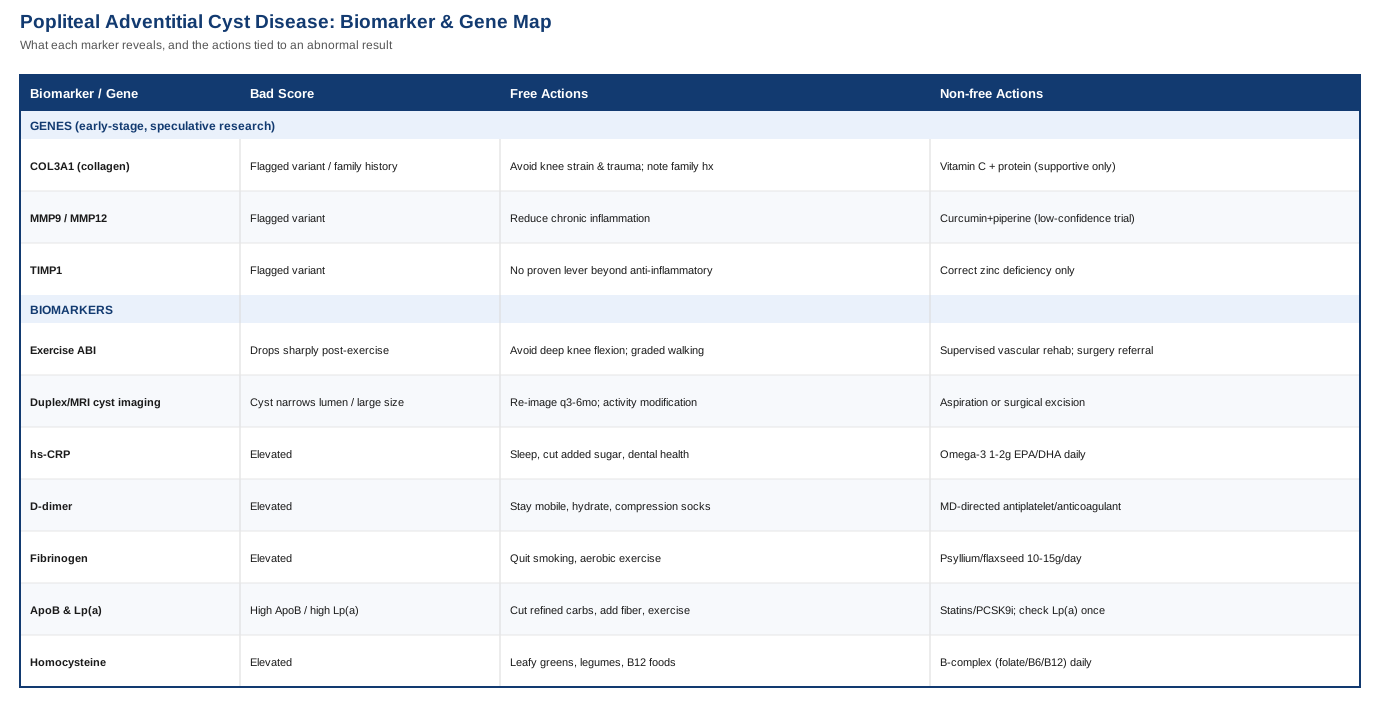
7 Biomarkers Worth Tracking If You're Dealing With Popliteal Adventitial Cyst Disease
CAD is a mechanical and structural problem first, not a metabolic one — the cyst itself won't show up as an abnormal blood value. But the consequences of a growing cyst (reduced flow, turbulence, clot formation) and the question of whether atherosclerosis is also present both leave measurable traces. The seven biomarkers below cover both angles: how the artery is functioning right now, and what else might be going on in the background. CAD is rare, affects mostly men in their 40s without typical cardiovascular risk factors, which is exactly why distinguishing it from ordinary PAD on paper, not just on imaging, is worth the extra effort.
Exercise ankle-brachial index (ABI)
Why it matters: resting ABI is often normal in early CAD because the cyst hasn't yet compressed the artery enough to matter at rest. The classic finding is a normal resting ABI that drops sharply after treadmill exercise, because the cyst narrows the lumen just enough to become flow-limiting only under demand. ABI remains one of the most validated, low-cost tools for both diagnosing arterial narrowing and predicting broader cardiovascular risk.
How to measure it: a vascular lab technician takes blood pressure at the ankle and arm before and after a standardized treadmill walk. Cost typically runs 50 to 150 dollars out of pocket, or is bundled into a vascular surgery consult when ordered through insurance.
If the score is bad, the plan without supplements or equipment: reduce activities that involve sustained deep knee flexion or repetitive pressure behind the knee — deep squats held for long periods, cycling with an aggressive forward-flexed position, kneeling on hard surfaces — since mechanical irritation of the popliteal fossa is one of the leading theories behind cyst formation and progression. Walk to the point of moderate claudication discomfort, rest, and repeat, three to five times a week, which is the same graded approach used in general PAD rehab. This won't shrink the cyst, but it maintains collateral circulation and keeps the vascular team's baseline data meaningful.
If the score is bad, the plan with supplements or equipment: this is a case where "equipment" means a supervised exercise program at a vascular rehab facility rather than a device you buy — structured, supervised walking sessions two to three times weekly for 12 weeks show meaningfully better outcomes than unsupervised walking in arterial claudication generally. There is no supplement that reliably improves exercise ABI in a structural narrowing. If the exercise ABI is markedly abnormal, the honest next step is a vascular surgery referral, since surgical excision or bypass is described as the definitive treatment once symptoms are functionally limiting.
Duplex ultrasound and MRI cyst measurements
Why it matters: this is the direct structural biomarker — cyst size, location relative to the artery, degree of luminal narrowing, and whether the cyst has a stalk connecting to the adjacent knee joint. These measurements are what actually drive the decision between watchful waiting and intervention.
How to measure it: duplex ultrasound is the cheaper first pass, roughly 150 to 400 dollars, but MRI with T1 and T2 weighted sequences is considered the gold standard for characterizing the cyst's contents and extent, typically 500 to 3,000 dollars depending on region and whether contrast is used. Imaging characteristics have also been used to argue for the developmental theory of cyst origin, since cysts are frequently found to communicate with the knee joint capsule.
If the score is bad, the plan without supplements or equipment: for small, asymptomatic cysts, the realistic non-invasive plan is scheduled re-imaging (commonly every 3 to 6 months initially) and activity modification around the knee, since spontaneous regression of the cyst has been documented in case reports, though it is not the typical course and shouldn't be assumed.
If the score is bad, the plan with supplements or equipment: percutaneous, ultrasound-guided aspiration of the cyst is a lower-morbidity option used in some centers, though recurrence is common because the underlying stalk or mucin-producing tissue is often left behind. Surgical excision, with or without arterial reconstruction, remains the approach with the lowest recurrence rate. Neither of these is a supplement-based intervention — this is squarely a procedural decision to make with a vascular surgeon, ideally one who has specifically managed CAD rather than general PAD.
High-sensitivity C-reactive protein (hs-CRP)
Why it matters: hs-CRP is a general inflammation marker, not specific to CAD, but it's useful for two reasons here — it helps rule in or out a coexisting atherosclerotic inflammatory process, and unexplained elevation can sometimes accompany cyst-related vessel wall irritation or post-surgical recovery.
How to measure it: a standard blood draw, 15 to 40 dollars, often included in a basic cardiovascular panel.
If the score is bad, the plan without supplements: prioritize sleep regularity, reduce ultra-processed food and added sugar intake, and address periodontal health, since chronic low-grade infection is a common and underrecognized driver of persistent hs-CRP elevation.
If the score is bad, the plan with supplements or equipment: omega-3 fatty acids (roughly 1 to 2 grams EPA/DHA daily) have modest evidence for lowering hs-CRP over 8 to 12 weeks; recheck at that interval rather than weekly. Side effects are generally mild — fishy aftertaste, occasional GI upset — but omega-3s do have a mild antiplatelet effect, which is worth flagging to a surgeon if a procedure is being scheduled. There's no need to cycle omega-3 supplementation; it's typically continuous.
D-dimer
Why it matters: turbulent flow through a narrowed, cyst-compressed arterial segment can promote local clot formation, and CAD cases have been reported with acute thrombosis or distal embolization as a complication. In peripheral arterial disease broadly, elevated D-dimer has been associated with roughly double the near-term risk of cardiovascular and thrombotic events.
How to measure it: a blood draw, 20 to 50 dollars, results in hours rather than days.
If the score is bad, the plan without supplements or equipment: this is not a value to self-manage. Compression stockings, staying mobile during long travel, and adequate hydration are reasonable general measures, but an elevated D-dimer in the context of a known arterial cyst warrants a direct conversation with your vascular team, not a home protocol.
If the score is bad, the plan with supplements or equipment: any antiplatelet or anticoagulant decision (aspirin, clopidogrel, or stronger agents) needs to come from the physician managing the cyst, because bleeding risk has to be weighed against a possible upcoming surgery. Avoid self-adding unsupervised "blood-thinning" supplements like high-dose fish oil, nattokinase, or serrapeptase on top of prescribed antithrombotics — the interaction risk (excess bleeding) outweighs any theoretical benefit here.
Fibrinogen
Why it matters: fibrinogen is both a clotting factor and an acute-phase inflammatory protein, and elevated fibrinogen alongside D-dimer has been shown to independently predict adverse outcomes in patients with disease across multiple vascular beds, making it a useful companion test rather than a standalone one.
How to measure it: a standard blood draw, 20 to 40 dollars.
If the score is bad, the plan without supplements: smoking cessation produces one of the largest measurable drops in fibrinogen of any lifestyle change, along with regular aerobic activity and gradual weight loss if applicable.
If the score is bad, the plan with supplements or equipment: fiber intake (psyllium or ground flaxseed, 10 to 15 grams daily) has modest supporting data for lowering fibrinogen over several months. There's no fast-acting supplement fix here, and mega-dosing niacin specifically to lower fibrinogen is not advisable given its side effect profile (flushing, potential liver enzyme elevation, glucose intolerance) relative to the modest benefit.
Apolipoprotein B (ApoB) and Lipoprotein(a) [Lp(a)]
Why it matters: this is the pair that lipid specialists like Peter Attia, Thomas Dayspring, and Allan Sniderman have pushed to the front of cardiovascular risk assessment, ahead of standard LDL cholesterol. ApoB reflects the actual number of atherogenic particles in circulation, which correlates more tightly with arterial risk than LDL-C does, and Lp(a) is a largely genetically-determined, independent risk marker for atherosclerotic disease. For someone with CAD, this pair answers a specific question: is there also a slow-building atherosclerotic process in this leg, or elsewhere, that deserves separate attention from the cyst itself. That distinction changes the entire management conversation, since CAD patients are classically described as free of standard atherosclerotic risk factors — confirming that with numbers, rather than assuming it, is worthwhile.
How to measure it: ApoB runs 25 to 50 dollars and is now offered by most major labs; Lp(a) runs 30 to 100 dollars and, because it's largely genetically fixed, generally only needs to be checked once in your life unless you're on a therapy specifically targeting it.
If the score is bad (ApoB), the plan without supplements: reduce refined carbohydrate and saturated fat load, add soluble fiber, and increase aerobic activity — ApoB responds to sustained dietary pattern changes over 8 to 12 weeks more reliably than most other lipid markers.
If the score is bad (ApoB), the plan with supplements or equipment: plant sterols/stanols (2 grams daily) and psyllium have modest ApoB-lowering evidence; for larger reductions, statins or PCSK9 inhibitors are the evidence-backed prescription options, and this is a conversation for a physician, not a self-directed supplement stack. Recheck every 3 to 6 months when actively adjusting.
If Lp(a) is elevated: lifestyle and most supplements have little effect on Lp(a) specifically, because it's driven by genetics rather than diet. Niacin can lower it modestly but carries meaningful side effects (flushing, hepatotoxicity risk at high doses, glucose intolerance) for a benefit that hasn't clearly translated into fewer cardiovascular events, so most lipidologists no longer recommend it for this purpose alone. The practical takeaway is simply to know the number once, and if it's high, to be more aggressive about every other modifiable risk factor on this list.
Homocysteine
Why it matters: elevated homocysteine has been independently associated with the presence and progression of peripheral arterial disease, acting partly through endothelial dysfunction and oxidative stress. It's one of the more easily modified values on this list.
How to measure it: a blood draw, 40 to 80 dollars.
If the score is bad, the plan without supplements: increase intake of leafy greens, legumes, and B12-rich foods (eggs, fish, dairy) for 8 to 12 weeks before retesting.
If the score is bad, the plan with supplements or equipment: a B-complex containing folate (or methylfolate for those who don't respond well to folic acid), B6, and B12, taken daily, typically normalizes mildly elevated homocysteine within two to three months. Ongoing use is standard rather than cycled, but B12 status should be periodically rechecked so that supplementation isn't masking an underlying absorption problem. Side effects are minimal at standard doses; very high-dose folic acid over long periods has raised some theoretical concerns in the research literature, which is the main reason to prefer food-first and moderate dosing over aggressive megadosing.
Taken together, these seven values won't diagnose or reverse a structural cyst, but they give you and your vascular team a much clearer picture of severity, complication risk, and whether a second process is quietly running alongside the one you already know about.
What Early Genetic Research Suggests
Unlike many vascular conditions, CAD doesn't yet have an established genetic signature — there is no confirmed causal gene, and no polygenic score built specifically for it. What follows is deliberately speculative and framed that way throughout: it draws on the biology of connective tissue and vascular wall remodeling, the same territory that genome researchers like Ali Torkamani study when building polygenic risk models, and that functional-health communicators like Gary Brecka popularize when they talk about "optimizing" specific gene variants. As reviews of polygenic risk scores emphasize, a risk variant shifts probability, it doesn't determine outcome, and that distinction matters enormously here given how thin the direct evidence is.
COL3A1 and related collagen genes
What it may affect: COL3A1 encodes type III collagen, a major structural component of blood vessel walls. Variants that reduce collagen strength or crosslinking are well established in vascular Ehlers-Danlos syndrome, which causes fragile, aneurysm-prone arteries. There is no confirmed link between COL3A1 variants and adventitial cyst formation specifically, but the developmental theory of CAD — that misplaced mesenchymal, mucin-producing cells end up in the adventitial layer during embryonic development — sits in the same broad category of connective tissue patterning gone slightly awry.
If the gene is flagged on a consumer genetic report, the plan without supplements: this is mostly about avoiding unnecessary additional strain on connective tissue — moderating extreme joint hypermobility exercises, avoiding high-impact trauma to the knee area, and mentioning any family history of vascular fragility or easy bruising to your physician, since that context matters more than the raw genetic variant.
If the gene is flagged, the plan with supplements or equipment: vitamin C (as a required cofactor for collagen synthesis, 500 to 1000 mg daily) and adequate dietary protein are the standard, low-risk supportive measures; there is no human evidence that any supplement compensates for a structural collagen gene variant in a way that prevents or resolves an adventitial cyst, and it's important not to overstate what "collagen support" supplements can do here. No cycling is needed for vitamin C at these doses; side effects at high doses are mainly gastrointestinal.
MMP9 and MMP12 (matrix metalloproteinases)
What it may affect: MMPs are the primary enzymes responsible for breaking down and remodeling the extracellular matrix within arterial walls, and their dysregulation has been implicated in aneurysm formation, arterial stiffening, and other structural vascular remodeling processes. Overactive matrix breakdown in the adventitia is a plausible, though unproven, contributor to the kind of localized tissue change that allows a mucin-filled cyst to expand.
If the gene is flagged, the plan without supplements: reducing chronic systemic inflammation (see the hs-CRP section above) is the most defensible lever, since inflammatory signaling upregulates MMP activity; this also happens to be one of the few overlaps between the genetic and biomarker sections of this article.
If the gene is flagged, the plan with supplements or equipment: there is early laboratory (not clinical) evidence that curcumin and green tea catechins can modulate MMP activity, but human trial data specific to arterial adventitial tissue doesn't exist. If tried, a reasonable approach is curcumin with piperine, 500 to 1000 mg daily, for 8 to 12 weeks, then reassess whether it's worth continuing — treat this as a low-confidence, low-risk experiment rather than a treatment. Side effects are generally mild GI upset; curcumin can also have a mild blood-thinning effect, again worth flagging before any planned procedure.
TIMP1 (tissue inhibitor of metalloproteinases)
What it may affect: TIMP1 keeps MMP activity in check. A relative imbalance — MMP activity outpacing TIMP inhibition — is one of the general mechanisms proposed for pathological vascular remodeling. Again, no study has directly tied a TIMP1 variant to CAD; this is an extrapolation from the broader matrix-biology literature referenced above.
If the gene is flagged, the plan without supplements or equipment: this one is largely non-actionable through lifestyle in any evidence-based way beyond the general anti-inflammatory measures already covered — the honest statement is that there isn't a meaningful independent lever here yet.
If the gene is flagged, the plan with supplements or equipment: the same caveat applies. Zinc adequacy (since several MMP/TIMP-related enzymes are zinc-dependent) is worth confirming through a basic panel if someone is deficient, but supplementing zinc beyond correcting a deficiency has no demonstrated effect on this pathway in humans and carries its own risk of copper deficiency with prolonged high-dose use, so this is not a "more is better" situation.
The honest summary of this section is that genetics here is a research direction, not a management tool. If you've had your genome sequenced through a consumer platform or a service in the Torkamani/Scripps mold, these three genes are reasonable to look up out of curiosity, but no current variant should change a treatment decision about an actual, imaged adventitial cyst.
10 Ideas From Peter Attia's Outlive That Apply Directly Here
Outlive, Peter Attia's book on longevity medicine, is built around exactly the kind of reframing this article has been doing throughout: move from reactive, symptom-based medicine toward measuring the things that actually predict trouble years in advance. Several of its core arguments map unusually well onto a vascular condition like CAD, even though the book isn't about this disease specifically.
1. "Medicine 3.0" means acting before the crisis, not after it
Attia's central argument is that conventional medicine treats disease once it's symptomatic, while a more useful model tracks risk markers early and intervenes on trajectory. For CAD, that translates into taking exercise ABI and imaging follow-up seriously even while a small cyst is still "watch and wait," rather than treating the first severe claudication episode as the starting point of care.
2. ApoB, not LDL-C, is the number that matters
This is one of the book's most repeated points, and it lines up exactly with the biomarker section above: particle count predicts arterial risk better than cholesterol mass does. If you take one lab change from this entire article, switching from a standard lipid panel to ApoB is probably it.
3. The "Four Horsemen" framework
Attia groups the major causes of death and disability into atherosclerotic disease, cancer, neurodegenerative disease, and metabolic dysfunction, arguing they share upstream risk factors. A CAD diagnosis is a reminder to check whether you're also carrying silent risk for the atherosclerotic horseman specifically, which is exactly what the ApoB/Lp(a) pairing above is for.
4. VO2 max is one of the strongest predictors of longevity we have
Cardiorespiratory fitness has repeatedly outperformed traditional risk factors like smoking or hypertension as a predictor of all-cause mortality. For someone recovering from cyst excision or managing claudication, rebuilding VO2 max through supervised, progressive aerobic training is a legitimate long-term target, not just a symptom-management tool.
5. Zone 2 training is popular, but the evidence is more mixed than the podcasts suggest
This is worth stating plainly because Attia and others have popularized Zone 2 heavily: a recent narrative review found that the claim of Zone 2 being uniquely optimal for mitochondrial adaptation isn't well supported, and higher intensities may offer equal or greater benefit per unit of training time. The practical takeaway for vascular rehab is that consistency and gradual progression across a range of intensities probably matters more than hitting one precise heart rate zone.
6. Strength and stability prevent the "marginal decade" from becoming a decline
Attia's "centenarian decathlon" concept — training now for the specific physical tasks you'll want to perform decades from now — applies directly to post-surgical leg rehab. Rebuilding single-leg stability and strength after any vascular procedure reduces the risk of the kind of fall or reinjury that compounds recovery time.
7. Emotional health is treated as a longevity pillar, not an afterthought
The book dedicates significant space to mental and emotional stability as a determinant of long-term health behavior adherence. A rare diagnosis with an uncertain natural history is genuinely stressful, and that stress affects whether someone actually follows through on exercise programs and monitoring schedules.
8. Rapamycin and other longevity compounds are discussed, but with real caution
Attia is notably careful about experimental interventions like rapamycin, framing the human evidence as early and the risk profile as non-trivial. That same caution should extend to any off-label longevity supplement stack for someone with an active vascular condition being monitored or scheduled for surgery — check with your surgical team before adding anything with systemic effects.
9. Injury prevention is a stated priority, not a side note
The book argues that a serious injury in later life often triggers a downward spiral that's harder to reverse than the injury itself. Applied here, that argues for genuine caution around repetitive knee-flexion trauma if the mechanical/developmental theory of cyst formation is on your mind, rather than pushing through knee-loading exercise out of general fitness enthusiasm.
10. Tracking beats guessing, consistently, over years
The throughline of the entire book is that periodic, structured measurement changes decisions in ways that intuition doesn't. That's the same argument this whole article has been making about the seven biomarkers above — the value isn't any single number, it's watching the trend.
Complementary Approaches Worth Knowing About
None of the following modalities treat the cyst itself, and none should delay imaging or a surgical opinion when one is indicated. Their honest role is symptom and stress management around claudication discomfort and, in many cases, around the anxiety and pain of vascular surgery itself — an area where the human trial evidence, while not CAD-specific, is genuinely relevant.
Guided imagery
Guided imagery is a structured relaxation technique where a person is guided, often through audio, to visualize calming or healing scenes in vivid sensory detail, engaging the parasympathetic nervous system to counter the physiological stress response. For someone facing imaging surveillance or a scheduled cyst excision, the relevance is squarely in perioperative anxiety management rather than in the vascular pathology itself.
A randomized clinical trial found that guided imagery relaxation significantly reduced preoperative state anxiety and cortisol levels compared with standard care, and a meta-analysis confirmed the effect on both preoperative anxiety and postoperative pain across multiple surgical populations, though the same meta-analysis noted that most included trials were in general or bariatric surgery rather than vascular surgery specifically, so the evidence should be extrapolated cautiously.
Realistically, this means using a 15 to 20 minute recorded guided imagery session in the days leading up to a scheduled vascular procedure, and again during the early recovery window when pain and uncertainty are both high. It's low-cost, has essentially no side effect profile, and doesn't interfere with any medication or procedure, which makes it one of the easiest complementary additions on this list.
Progressive muscle relaxation
Progressive muscle relaxation (PMR) involves systematically tensing and then releasing muscle groups throughout the body, which reduces overall sympathetic arousal and has a well-documented calming and analgesic effect in surgical recovery contexts.
A randomized controlled trial in surgical patients found that a structured PMR protocol reduced postoperative pain and anxiety scores while improving sleep quality compared with usual care, a pattern that has been replicated across several other surgical populations, though again not specifically in vascular or CAD patients.
For CAD, the practical application is around a planned cyst excision or bypass: a 20 to 30 minute PMR session the evening before surgery and once or twice daily during the initial post-op recovery period, continued for as long as pain and anxiety remain elevated. There's no cycling requirement and essentially no risk, making it reasonable to use liberally during any high-stress phase of managing this condition, including the anxious stretch of waiting on imaging results.
Biofeedback
Biofeedback trains a person to voluntarily influence physiological signals — commonly skin temperature or muscle tension — that are normally outside conscious control, using real-time visual or auditory feedback from sensors.
The direct evidence base in arterial disease is older but notable: an early controlled study found that patients with chronic arterial occlusive disease and claudication who underwent EMG and skin-temperature biofeedback training over 30 sessions across 13 weeks significantly increased maximal treadmill walking time compared with controls. In a related vascular application, a review of thermal biofeedback for Raynaud's phenomenon found consistent evidence across several randomized trials that patients could learn to increase peripheral blood flow and sustain symptom improvement for one to two years, demonstrating that peripheral circulation is genuinely trainable through this method, even if the underlying vascular anatomy hasn't changed.
For CAD specifically, biofeedback is best positioned as a claudication-coping tool rather than a treatment for the cyst — a 10 to 12 week course of supervised sessions, typically once or twice weekly, is the pattern used in the supporting trials. It requires access to a biofeedback-trained therapist or clinic, which is the main practical barrier, and it has no meaningful side effects.
Mindfulness meditation / MBSR
Mindfulness-based stress reduction (MBSR) is a structured eight-week program combining meditation, body awareness, and gentle movement, designed to change how the nervous system processes chronic pain and stress signals rather than eliminating the underlying physical cause.
A randomized controlled trial comparing MBSR to a wait-list control in chronic pain patients found significant reductions in pain-related distress, and a broader systematic review and meta-analysis confirmed a small but statistically significant reduction in pain across 30 randomized trials, alongside improvements in depression symptoms and quality of life — with the review explicitly describing the overall evidence quality as low, which is an honest caveat worth carrying into this application.
For someone managing intermittent claudication discomfort from CAD, or the drawn-out uncertainty of monitoring a small cyst over months, an eight-week MBSR course (in person or via a well-validated app-based program) is a reasonable, low-risk addition alongside — not instead of — standard vascular follow-up. Sessions typically run 20 to 45 minutes daily; there's no cycling needed, and the only real "side effect" reported in trials is that some participants find early sessions frustrating before the practice becomes easier.
Conclusion
Popliteal adventitial cyst disease is structural, not metabolic, which means the biomarkers that matter most are the ones that reveal hemodynamic severity, clotting risk, and whether a second, unrelated arterial process is quietly developing alongside it — exercise ABI, imaging measurements, hs-CRP, D-dimer, fibrinogen, ApoB and Lp(a), and homocysteine. The genetic angle is real biology but early-stage speculation for this specific condition, and the complementary approaches covered here support recovery and symptom coping rather than the cyst itself. None of that changes the core fact that imaging and a vascular surgeon's judgment remain the decisive tools for an actual cyst.
What it does change is the quality of the conversation you can have. Track your exercise ABI and imaging trend over time rather than a single snapshot, ask specifically for ApoB and Lp(a) rather than a standard lipid panel, and bring your genetic curiosity to your physician as a question rather than a conclusion. That combination — better questions, better data, and a realistic sense of what each measurement can and can't tell you — is the most useful next step available right now.