This article contains AI generated content.
Popliteus Muscle Strain: 6 Genes And 7 Biomarkers To Track
If you've been told you have a popliteus strain, you already know the frustrating part isn't the diagnosis — it's the vagueness of what comes after. Rest a few weeks. Ice it. Strengthen the quad. Ease back into activity and see how it feels. That advice isn't wrong, but it's built for an average person who doesn't exist. It doesn't explain why one runner is back on trails in three weeks while another is still guarding the back of their knee three months later, or why the same rehab program produces completely different timelines in two people with what looks like the same grade of strain.
The popliteus is a small, unglamorous muscle tucked behind the knee, and precisely because it's small and rarely studied on its own, most of what gets written about it is anatomy and physical-therapy protocol repeated from source to source. What's missing is the layer underneath: why connective tissue heals at different rates in different people, why some individuals seem to re-strain the same soft tissue repeatedly, and what measurable, individual biology might be driving that.
That underlying biology — collagen genetics, inflammatory signaling, hormonal balance, micronutrient status — isn't mystical. It's measurable, and in most cases it's actionable. Looking at it doesn't replace physical therapy or a sports medicine evaluation; it adds context that generic advice can't offer, because generic advice was never written for your bloodwork or your genome.
This article takes that deeper approach. It walks through the biomarkers most relevant to muscle and tendon strain recovery, what they may reveal about your specific healing capacity, and how to address an unfavorable result with and without supplements. It also looks at the genetic variants tied to connective tissue injury risk, a podcast built around a leading muscle physiologist's research, and a handful of complementary approaches with real supporting evidence. None of this promises a faster healing timeline — but better information, applied carefully, tends to produce better decisions than guessing.
Summary
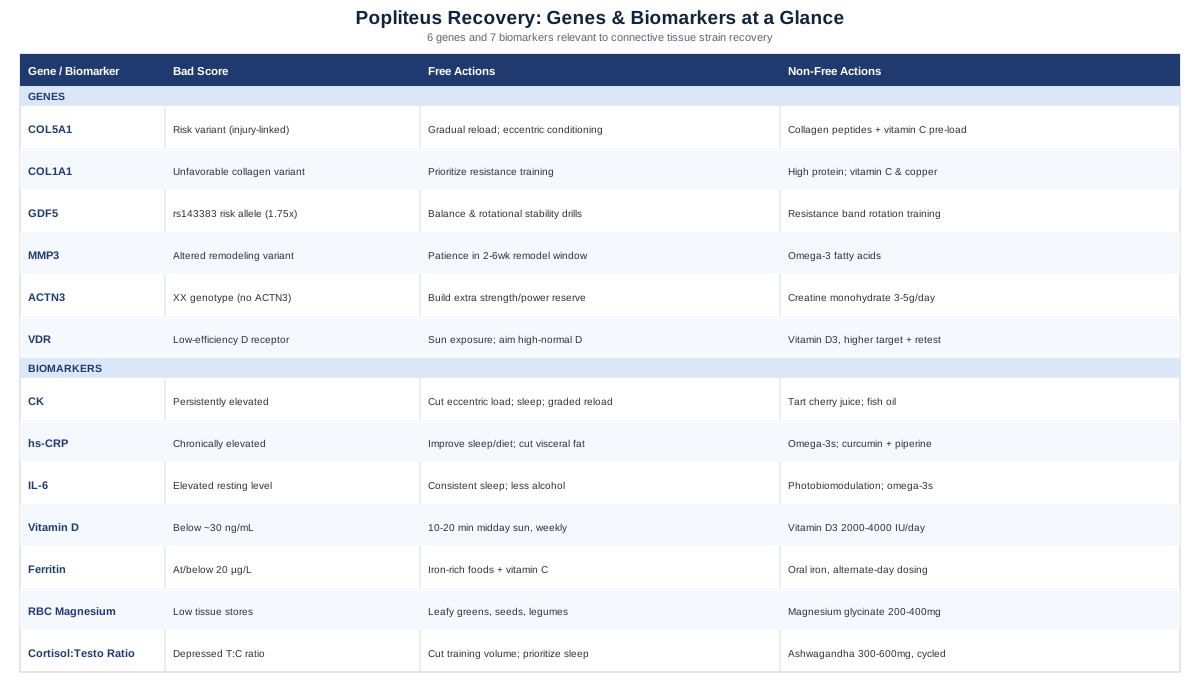
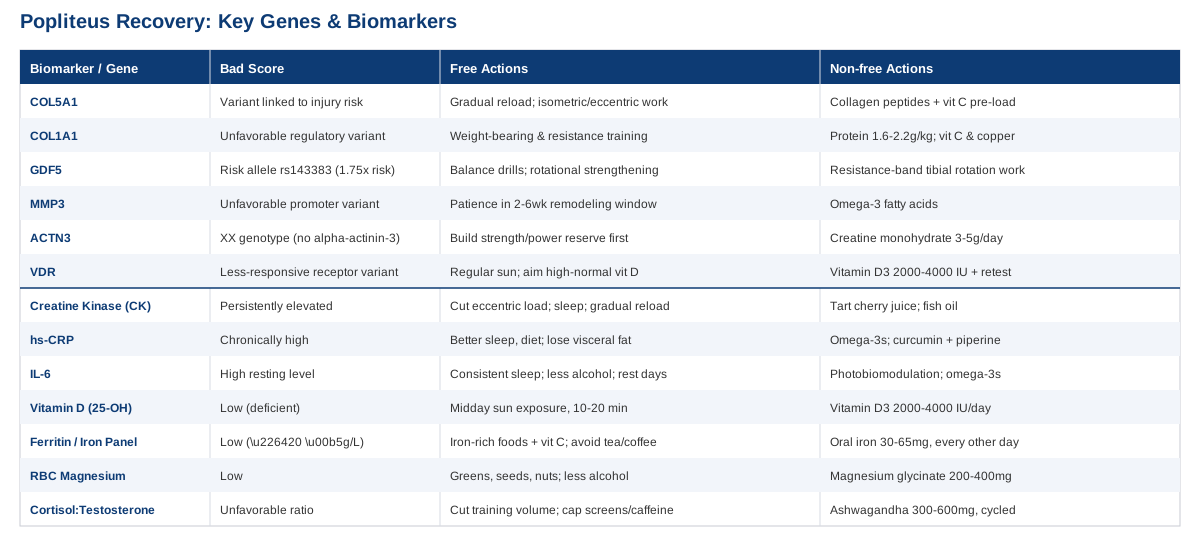
The popliteus itself has barely been studied at the genetic or biomarker level — it's simply too small and too rarely isolated in research. But the tissue it's made of, and the healing machinery it depends on, has been studied extensively in the broader context of muscle strains, tendon injuries, and ligament tears. That research points to seven bloodwork markers that can reveal whether your body is inflamed, undersupplied, or hormonally out of balance in ways that slow soft-tissue repair — and to six genes involved in collagen structure and muscle fiber composition that may explain why connective tissue injuries run in certain people and certain families. Beyond the lab work, a leading muscle physiologist's research offers ten practical, occasionally counterintuitive training principles, and several complementary therapies — from massage to photobiomodulation to motor imagery — have real clinical evidence behind them for muscle and joint recovery. Read on to see exactly which numbers to ask your doctor for, which genes are worth knowing about if you keep re-injuring the same area, and what to actually do about each one.
The 7 Biomarkers Worth Tracking When a Popliteus Strain Won't Fully Resolve
The popliteus is a stabilizer of the posterolateral corner of the knee, and like any strained skeletal muscle, its repair depends on the same systemic processes that govern healing everywhere else in the body: controlled inflammation, adequate oxygen and micronutrient delivery, and a hormonal environment that favors tissue rebuilding over breakdown. There is no popliteus-specific blood test. What exists instead is a well-studied set of markers used across sports medicine to evaluate muscle damage, systemic inflammation, and recovery capacity in general — and applying them to a stubborn or recurring popliteus strain is a reasonable, evidence-grounded way to look past the injury site itself.
Creatine Kinase (CK)
Creatine kinase leaks out of muscle cells when the cell membrane is disrupted, whether from a strain, from unaccustomed eccentric exercise, or from simple overtraining. It matters here because a persistently elevated CK weeks after an injury can mean ongoing micro-damage or that you've returned to loading the area faster than it can tolerate. Research on post-exercise CK variability shows the marker typically peaks 24 to 72 hours after damage and is highly individual — some people run chronically higher CK than others with no pathology at all, so a single reading matters less than your own trend over time.
How to Measure It
A basic serum CK test costs roughly 15 to 35 US dollars through a direct-access lab (Quest, LabCorp, or a local phlebotomy service) and is often bundled into broader metabolic panels ordered by a physician at no extra out-of-pocket cost. Because CK responds so strongly to recent activity, test it after at least 48 hours without hard training, ideally first thing in the morning.If the Score Is Elevated: The Plan Without Supplements
Reduce eccentric loading on the leg (downhill running, deep lunges, deceleration-heavy sports) for 7 to 10 days, prioritize sleep since most muscle repair hormone release happens overnight, and re-test only after a full rest cycle rather than mid-flare. Gradual, graded reloading — adding volume in roughly 10 percent increments per week — is the single most reliable non-supplement lever for keeping CK from spiking again.If the Score Is Elevated: The Plan With Supplements or Equipment
Tart cherry juice concentrate (around 30 milliliters twice daily for 4 to 5 days around periods of higher training load) and omega-3 fish oil (1 to 2 grams daily, ongoing) both have modest human data supporting reduced exercise-induced muscle damage markers. Cycle tart cherry around known high-load periods rather than using it continuously — there's no established benefit to constant use, and both are generally well tolerated, though fish oil can cause mild GI upset or interact with blood thinners at high doses.High-Sensitivity C-Reactive Protein (hs-CRP)
hs-CRP is a systemic inflammation marker produced by the liver in response to interleukin-6 signaling. It's relevant to a slow-healing strain because chronically elevated background inflammation — from poor sleep, visceral fat, or an unrelated condition — can blunt the localized, time-limited inflammatory response that soft tissue actually needs to repair itself. One study found CRP rises meaningfully only in the subset of people who mount the largest CK response to muscle-damaging exercise, suggesting CRP and CK together give a more complete picture than either alone.How to Measure It
An hs-CRP blood draw runs about 15 to 30 US dollars direct-pay, or is frequently included in cardiometabolic panels. Test when you're not acutely sick, since even a mild cold will spike it independent of any muscle issue.If the Score Is High: The Plan Without Supplements
Address the biggest known drivers first: poor sleep duration, high ultra-processed food intake, and unmanaged stress. Losing excess visceral fat, if present, tends to lower hs-CRP more reliably than almost any other single intervention, since adipose tissue itself secretes inflammatory cytokines.If the Score Is High: The Plan With Supplements or Equipment
Omega-3s (1.5 to 3 grams EPA/DHA daily, taken continuously rather than cycled) have the strongest evidence for modestly lowering hs-CRP over 8 to 12 weeks. Curcumin with piperine (500 to 1,000 milligrams daily, cycled 8 weeks on/2 weeks off) has more mixed but suggestive human data. Both are generally safe; curcumin at high doses can cause GI discomfort and should be used cautiously alongside blood thinners.Interleukin-6 (IL-6)
IL-6 is a cytokine with a split personality: a short, sharp rise after exercise or injury is a normal and necessary part of tissue repair signaling, but chronically elevated resting IL-6 is associated with poor recovery and systemic low-grade inflammation. Work on massage therapy after exercise-induced muscle damage specifically tracked IL-6 as one of the inflammatory markers that manual therapy helped modulate, underlining how directly this cytokine reflects your muscle's inflammatory state.How to Measure It
IL-6 isn't a routine test — expect to pay roughly 50 to 100 US dollars through a specialty or functional-medicine lab, and it's worth asking a sports medicine physician whether it's clinically indicated before paying out of pocket, since for most people the CRP/CK combination gives similar practical information at lower cost.If the Score Is High: The Plan Without Supplements
The same anti-inflammatory lifestyle levers apply: consistent sleep (7 to 9 hours), reduced alcohol, and avoiding back-to-back hard training days without adequate recovery windows in between.If the Score Is High: The Plan With Supplements or Equipment
Photobiomodulation devices (see the complementary approaches section below) have direct human evidence for lowering post-exercise inflammatory markers when used a few times per week during a recovery phase, not continuously. Omega-3 supplementation again applies here at the same dose noted above.25-Hydroxyvitamin D
Vitamin D receptors are expressed in skeletal muscle tissue and appear to play a direct role in muscle regeneration and satellite cell activity after injury. A systematic review of vitamin D supplementation in elite athletes found measurable strength gains in previously deficient individuals, particularly in lower-limb muscles — directly relevant to a knee-stabilizing muscle like the popliteus.How to Measure It
A 25-OH vitamin D blood test costs roughly 35 to 60 US dollars direct-pay and is one of the most commonly ordered tests in primary care, so many people can get it covered through a routine physical.If the Score Is Low: The Plan Without Supplements
Ten to twenty minutes of midday sun exposure on bare skin several times a week can meaningfully raise levels in people who train primarily indoors, though this varies enormously with latitude, season, and skin tone.If the Score Is Low: The Plan With Supplements or Equipment
Vitamin D3, typically 2,000 to 4,000 IU daily, taken continuously with re-testing at 8 to 12 weeks to confirm the dose is landing in a healthy range (commonly cited as 30 to 50 ng/mL, though your physician's target may differ). Taking it with a fat-containing meal improves absorption. Very high doses over long periods can cause hypercalcemia, so this is a supplement to dose against a lab number, not to take blindly at a fixed dose indefinitely.Ferritin and Iron Panel
Iron is required for oxygen transport to healing tissue, and low ferritin — even without frank anemia — is common in endurance athletes and can slow recovery and sap the energy needed for consistent rehab work. A systematic review on iron deficiency and sports performance found that supplementation meaningfully helped performance specifically in those with ferritin at or below 20 micrograms per liter, which is a useful threshold to know.How to Measure It
A full panel (ferritin, serum iron, TIBC, transferrin saturation) runs about 30 to 70 US dollars direct-pay. Ferritin alone is an acute-phase reactant, so pair it with the other markers rather than reading it in isolation, especially if hs-CRP is also elevated.If the Score Is Low: The Plan Without Supplements
Increase dietary iron from red meat, poultry, and legumes, and pair plant-based iron sources with vitamin C to improve absorption; avoid coffee or tea within an hour of iron-containing meals, since tannins block uptake significantly.If the Score Is Low: The Plan With Supplements or Equipment
Oral iron (commonly 30 to 65 milligrams elemental iron, every other day rather than daily — alternate-day dosing has been shown to improve absorption and reduce GI side effects compared with daily dosing) for 8 to 12 weeks, with a re-test before continuing further. Constipation and nausea are the most common side effects. Iron should not be supplemented without a confirmed low ferritin, since excess iron is harder for the body to clear than most other micronutrients.RBC Magnesium
Magnesium is a cofactor in muscle contraction and relaxation, and red-blood-cell magnesium is considered a more accurate reflection of tissue stores than standard serum magnesium, which the body tightly regulates regardless of actual deficiency. Cross-sectional data link magnesium status to measures of lower-limb muscle performance, and a 2024 systematic review found magnesium supplementation reduced muscle soreness and had a protective effect on exercise-induced muscle damage in physically active people — directly relevant to a muscle recovering from strain.How to Measure It
RBC magnesium costs roughly 40 to 70 US dollars and typically needs to be specifically requested, since standard panels usually test serum magnesium instead, which is far less informative for this purpose.If the Score Is Low: The Plan Without Supplements
Increase intake of leafy greens, pumpkin seeds, almonds, and legumes; reduce alcohol, which increases magnesium excretion through the kidneys.If the Score Is Low: The Plan With Supplements or Equipment
Magnesium glycinate or citrate, 200 to 400 milligrams daily, taken in the evening since it can have a mild relaxing effect. This is well tolerated at these doses, though citrate forms can cause loose stools in some people — glycinate is generally gentler. No cycling is necessary; re-test after 8 weeks.Cortisol-to-Testosterone Ratio
This ratio reflects the balance between catabolic (breakdown) and anabolic (repair) signaling in the body. A systematic review of the hormonal aspects of overtraining syndrome found that a persistently depressed testosterone-to-cortisol ratio tracks with poor recovery and elevated injury risk — relevant if your popliteus strain happened during a period of unusually high training load or life stress, or keeps recurring under similar conditions.How to Measure It
A morning serum cortisol plus total and free testosterone panel costs roughly 80 to 150 US dollars direct-pay; a four-point salivary cortisol test (tracking the daily curve rather than one snapshot) runs closer to 120 to 180 US dollars and is arguably more informative than a single blood draw, since cortisol naturally swings throughout the day.If the Ratio Is Unfavorable: The Plan Without Supplements
This is one of the clearest cases where the fix is behavioral rather than pharmacological: a deliberate reduction in training volume for 2 to 4 weeks, a hard cap on evening screen use and caffeine after midday, and treating sleep as non-negotiable. Re-test after the reduced-load block, not during it.If the Ratio Is Unfavorable: The Plan With Supplements or Equipment
Ashwagandha (300 to 600 milligrams of a standardized root extract daily, cycled 8 to 12 weeks on with a 2 to 4 week break) has reasonable human evidence for modestly lowering cortisol and improving perceived recovery. It's generally well tolerated but should be avoided in pregnancy, autoimmune thyroid conditions, and combined cautiously with sedatives given its mild calming effect.What Your Genes May Say About Popliteus and Muscle-Tendon Strain Risk
Genetic testing for connective tissue injury risk is a newer, more speculative field than metabolic biomarker testing, and no study has looked at the popliteus specifically — the muscle is simply too small and too rarely isolated in cohort research. What does exist is a growing body of work on the genes that govern collagen structure and muscle fiber type, studied mainly in the context of ACL tears, Achilles tendon injuries, and hamstring strains. Researchers like Ali Torkamani, whose work at Scripps Research has focused on how genomic data can inform individual health decisions, and biohackers like Gary Brecka, who popularized direct-to-consumer genetic panels covering variants like these, have helped bring this kind of testing into mainstream awareness even though the underlying science is still maturing. Treat what follows as a genuinely useful but early-stage lens, not a diagnosis.
COL5A1
COL5A1 codes for a component of type V collagen, which regulates the diameter and assembly of the much more abundant type I collagen fibers that give tendons and ligaments their tensile strength. A meta-analysis of 21 observational studies found specific COL5A1 variants associated with altered risk of tendon and ligament soft tissue injury, though results have been inconsistent across ethnic populations and study designs, and the effect size for any single variant is modest.If the Gene Variant Looks Unfavorable: The Plan Without Supplements
Since COL5A1 affects collagen fiber assembly rather than something you can directly override, the most defensible response is process, not correction: longer, more gradual return-to-load timelines after any strain, and consistent tendon-and-muscle conditioning work (isometric holds, controlled eccentric loading) rather than aggressive plyometric progressions.If the Score Is Bad: The Plan With Supplements or Equipment
Collagen peptides (15 grams, taken with roughly 50 milligrams of vitamin C about 30 to 60 minutes before loading exercise, on training days only) have human data supporting improved collagen synthesis markers when timed this way. It's a low-risk supplement with minimal reported side effects; cycling isn't necessary, but it should be paired with actual loading exercise to have any effect — collagen without mechanical stimulus doesn't do much.COL1A1
COL1A1 codes for the primary structural protein in tendons, ligaments, and bone. Certain regulatory-region variants have been studied in relation to both injury risk and bone density, making this gene relevant to overall connective tissue robustness rather than muscle strain specifically.If the Gene Variant Looks Unfavorable: The Plan Without Supplements
Weight-bearing and resistance training remain the strongest known non-supplement stimulus for collagen and bone matrix quality; the practical implication of an unfavorable COL1A1 variant is simply to not skip strength training in favor of pure mobility or cardio work.If the Score Is Bad: The Plan With Supplements or Equipment
Adequate protein intake (roughly 1.6 to 2.2 grams per kilogram of bodyweight daily) supports the raw material supply for collagen synthesis; vitamin C and copper, both collagen synthesis cofactors, are worth confirming aren't deficient through diet before adding a targeted supplement.GDF5
GDF5 (growth differentiation factor 5) is involved in cartilage and connective tissue development. Research on the rs143383 variant found the risk allele considerably more common in people with tendon and ligament injuries than in uninjured controls, with a reported 1.75-fold increase in risk.If the Gene Variant Looks Unfavorable: The Plan Without Supplements
GDF5's effect appears to run through reduced tissue stiffness and altered joint range of motion, so the most relevant non-supplement response is proactive posterolateral knee stability work — single-leg balance drills and controlled rotational strengthening — rather than waiting for symptoms to appear.If the Score Is Bad: The Plan With Supplements or Equipment
There's no supplement that directly targets GDF5 expression with human evidence behind it; the more defensible investment here is equipment-based — a resistance band or cable setup for internal/external tibial rotation strengthening, done 2 to 3 times weekly during any return-to-sport phase.MMP3
Matrix metalloproteinase 3 breaks down and remodels extracellular matrix proteins, including collagen, as part of normal tissue turnover and repair. Certain MMP3 promoter variants have been linked to altered Achilles tendon and ACL injury rates, likely by shifting the balance between tissue breakdown and rebuilding during the remodeling phase of healing.If the Gene Variant Looks Unfavorable: The Plan Without Supplements
Because MMP3 activity governs the remodeling phase specifically, the main lever is patience during that phase — resisting the urge to return to full load in the 2 to 6 week window when tissue is being actively remodeled and is more vulnerable to re-injury than it looks or feels.If the Score Is Bad: The Plan With Supplements or Equipment
Omega-3 fatty acids (dosing as above) have some evidence for favorably modulating matrix metalloproteinase activity in inflammatory contexts, making this one case where a supplement already recommended for CK and CRP does double duty.ACTN3
ACTN3 determines whether you produce alpha-actinin-3, a protein found in fast-twitch muscle fibers. The nonfunctional "X" variant, when present in both gene copies, means a complete absence of this protein. Research in professional volleyball players found this variant underrepresented among elite athletes and associated with increased muscle injury risk, particularly in female athletes, likely reflecting reduced fast-twitch force capacity and a compensatory reliance on slower-twitch fibers under high-speed loads.If the Gene Variant Looks Unfavorable: The Plan Without Supplements
If you carry this variant, building a larger margin of strength and power reserve before returning to cutting, pivoting, or sprint-heavy activity is the most defensible non-supplement compensation — essentially treating your power ceiling as lower and training the surrounding strength base more conservatively to compensate.If the Score Is Bad: The Plan With Supplements or Equipment
Creatine monohydrate (3 to 5 grams daily, taken continuously with no need to cycle) has the strongest human evidence of any legal supplement for supporting fast-twitch-dependent strength and power output, which may partially offset the reduced alpha-actinin-3 function. It's very well studied for safety; the main documented side effect is mild water retention.VDR (Vitamin D Receptor)
Certain VDR gene variants affect how effectively vitamin D signaling translates into actual muscle tissue response, meaning two people with identical blood vitamin D levels can have different muscle regeneration outcomes depending on their receptor variant.If the Gene Variant Looks Unfavorable: The Plan Without Supplements
Regular sun exposure remains worthwhile regardless of receptor variant, but if you carry a less efficient VDR variant, it's worth treating your blood vitamin D target as a floor rather than a ceiling — aiming toward the higher end of the normal range rather than the low end.If the Score Is Bad: The Plan With Supplements or Equipment
The same D3 protocol described in the biomarker section applies, simply with closer attention to re-testing, since a less responsive receptor may mean you need a higher blood level to get the same tissue effect as someone with a fully functional variant.Ten Training Principles From a Leading Muscle Physiologist's Research That Are Worth Knowing
Much of the public conversation about muscle recovery and strain prevention has been shaped by the Huberman Lab podcast's long-form conversations with Dr. Andy Galpin, a muscle physiologist whose research focuses on how training variables translate into real tissue adaptation. His work is worth engaging with directly because it regularly challenges default clinical advice — like the idea that more rest is always better, or that pain is always a stop signal. Below are ten of the most practical, occasionally counterintuitive takeaways relevant to someone recovering from or trying to prevent a strain like this one.
Recovery Timelines Are Tissue-Specific, Not Universal
Muscle, tendon, and the muscle-tendon junction heal at meaningfully different rates because they have different blood supply and cell turnover rates. A strain near the tendinous portion of a muscle — which describes much of the popliteus — often needs a longer, more conservative timeline than a strain in the fleshy muscle belly, even when both are graded similarly on imaging.Complete Rest Is Rarely the Right Default
Prolonged immobilization weakens surrounding tissue and can slow recovery rather than protect it. The more defensible approach in most soft tissue strains is relative rest — removing the specific aggravating movement while maintaining pain-free loading everywhere else, including the injured area itself within a tolerable range.Early, Controlled Loading Speeds Healing
Tissue remodels in response to mechanical stress, and appropriately dosed loading in the days and weeks after a strain — not weeks of total avoidance — appears to produce stronger, more organized repair tissue than passive rest alone.Sleep Is the Single Highest-Leverage Recovery Variable
Growth hormone release and much of the cellular repair machinery is concentrated in deep sleep. Training harder while under-sleeping is one of the most common and avoidable ways people prolong soft tissue injuries.Protein Timing Matters Less Than Total Daily Intake
The anxious focus on eating protein within a narrow post-workout window is largely overstated; what actually predicts muscle repair capacity is hitting an adequate total daily protein intake, distributed reasonably across the day.Heat and Cold Serve Different Purposes
Cold exposure can blunt some of the inflammatory signaling needed for adaptation if used too soon or too often after strength training, while heat exposure (sauna) has separate evidence for supporting blood flow and tissue recovery. Using cold reflexively after every session may be working against the repair process rather than for it.Pain Is Information, Not Always a Stop Sign
Low-level discomfort during controlled rehab loading is often a normal part of tissue remodeling, distinct from sharp or worsening pain, which is a genuine stop signal. Learning to tell these apart is a skill, not an instinct.Zone 2 Cardio Supports Tissue Recovery Indirectly
Building a strong aerobic base improves the efficiency of the vascular system delivering nutrients and clearing metabolic byproducts from injured tissue, making it a legitimate, underused recovery tool rather than just a fitness metric.Strength Reserve Prevents Re-Injury More Than Stretching Does
Flexibility work has a much weaker evidence base for injury prevention than most people assume; building a genuine strength margin above what a given activity demands is a more reliable protective factor.Individual Variability Is the Point, Not the Noise
Perhaps the most repeated theme across this body of work is that population-average recommendations are a reasonable starting point, but the goal is always to use your own data — how you actually respond — to refine the plan, which is exactly the argument for tracking the biomarkers and genes covered above rather than following generic timelines alone.Complementary Approaches With Real Supporting Evidence
None of the following replace physical therapy, appropriate imaging, or a sports medicine evaluation for a strain that isn't improving. But each has genuine human evidence relevant to muscle recovery and rehabilitation, which separates them from the much longer list of recovery trends with little behind them.
Massage Therapy
Massage is relevant here because it appears to do more than feel good — it directly modulates the cellular signaling involved in muscle repair after damage. For a strain that keeps flaring with activity, manual therapy is a reasonable adjunct to reduce localized inflammation and support tissue remodeling between rehab sessions.A landmark study published in Science Translational Medicine took muscle biopsies before and after massage following exercise-induced damage and found it activated mechanotransduction pathways, reduced inflammatory cytokine production including IL-6, and supported mitochondrial biogenesis signaling — a rare case of a hands-on therapy backed by direct tissue-level evidence rather than just self-reported soreness scores.
In practice, this means scheduling a focused massage on the posterior and lateral knee musculature 24 to 72 hours after a flare-up or hard training session, rather than immediately post-exercise, and treating it as a recovery tool during the rehab phase rather than a substitute for the strengthening work itself.
Photobiomodulation (Low-Level Laser Therapy)
Photobiomodulation uses specific wavelengths of red or near-infrared light to increase mitochondrial activity in cells, and it's relevant to a strain like this because it's one of the few passive modalities with direct human evidence for reducing exercise-induced muscle damage markers and soreness.A systematic review and meta-analysis on delayed-onset muscle soreness found positive effects from both laser and LED-based devices in the 655 to 950 nanometer range, and a separate randomized controlled trial in high-level soccer players found pre-exercise treatment reduced muscle damage and inflammatory markers. It's worth noting evidence is stronger for exercise-induced soreness than for deeper acute tissue injuries, where results are more mixed.
A realistic protocol is 2 to 3 sessions weekly using a device with the studied wavelength range, applied directly over the posterolateral knee for 5 to 10 minutes, either before a rehab loading session or during the early recovery window — not as a daily, indefinite habit, since most positive trials used it around specific training or recovery events rather than continuously.
EMG Biofeedback
Electromyographic biofeedback uses real-time muscle activation readouts to help retrain proper firing patterns in muscles that have "gone quiet" after injury — a well-documented phenomenon around the knee where surrounding musculature under-activates even after the original injury has healed structurally.A randomized controlled trial following ACL reconstruction found EMG biofeedback improved knee extension range and quadriceps activation compared with standard rehab alone, though a broader systematic review found mixed effects on overall functional outcomes — an honest picture of a tool that helps a specific mechanism (muscle activation) without being a general cure-all.
For a popliteus strain, this looks like using a portable EMG biofeedback unit during early rehab exercises targeting knee stabilizers, giving visual or audio feedback on whether the muscle is actually firing during controlled movements, 2 to 3 times weekly for the first several weeks of return-to-activity work.
Guided Imagery and Motor Imagery
Motor imagery — mentally rehearsing a movement without physically performing it — engages overlapping neural circuits with actual movement execution, which is why it has genuine, if modest, evidence for supporting muscle activation and reducing reinjury anxiety during rehabilitation from lower-limb injuries.An early but influential study on relaxation and guided imagery following ACL reconstruction found significantly greater knee strength and significantly lower reinjury anxiety and pain in the intervention group at 24 weeks post-surgery compared with controls. A more recent systematic review of motor imagery techniques after ACL reconstruction found consistent evidence for increased muscle activation, though it stopped short of confirming clear added functional benefit over physiotherapy alone — a fair summary is that it helps with the psychological and neuromuscular side of recovery more clearly than the raw strength side.
A practical version of this is spending 5 to 10 minutes before a rehab session mentally rehearsing the movement pattern — controlled knee rotation and stability under load — especially useful for anyone whose main barrier to return-to-activity is fear of re-injury rather than remaining physical limitation.
Progressive Muscle Relaxation
Progressive muscle relaxation — systematically tensing and releasing muscle groups — is relevant less for the injured tissue directly and more for the guarding and compensatory tension that often develops in surrounding muscles after any knee injury, which can itself become a secondary source of discomfort and altered movement patterns.The same relaxation-and-imagery research referenced above combined progressive relaxation techniques with guided imagery in the intervention group, making it difficult to fully separate the two, but the combined protocol's positive effect on pain and reinjury anxiety following ACL reconstruction is the best available human evidence for this pairing in a knee rehabilitation context specifically.
In practice, a short progressive muscle relaxation routine covering the calf, hamstring, and quadriceps of the affected leg, done a few times weekly during the more anxious early phases of return-to-activity, is a low-cost, zero-risk addition alongside — not instead of — the physical rehab work.
Conclusion
A popliteus strain that won't fully settle usually isn't a mystery of bad luck — it's more often a mismatch between generic rehab timelines and an individual's actual inflammatory, hormonal, and connective tissue biology. The seven biomarkers here — CK, hs-CRP, IL-6, vitamin D, ferritin, RBC magnesium, and the cortisol-to-testosterone ratio — give a concrete, testable way to check whether your body is genuinely ready to rebuild tissue or is still working against itself. The genetic variants covered are earlier-stage evidence, but they offer a plausible explanation for why some people seem structurally more injury-prone, and a reasonable, low-risk way to compensate for it. Layered on top of solid training principles and a few complementary tools with real evidence behind them, this is a far more complete picture than "rest and see."
None of this replaces a proper clinical evaluation, especially if pain, instability, or swelling persists or worsens. The next useful step is a practical one: track how your symptoms actually respond to load over the coming weeks, ask your physician about the two or three biomarkers most relevant to your situation, and bring this framework into the conversation rather than navigating it alone.
Musculoskeletal: Joint Conditions Tendon & Ligament Conditions