This article contains AI generated content.
Sartorius Tendinitis: 6 Genes and 6 Biomarkers to Track
If the pain sits along the inner thigh, tracks down toward the knee, and flares every time you take stairs, get on a bike, or sit cross-legged for too long, you already know that "sartorius tendinitis" is one of those diagnoses that's easy to name and hard to resolve. It sits near the pes anserine, overlaps with hip flexor strain, and responds unpredictably to the standard rest-ice-stretch routine that works for other tendon complaints. Months of physiotherapy exercises that were supposed to help can leave you exactly where you started, wondering if something else is going on underneath the obvious mechanical explanation.
Most of the advice available for tendon pain is written for the Achilles or the patellar tendon, then loosely applied to every other tendon in the body, including the sartorius. That advice assumes every tendon, and every person, responds to load and repair signals the same way. In reality, tendon quality is shaped by collagen genetics, hormone status, inflammation levels, and nutrient availability long before a physiotherapist ever touches your leg. Two people doing the exact same eccentric-strengthening program can have completely different outcomes because their underlying tissue biology isn't the same.
This article goes past the generic protocol and looks at two things that actually explain why some tendons heal slowly and others don't: the genes that build and remodel collagen, and the bloodwork that reflects your current biological environment. Neither one is deterministic, and neither one replaces a proper physical examination, but both give you something more specific to act on than "give it more time."
None of this rewrites your biology overnight, and there's no shortcut around progressive tendon loading. But knowing which collagen genes run less favorably, and which biomarkers are quietly working against tissue repair, turns a vague waiting game into a plan with actual levers. The sections ahead cover the genetic research on tendon collagen and repair genes, the bloodwork worth tracking alongside it, a research-based reframe of how tendons heal that challenges a lot of standard physio advice, and a short set of complementary approaches with real supporting evidence.
Summary
Sartorius tendinitis rarely happens in isolation — it tends to show up in people whose collagen-building genes, thyroid function, vitamin D status, or blood sugar control are quietly working against tendon repair. Below, you'll find the six genes with the strongest human evidence for tendon and ligament resilience (COL5A1, COL1A1, MMP3, TNC, GDF5, and CASP8), what a less favorable variant may mean in practice, and specific plans — with and without supplements — for compensating for each one. After that, six bloodwork markers worth tracking (vitamin D, thyroid function, HbA1c, hs-CRP, IGF-1, and homocysteine/B12/folate) show what's happening in your tissue environment right now, with cost ranges and correction plans. A closer look at a research conversation that challenges the standard rest-and-ice approach to tendon injuries follows, along with a short review of complementary approaches — massage, yoga, photobiomodulation, and mindfulness — that have real, if sometimes mixed, evidence behind them.
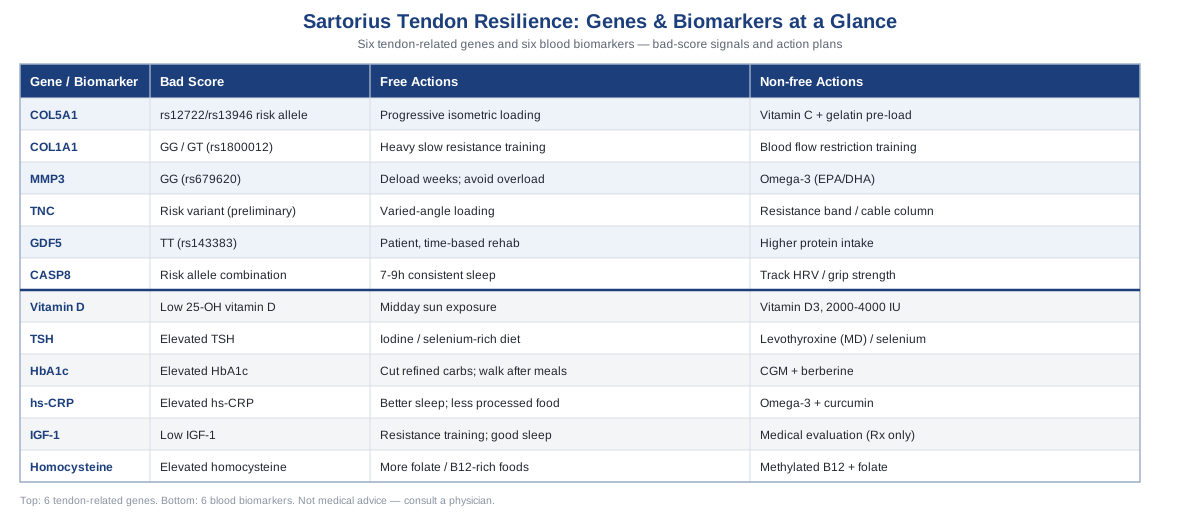
The Genetic Blueprint Behind Sartorius Tendon Resilience
Tendon genetics is one of the more mature corners of sports and orthopedic genomics. Research groups in South Africa and the UK, led largely by Malcolm Collins and Stuart Posthumus, have spent almost two decades running case-control studies comparing people with tendinopathy or tendon rupture against uninjured controls, looking for variants in the genes that build and remodel collagen. The result is a body of evidence that's genuinely specific to tendons and ligaments, unlike a lot of consumer genetic testing that stretches thin associations across dozens of unrelated conditions.
If you want a general starting point for exploring your own genetic data, geneticist Ali Torkamani has written extensively on how to interpret polygenic risk responsibly rather than treating any single variant as fate, and Gary Brecka has done a lot to popularize practical, actionable genetic panels (MTHFR, APOE, and similar) for people without a genetics background. Both are useful entry points, but the tendon-specific variants below come from dedicated musculoskeletal genetics research, not general wellness panels, so treat this section as a more targeted layer on top of whatever broader panel you may have already run.
COL5A1 — the fibril-assembly regulator
COL5A1 encodes part of type V collagen, a minor but critical component that controls how thick and how densely packed the type I collagen fibrils in your tendon become. Certain variants, most studied at the rs12722 and rs13946 sites, are associated with altered fibril structure and a measurably higher risk of tendon and ligament injury, including Achilles tendon pathology, in multiple case-control cohorts and a Caucasian-population meta-analysis. COL5A1 meta-analysis on tendon-ligament injury risk and a related review of tendon and ligament injury genetics both summarize this evidence, which is now considered one of the more replicated findings in the field.
If the gene runs unfavorably: the plan without supplements
Because a less favorable COL5A1 variant is associated with thinner, less organized fibrils, the practical compensation is mechanical, not biochemical: slow, progressive tendon loading. Isometric holds (for example, 5 sets of 30-45 seconds at a comfortable hip-flexion angle) three to four times per week, progressing to slow heavy resistance work over 8-12 weeks, gives the tendon a stimulus to remodel more densely over time. There's no way to "fix" the gene, but consistent mechanical loading is the only intervention shown to meaningfully change tendon stiffness regardless of genotype. Side effect to watch for: overloading too quickly (jumping straight to fast eccentric work) can aggravate an already structurally weaker tendon, so progression should be gradual.If the gene runs unfavorably: the plan with supplements or equipment
Vitamin C (500mg to 1g) combined with 15g of hydrolyzed collagen or gelatin, taken about 60 minutes before your loading session, has been shown to roughly double a marker of collagen synthesis compared to placebo. This is worth cycling around training days rather than taking daily — for example, on the 3-4 days per week you do tendon-loading work, not as a standing daily supplement. Side effects are minimal at these doses, though very high vitamin C intake (multiple grams) can cause gastrointestinal upset in some people.COL1A1 — the tensile-strength gene
COL1A1 codes for the dominant structural protein in tendon, type I collagen. A well-studied Sp1-binding-site polymorphism (rs1800012) shifts the ratio of collagen molecule types produced, and a meta-analysis pooling nearly 1,000 cases found the rare TT genotype associated with a meaningfully reduced risk of tendon and ligament injury, meaning the more common GG/GT genotypes carry comparatively higher risk. Meta-analysis of COL1A1 rs1800012 and sports-related tendon injuries lays out the numbers, though it's worth noting evidence specifically for Achilles tendinopathy (as opposed to acute rupture) has been more mixed.
If the gene runs unfavorably: the plan without supplements
Since this variant is thought to affect tensile strength rather than just fibril organization, the highest-leverage free intervention is simply increasing tendon cross-sectional load tolerance gradually: heavy slow resistance training (3 sets of 6-8 reps, 3x per week, at a tempo of roughly 3 seconds up and 3 seconds down) has the best evidence for increasing tendon stiffness over 12+ weeks. Avoid sudden increases in running mileage or hill work, which disproportionately stress the exact tensile properties this gene influences.If the gene runs unfavorably: the plan with supplements or equipment
Blood flow restriction (BFR) training equipment allows you to load the tendon meaningfully with lower absolute weights, which is useful if pain limits how much load you can otherwise tolerate. Used 2-3 times per week at 20-30% of one-rep max with cuffs inflated to a moderate pressure, it's generally well tolerated, though it should be avoided if you have a history of blood clots or uncontrolled hypertension, and sessions should be capped around 15-20 minutes to avoid excessive numbness or bruising.MMP3 — the matrix remodeling enzyme
Matrix metalloproteinase 3 breaks down and remodels the extracellular matrix, a normal and necessary part of tendon adaptation. The rs679620 variant, when present as the GG genotype, has been linked to an increased risk of Achilles tendinopathy in a meta-analysis of tendon-ligament injury studies, likely because it shifts the balance between matrix breakdown and matrix rebuilding. Meta-analysis of MMP3 polymorphisms and tendon-ligament injury risk covers this in detail, including interaction effects with COL5A1 genotype.
If the gene runs unfavorably: the plan without supplements
Because this gene affects the breakdown side of the remodeling equation, the priority is avoiding excessive, unrecovered loading that tips the balance further toward degradation. That means built-in deload weeks (one lighter week every 4th week of a loading program) and paying closer attention to next-day soreness as a signal to back off, rather than pushing through it.If the gene runs unfavorably: the plan with supplements or equipment
Omega-3 fatty acids (roughly 2-3g combined EPA/DHA daily) have modest evidence for reducing the inflammatory signaling that drives excess matrix breakdown, and are reasonable to take consistently rather than cycled, though very high doses can mildly increase bleeding risk and should be discussed with a doctor if you're on blood thinners.TNC — the tenascin-C scaffold gene
Tenascin-C is an extracellular matrix glycoprotein that appears specifically at load-bearing sites within tendon and helps organize collagen during repair. Variants in the TNC gene have shown associations with tendinopathy risk in several cohorts, and TNC is frequently studied alongside COL5A1 because the two appear to interact. The broader genetics of sports injury and athletic performance review summarizes TNC's role alongside other structural tendon genes; a more recent Croatian case-control study in high-level athletes also examined TNC variants specifically, though it's a smaller cohort and the finding should be treated as preliminary rather than settled.
If the gene runs unfavorably: the plan without supplements
Tenascin-C expression responds to mechanical strain, meaning varied-angle loading (not just one fixed hip-flexion position) may help stimulate more complete matrix organization during repair. Rotating between straight-leg raises, seated hip flexion holds, and standing marching drills across a week gives the tendon a broader strain pattern to adapt to.If the gene runs unfavorably: the plan with supplements or equipment
There's no strong human supplement evidence targeting TNC specifically, so the more useful equipment-based option is a simple resistance band or cable column for controlled hip flexion loading, done 3x weekly, allowing you to fine-tune angle and load in a way free-weight exercises don't. No meaningful side effects beyond standard strength-training fatigue.GDF5 — the growth-signal gene
Growth differentiation factor 5 is involved in the development and maintenance of tendons, ligaments, and cartilage, and the rs143383 variant in its regulatory region reduces GDF5 expression when the T allele is present. A genetic association study found the TT genotype carried roughly double the risk of Achilles tendon pathology compared to other genotypes, and this same variant has pleiotropic effects across joint tissues more broadly. Genetic association study of GDF5 and TGF-beta family components in Achilles tendon pathology details the mechanism.
If the gene runs unfavorably: the plan without supplements
Since reduced GDF5 expression lowers baseline tissue growth signaling, patience with rehab timelines matters more here than with other variants — expect remodeling to take longer (think months, not weeks) and avoid restarting high-intensity activity based on pain relief alone rather than a structured, time-based return-to-load progression.If the gene runs unfavorably: the plan with supplements or equipment
Adequate protein intake (around 1.6g per kg of bodyweight daily, spread across meals) supports the growth-signaling environment GDF5 partly governs. This is a sustained daily habit rather than something to cycle, and the main caution is for anyone with pre-existing kidney disease, who should check with a physician before increasing protein intake meaningfully.CASP8 — the apoptosis-pathway gene
CASP8 sits in the apoptosis (programmed cell death) pathway, which matters for tendon because clearing out damaged tenocytes efficiently is part of normal repair. Specific CASP8 variants, alongside COL5A1, have been associated with Achilles tendon pathology risk in Southern Hemisphere cohorts, with certain allele combinations linked to increased risk and others to decreased risk. Study on CASP8 and related gene variants in chronic Achilles tendinopathy is a useful reference, though it's worth flagging that this association hasn't been replicated as consistently across different populations as the COL5A1 findings.
If the gene runs unfavorably: the plan without supplements
Sleep quality and duration (aiming for 7-9 hours consistently) has a disproportionate effect on cellular repair and clearance processes, apoptosis included. It's a low-cost, no-equipment lever that's easy to overlook when the focus is entirely on the injured area itself.If the gene runs unfavorably: the plan with supplements or equipment
There isn't strong direct human evidence for a supplement that specifically targets CASP8-mediated apoptosis in tendon, so the more defensible option is simply tracking recovery markers (morning heart rate variability via a wearable, or basic grip strength as a fatigue proxy) to make sure you're not compounding poor cellular clearance with chronic under-recovery. This is monitoring rather than an active intervention, so there are no side effects to weigh.The epigenetic layer worth knowing about
Genes are only half the picture. Methylation status, particularly around the MTHFR gene (C677T and A1298C variants), affects how efficiently your body converts folate and recycles homocysteine, which in turn affects collagen cross-linking through lysyl oxidase activity. Research on MTHFR variants and folate deficiency risk shows how these polymorphisms compound with each other. If you carry an unfavorable MTHFR genotype, methylated folate (5-MTHF) rather than standard folic acid, at 400-800mcg daily, bypasses the enzymatic bottleneck; this is reasonable as a daily supplement rather than something to cycle, with essentially no side effects at these doses beyond rare mild nausea.
None of these genetic findings should be read as a diagnosis or a guarantee. Most come from case-control studies with a few hundred to a few thousand participants, and replication across different ethnic populations is inconsistent for several of them, CASP8 and GDF5 in particular. Treat a "high-risk" variant as a reason to be more disciplined about loading and recovery, not as a reason to assume the tendon can't heal properly.
Genetics tells you what you were built with; bloodwork tells you what's happening in your body right now, and unlike your genes, most of it is directly modifiable within weeks.
Bloodwork That Reveals Your Current Tendon Environment
Where genetic variants are fixed, these six markers shift with diet, sun exposure, sleep, and treatment, and several of them have direct, condition-relevant human evidence tying poor values to worse tendon outcomes.
Vitamin D (25-hydroxyvitamin D)
Low vitamin D impairs collagen synthesis and tenocyte proliferation and increases local inflammatory signaling. In one large retrospective analysis, vitamin-D-deficient patients had a substantially higher incidence of tendon pathology than matched controls, and in a cohort of young women with lower-extremity musculoskeletal complaints, roughly two-thirds had low vitamin D, with muscle and tendon injuries among the more common presentations. Vitamin D deficiency and tendon injury incidence and vitamin D status in young women with lower-extremity complaints both support this.
How to measure it
A basic 25-OH vitamin D blood draw costs roughly $20-50 out of pocket in the US if not covered by insurance, or is typically included free in an annual physical panel in many public healthcare systems.If the score is bad: the plan without supplements
15-20 minutes of midday sun exposure on bare arms and legs, several times a week, is often enough to meaningfully raise levels in people who aren't severely deficient, though this varies enormously by latitude, skin tone, and season.If the score is bad: the plan with supplements or equipment
Vitamin D3, typically 2,000-4,000 IU daily (higher short-term doses under medical supervision if severely deficient), taken with a meal containing some fat for absorption. This is a daily supplement, not cycled, and retesting after 8-12 weeks is the standard way to confirm it's working. Side effect risk is low at these doses, but very high doses over long periods can cause hypercalcemia, so levels above 10,000 IU daily should only be taken under supervision.Thyroid function (TSH and free T4)
Thyroid hormone directly regulates collagen turnover in tenocytes, and hypothyroidism is associated with decreased collagen synthesis and weakened tendon matrix. Achilles tendinopathy has even been flagged as a possible early, sentinel sign of otherwise asymptomatic hypothyroidism or Hashimoto's thyroiditis, particularly in middle-aged women. Thyroid hormone effects on tenocyte collagen expression and thyroid dysfunction as a driver of Achilles tendinopathy outline the mechanism and clinical pattern.
How to measure it
A TSH-only test runs about $30-50 out of pocket; a fuller panel including free T4 and thyroid antibodies is closer to $80-150, and is worth requesting if TSH alone comes back borderline.If the score is bad: the plan without supplements
Adequate iodine and selenium intake from diet (seafood, dairy, Brazil nuts in moderation) supports thyroid hormone production, though this won't correct clinical hypothyroidism on its own.If the score is bad: the plan with supplements or equipment
Confirmed hypothyroidism is a medical treatment decision (levothyroxine), not a supplement one, and should go through a physician rather than self-treatment. Selenium (200mcg daily) has some supporting evidence for thyroid antibody reduction in autoimmune thyroiditis specifically, cycled for 3 months at a time with retesting, though doses above 400mcg daily carry a risk of selenium toxicity.HbA1c and fasting glucose
Chronic hyperglycemia glycates tendon collagen, making it stiffer and more brittle over time. People with type 2 diabetes face roughly four times the risk of Achilles tendinopathy compared to non-diabetics, and HbA1c has been proposed as a usable, non-invasive proxy for altered tendon mechanics even before a diabetes diagnosis is made. HbA1c and Achilles tendon contracture in diabetic foot patients covers this relationship.
How to measure it
HbA1c testing costs roughly $15-40 out of pocket and is a standard part of most annual metabolic panels.If the score is bad: the plan without supplements
Reducing refined carbohydrate intake and adding a 10-15 minute walk after meals both meaningfully blunt post-meal glucose spikes, which is where a lot of the cumulative glycation damage comes from.If the score is bad: the plan with supplements or equipment
A continuous glucose monitor (roughly $50-100/month) gives real-time feedback on which foods and habits spike your glucose the most, which is more actionable than a single annual HbA1c number. Berberine (500mg, 2-3x daily with meals) has reasonable evidence for modestly improving insulin sensitivity, cycled for 8-12 weeks with a break, and can cause gastrointestinal upset in some people and shouldn't be combined with certain diabetes medications without medical guidance.High-sensitivity CRP (hs-CRP)
hs-CRP reflects systemic low-grade inflammation, which is relevant because chronic tendinopathy has an inflammatory component even though it's often framed as purely "degenerative." Direct sartorius- or tendon-specific hs-CRP research is limited, but studies in related soft-tissue and nerve-adjacent conditions show elevated CRP tracking with symptom spread and pain sensitivity, which is a reasonable, if indirect, rationale for tracking it here. CRP and symptom spread in carpal tunnel syndrome is one example of this broader pattern.
How to measure it
hs-CRP testing costs about $20-40 out of pocket and is often bundled with a standard lipid or metabolic panel.If the score is bad: the plan without supplements
Improving sleep consistency and reducing ultra-processed food intake are the two levers with the most consistent evidence for lowering hs-CRP over 8-12 weeks.If the score is bad: the plan with supplements or equipment
Omega-3s (2-3g EPA/DHA daily, same as noted for MMP3 above) and curcumin with piperine (500-1000mg daily, cycled 8 weeks on/2 weeks off) both have supporting evidence for modestly reducing inflammatory markers. Curcumin can interact with blood thinners and should be stopped before any scheduled surgery.IGF-1
Insulin-like growth factor 1 stimulates tenocyte proliferation and type I collagen synthesis, and its expression rises during normal tendon healing, though IGF-1 protein levels are often lower than normal in the early phase of an actual injury, which is part of why healing stalls. IGF-1 and tendon regenerative therapy reviews the human and preclinical evidence.
How to measure it
A serum IGF-1 test runs roughly $60-100 out of pocket and isn't part of routine panels, so it usually needs to be specifically requested.If the score is bad: the plan without supplements
Resistance training itself is one of the more reliable natural stimulants of IGF-1 activity at the tissue level, and adequate sleep supports the growth-hormone pulses that drive IGF-1 production overnight.If the score is bad: the plan with supplements or equipment
There's no well-supported over-the-counter supplement that reliably and safely raises IGF-1; approaches involving injectable growth hormone or IGF-1 analogs are prescription-only, carry meaningful side-effect profiles, and should only be considered under direct medical supervision for a diagnosed deficiency, not for general tendon recovery.Homocysteine, B12, and folate
Elevated homocysteine interferes with lysyl oxidase-mediated collagen cross-linking, the same process affected by the MTHFR variants discussed earlier, producing mechanically weaker connective tissue. Hyperhomocysteinemia and connective tissue markers documents this relationship, largely in bone but with clear mechanistic overlap to tendon collagen.
How to measure it
A homocysteine panel with B12 and folate costs roughly $50-80 out of pocket combined.If the score is bad: the plan without supplements
Increasing dietary folate (leafy greens, legumes) and B12 (eggs, fish, dairy) covers most mild elevations without needing a supplement at all.If the score is bad: the plan with supplements or equipment
Methylated B12 (methylcobalamin, 500-1000mcg daily) and methylated folate (400-800mcg daily) are preferred over standard forms, particularly for anyone carrying the MTHFR variants above. Taken daily rather than cycled, with retesting at 8-12 weeks; side effects are rare but very high B12 doses have occasionally been linked to mild acne-like breakouts in sensitive individuals.With both the genetic risk picture and the current bloodwork picture in hand, it's worth looking at how tendon rehab thinking itself has shifted in recent years, since some of the standard advice you may already be following is being actively challenged by the researchers who study this tissue most closely.
The Podcast Conversation That Reframes How Tendons Actually Heal
Tim Ferriss's long-form interview with Dr. Keith Baar, a physiologist at UC Davis who has spent his career studying how tendons and ligaments adapt, is one of the more useful pieces of media on this topic precisely because it pushes back on several assumptions embedded in standard physio advice. It's not specific to the sartorius, but the underlying tendon biology he describes applies to any tendon in the body, sartorius included.
Tendons remodel on a much slower clock than muscle
Muscle protein turns over in days; tendon collagen turnover is closer to the order of a year for full replacement. This alone explains why a tendon that "feels fine" after four weeks of rehab often isn't structurally remodeled yet, and why symptom relief is a poor proxy for actual tissue readiness.Complete rest is often the wrong call
Baar argues that unloaded tendon doesn't just fail to heal, it can actively deteriorate further, because the mechanical signal that drives productive collagen remodeling simply isn't present. Controlled loading, not avoidance, is the actual repair stimulus.Ice may blunt the exact signaling repair depends on
The inflammatory response that follows tendon loading isn't purely a problem to suppress; it's part of the signal that triggers repair. Baar's position is that reflexively icing an overuse tendon injury may interfere with this process, a direct challenge to the traditional RICE (rest, ice, compression, elevation) protocol still taught widely.Isometrics can match or beat the eccentric-only dogma
The Alfredson eccentric-loading protocol became the default tendinopathy prescription for years, but Baar's research suggests isometric holds can be equally or more effective, particularly for pain reduction in the short term, while being gentler to introduce for someone in an acute flare.Vitamin C and gelatin timing actually matters
Baar's own published research found that 15g of vitamin C-enriched gelatin taken about an hour before loading roughly doubled a blood marker of collagen synthesis compared to placebo. Vitamin C-enriched gelatin and collagen synthesis before exercise is the underlying study, and it's the same protocol referenced in the COL5A1 section above.Full range of motion matters more than isolated, cautious movement
Baar emphasizes that tendons remodel according to the specific strain pattern they experience, so rehab confined to a narrow, pain-free range may leave the tendon adapted to only that narrow range rather than restoring full functional capacity.Growth hormone and IGF-1 matter more to tendon repair than testosterone
This runs against a common assumption that testosterone drives connective tissue repair broadly. Baar points to growth hormone and IGF-1 signaling as the more directly relevant pathway for tendon and ligament collagen synthesis specifically.Newer pharmacological approaches (like JAK inhibitors) are being explored for fibrotic tendon changes
This is early-stage and not something to self-prescribe, but it reflects a broader shift toward viewing chronic tendinopathy as having a fibrotic, drug-addressable component rather than purely a mechanical-overuse problem.Age and sex both change how tendons adapt
Tendon adaptation to load isn't uniform across a population; hormonal status (including menopause) and age both shift how readily collagen synthesis responds to a given training stimulus, which is part of why identical rehab programs produce different results in different people.Consistency over months, not intensity over weeks, is what actually resolves tendinopathy
Given how slowly tendon remodels, Baar's overall message is that patience paired with consistent, progressively loaded training beats any single clever intervention. This is the least exciting takeaway and also the most consistently supported one across the tendon literature broadly, not just this one conversation.Loading and biology aside, a handful of complementary approaches also have real, human evidence behind them for tendon-adjacent pain and function, worth considering as additions rather than replacements for a structured loading program.
Complementary Approaches Worth Considering
Massage and myofascial release
Tight hamstrings and hip flexors increase mechanical strain across the inner knee and thigh where the sartorius tendon travels, so anything that reliably improves flexibility in that chain is directly relevant, not just generally relaxing.
A randomized controlled trial found that self-myofascial release applied to segments of the posterior fascial chain (plantar fascia, calf, or lumbar fascia) produced measurable improvements in hamstring flexibility and ankle dorsiflexion in as little as 2-10 minutes per session, with roughly half the flexibility gain occurring within the first two minutes. Self-myofascial release and remote hamstring flexibility, a randomized controlled trial is the source study.
In practice, a foam roller or massage ball used on the calf and hamstring for 5-10 minutes, 3-4 times a week, is a low-cost, low-risk addition alongside a tendon-loading program. It won't resolve tendinitis on its own, and evidence is strongest for flexibility gains rather than pain reduction specifically, so treat it as a support measure, not the primary intervention.
Yoga
Yoga combines controlled stretching of the hip flexors and inner thigh with strengthening through held postures, both relevant to a muscle-tendon unit that crosses two joints the way the sartorius does.
Trial evidence is strongest in knee osteoarthritis rather than tendinitis specifically, but a randomized controlled trial of a yoga-based lifestyle intervention showed measurable improvements in functional mobility, flexibility, and strength measures relevant to the same lower-limb chain. Yoga-based lifestyle intervention for knee osteoarthritis, a randomized controlled trial is the reference study.
Two to three sessions a week focused on gentle hip-opening and hamstring poses (avoiding deep, forced end-range stretching during an active flare) is a reasonable way to apply this. Evidence specific to tendinitis rather than general lower-limb flexibility and OA is still limited, so this is best framed as a complement to structured loading, not a substitute.
Photobiomodulation (low-level laser therapy)
Photobiomodulation uses red and near-infrared light believed to influence mitochondrial activity in the treated tissue, with tendinopathy being one of its more commonly tested applications in physiotherapy clinics.
The evidence is genuinely mixed: a systematic review and meta-analysis of low-level laser treatment for tendinopathy found inconsistent results across trials, with some showing benefit and others showing none. Systematic review and meta-analysis of low-level laser treatment for tendinopathy is worth reading in full before investing in this option.
If you try it, it typically requires a clinic-based device (home devices vary widely in power output and are less standardized), applied 2-3 times weekly for several weeks. Given the mixed evidence, it's reasonable to treat as a low-risk adjunct rather than a core part of the plan, and not worth prioritizing over consistent loading or the nutrient corrections covered above.
Mindfulness meditation
Chronic tendon pain that drags on for months has a real central sensitization component, meaning the nervous system's pain processing itself can become part of the problem, independent of ongoing tissue damage.
An umbrella review of mindfulness-based interventions for chronic musculoskeletal pain found generally positive, if methodologically mixed, evidence for reduced pain intensity and improved coping. Umbrella review of mindfulness and chronic musculoskeletal pain is the source, and it's worth noting this evidence is general to musculoskeletal pain rather than tendon-specific.
A structured 8-week mindfulness-based stress reduction (MBSR) course, or even 10 minutes of daily guided practice, is a reasonable, no-equipment addition, particularly if pain has been persistent enough to affect sleep or mood. It won't change tendon structure, but it may reduce the pain amplification that makes an already slow healing process feel worse than the tissue state alone would suggest.
Bringing It Together
Sartorius tendinitis that isn't responding to generic rest-and-stretch advice usually has a reason, and that reason is often visible in collagen genetics, thyroid and vitamin D status, blood sugar control, or simply a rehab approach that's avoiding the exact loading the tendon needs to remodel. None of the genes covered here are destiny, and none of the biomarkers guarantee a fix on their own, but together they turn a frustrating, open-ended waiting period into something closer to a checklist: know your collagen-gene risk profile if you're curious, get the six bloodwork markers checked, load the tendon consistently and patiently rather than avoiding it, and layer in massage, yoga, or mindfulness where they genuinely fit your situation.
The most useful next step is usually the simplest one: get vitamin D, thyroid function, HbA1c, and homocysteine checked if you haven't recently, start tracking symptoms against your training load rather than against how you feel on a given day, and bring this information to a sports medicine physician or physiotherapist who can build a structured loading progression around it. Better information doesn't heal a tendon by itself, but it makes the decisions along the way considerably less of a guess.
Endocrine & Metabolic: Diabetes & Blood Sugar Thyroid Conditions