This article contains AI generated content.
Semimembranosus Tendinopathy Genes and Biomarkers: 6 Genes and 6 Biomarkers to Track
Introduction
Semimembranosus tendinopathy has a specific, frustrating pattern: deep posteromedial knee or proximal hamstring pain that flares with running, lunging, or prolonged sitting, and that seems to improve with rest only to return the moment training resumes. If you have already tried the standard rotation of stretching, ice, anti-inflammatories, and a generic hamstring strengthening sheet handed to every patient regardless of history, and the pain keeps circling back, you already know that "just do more eccentrics and give it time" is not a full answer.
Generic tendinopathy advice is built for the average case, not for your tendon. It rarely accounts for why some people load a healing tendon and get stronger while others load the same tendon and re-aggravate it for months. Some of that difference comes down to biology that a standard physical therapy consult never touches: collagen-coding genes, matrix remodeling enzymes, and the metabolic and inflammatory environment the tendon is trying to heal inside of.
This article goes past the generic script. It looks at the specific gene variants that recurring research has linked to tendon injury and tendinopathy risk, and at the blood biomarkers that plausibly shape how well a tendon like the semimembranosus repairs itself. Neither list is a diagnosis, and neither replaces a clinician who has actually examined your knee. But knowing which variants and markers are worth checking, and what to realistically do about an unfavorable result, turns a vague "my tendon just won't heal" into a short list of concrete, checkable things.
The goal here is grounded, not hyped. There is no gene or supplement that reverses tendinopathy on its own. What better information does is narrow the guesswork: it tells you where to put your attention first, what a reasonable loading and nutrition plan looks like if your biology is working against you, and where the evidence is still early enough that caution is warranted. The rest of this article walks through the genetics, the biomarkers, a research-backed protocol on how tendons actually adapt, and a short set of complementary approaches with real supporting evidence.
Summary
Semimembranosus tendinopathy is not just a mechanical loading problem, it is also shaped by collagen genetics, matrix-remodeling enzymes, and the metabolic conditions surrounding the tendon. Below, you will find six of the most studied gene variants in tendon injury research, including COL5A1, COL1A1, MMP3, TNC, GDF5, and COL3A1, with a plan for each depending on whether you carry the higher-risk version, and without needing to run a lab test to start applying most of it. You will also find six practical biomarkers, from hs-CRP to vitamin D to fasting insulin, that give a faster, cheaper read on your current tendon-healing environment than genetics alone, along with realistic ways to improve each one. Beyond that, a research-backed protocol from tendon physiologist Keith Baar challenges the old "just rest it" mindset with a specific, timed nutrition-and-loading strategy, and a short section covers complementary approaches, like photobiomodulation and targeted massage, that have actual human evidence behind them for tendinopathy rather than folklore. Read on to see which of these apply to you, and where the science is strong enough to act on versus still early.
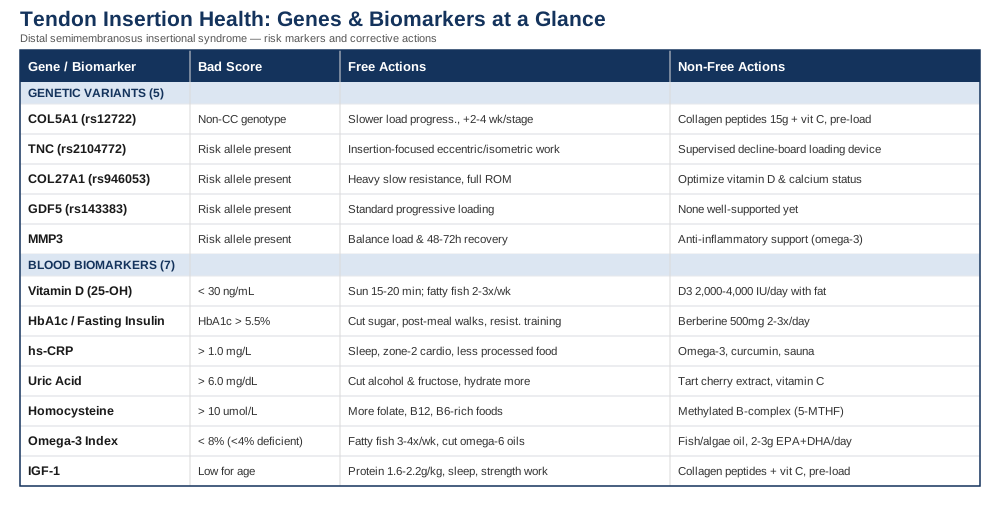
The Genetic Side of Semimembranosus Tendinopathy: Key Variants and What To Do About Them
Tendon genetics is a real, if still maturing, field. Most of the foundational work has been done on the Achilles tendon and the ACL, because they are easier to study in large athletic cohorts, but the underlying biology, collagen structure, cross-linking, and matrix turnover, applies to every load-bearing tendon in the body, including the semimembranosus tendon at the back of the knee. Researchers like Malcolm Collins and Stuart Raleigh built much of this evidence base through South African cohort studies, while genomic medicine researchers such as Ali Torkamani at Scripps Research have pushed the broader idea that ordinary people can and should look at their own raw genetic data to understand personal risk rather than treating genetics as something only relevant to rare disease. Health educators like Gary Brecka have popularized this same idea for general wellness, using consumer genetic panels to flag variants in methylation, inflammation, and collagen pathways as a starting point for a conversation, not a verdict. That is the spirit of the section below: a starting point, not a diagnosis.
If you want to check where you personally stand on any of these variants, raw data from a consumer test such as 23andMe or AncestryDNA can be run through a third-party interpretation tool, or you can order a dedicated variant panel through a genetics-literate physician. None of this is necessary to benefit from the "without supplements" plans below, which are useful regardless of your genotype.
COL5A1: the tendon structure gene
COL5A1 codes for type V collagen, a minor but critical component that regulates the diameter and organization of the much more abundant type I collagen fibrils that make up tendon structure. Thinner, more tightly regulated fibrils tend to make a stiffer, more damage-resistant tendon; disorganized, thicker fibrils are more vulnerable to microtrauma. The BstUI (rs12722) polymorphism in COL5A1 was the first variant ever linked to Achilles tendon pathology, in a study by Mokone and colleagues (The COL5A1 gene and Achilles tendon pathology), and the protective allele has since been replicated across multiple tendon and ligament injury cohorts. This is one of the stronger, more repeated findings in the field, though effect sizes are modest and not every replication study agrees.
If This Variant Is Unfavorable: Plan Without Supplements
The most evidence-backed lever for a COL5A1 risk variant is progressive, consistent tendon loading, because mechanical stimulus is still the strongest known driver of collagen fibril organization regardless of genotype. Practically, this means a structured isometric-to-heavy-slow-resistance progression for the hamstring group three to four times per week, never skipping the warm-up load, and avoiding sudden spikes in sprint or lunge volume, which is when a disorganized matrix is most likely to fail. Sleep consistency also matters more than people assume, since the bulk of collagen remodeling and growth hormone-driven repair happens during deep sleep.
If This Variant Is Unfavorable: Plan With Supplements or Equipment
Vitamin C paired with a collagen or gelatin source timed before loading (detailed further in the Keith Baar protocol below) gives the raw material for type I and V collagen synthesis; a reasonable approach is 15 grams of hydrolyzed collagen or gelatin with 50 to 100 milligrams of vitamin C, taken about 60 minutes before a training session, used on training days only rather than daily, to avoid unnecessary sustained supplementation. Blood flow restriction cuffs during light-load rehab sessions can amplify a collagen synthesis signal at lower joint stress, which is useful during a flare-up; cycle this in two to three-times-weekly blocks of four to six weeks rather than indefinitely. Side effects are minimal, though gelatin can cause mild GI upset in some people and BFR should not be used without guidance if you have any vascular risk factors.
COL1A1: the primary collagen gene
COL1A1 encodes the alpha-1 chain of type I collagen, the dominant structural protein in tendon. The Sp1-binding site polymorphism (rs1800012) has been studied extensively because it affects how much type I collagen is transcribed and how it is proportioned relative to type III. Evidence here is more mixed than for COL5A1: a study by September and colleagues (Investigation of the Sp1-binding site polymorphism within the COL1A1 gene) found no significant association between this variant and Achilles tendinopathy specifically, even though meta-analyses across broader soft tissue rupture categories (ACL tears, shoulder dislocations) do show an association. The honest read is that COL1A1's role in tendinopathy specifically, as opposed to acute rupture, is still uncertain.
If This Variant Is Unfavorable: Plan Without Supplements
Because COL1A1's clearest signal is with acute rupture rather than chronic tendinopathy, the most sensible non-supplement response is rupture-risk reduction: avoiding ballistic, unwarmed maximal-effort hamstring loading (sprint starts, heavy Nordic curls) without a proper graded warm-up, and building tendon stiffness gradually through isometric holds before progressing to faster, more elastic loading patterns.
If This Variant Is Unfavorable: Plan With Supplements or Equipment
Given the uncertain evidence, an aggressive supplement stack is not well justified here. A reasonable, low-risk option is ensuring adequate dietary protein (around 1.6 grams per kilogram of bodyweight daily) to support baseline type I collagen turnover, with no need for a dedicated collagen-specific product beyond what is already recommended for COL5A1 above. There is no established cycling protocol because the underlying evidence for intervention is weak; the priority is training modification, not supplementation.
MMP3: the matrix remodeling gene
MMP3 encodes matrix metalloproteinase-3 (stromelysin-1), an enzyme that breaks down and remodels the extracellular matrix, including collagen, proteoglycans, and fibronectin. Tendon health depends on a balance between matrix breakdown and rebuilding; too much MMP3 activity relative to its inhibitors (TIMPs) tips that balance toward degeneration. Raleigh and colleagues (Variants within the MMP3 gene are associated with Achilles tendinopathy) found that specific MMP3 promoter variants were associated with Achilles tendinopathy, and notably, that this risk was amplified when combined with a COL5A1 risk variant, suggesting these pathways interact rather than acting independently. A later study replicated the MMP3/TIMP2 association in an independent cohort, strengthening this signal.
If This Variant Is Unfavorable: Plan Without Supplements
Since excess MMP3 activity is also upregulated by inflammation and mechanical overload, the practical lever is managing load spikes and total inflammatory burden together: track weekly training load rather than adjusting session by session, cap week-over-week volume increases at roughly ten percent, and prioritize non-inflammatory recovery habits such as consistent sleep and stress management, since cortisol dysregulation independently upregulates MMPs.
If This Variant Is Unfavorable: Plan With Supplements or Equipment
Omega-3 fatty acids (roughly 2 to 3 grams combined EPA/DHA daily, with food) have reasonable evidence for modestly reducing systemic inflammatory markers, which may indirectly reduce excess MMP activity; use for a defined block of eight to twelve weeks and reassess rather than taking indefinitely without reason. A basic hs-CRP recheck every three months is a more useful way to monitor this than any home device. Side effects of omega-3s at this dose are generally mild (occasional GI upset, fishy aftertaste) but they can mildly increase bleeding risk, so check with a physician if you are on blood thinners.
TNC: the tenascin-C gene
Tenascin-C is a structural glycoprotein expressed at high levels during tendon healing and under mechanical stress; it is thought to help cells sense and respond to load. Mokone and colleagues (The guanine-thymine dinucleotide repeat polymorphism within the tenascin-C gene) identified a repeat polymorphism in the TNC gene that was significantly associated with Achilles tendon injury in a case-control study of physically active adults, one of the earlier and more specific tendon-gene associations in the literature. Because TNC expression itself is highly load-responsive, this variant may partly reflect how efficiently your tendon cells detect and adapt to mechanical stimulus.
If This Variant Is Unfavorable: Plan Without Supplements
Since tenascin-C is upregulated by mechanical loading itself, consistent, moderate mechanical stimulus (rather than either complete rest or erratic high-intensity spikes) is the most direct way to support this pathway. A steady three-times-weekly loading routine that never lapses for more than a few days appears more useful here than an aggressive but inconsistent program.
If This Variant Is Unfavorable: Plan With Supplements or Equipment
There is no specific supplement shown to directly modulate tenascin-C expression in humans, so equipment is more relevant than supplementation here: a simple resistance band or isometric mid-range hold setup used daily for short (5 to 10 minute) sessions can maintain the steady mechanical signal this gene pathway seems to respond to, without the joint stress of full-range loaded movement during a flare. This can be done daily during a flare-up and tapered to three times weekly once symptoms settle, with no meaningful side effects beyond standard training soreness.
GDF5: the growth factor gene
Growth differentiation factor 5 is involved in joint and connective tissue development, and animal studies show GDF5 deficiency alters the ultrastructure and mechanical properties of the Achilles tendon. In humans, a functional variant (rs143383) in the GDF5 5' untranslated region has been linked to roughly double the risk of Achilles tendon pathology in carriers of the TT genotype, in a genetic association study of the TGF-beta family's role in tendon disease (Components of the transforming growth factor-beta family and Achilles tendon pathology). GDF5 expression is also epigenetically regulated through promoter methylation (GDF5 expression is modulated epigenetically by DNA methylation), meaning environmental and lifestyle factors can influence how much of this gene is actually expressed regardless of which variant you carry, an area of genuinely early but promising research.
If This Variant Is Unfavorable: Plan Without Supplements
Because GDF5 expression is methylation-sensitive, general habits known to support healthy methylation, adequate sleep, regular moderate exercise, and avoiding chronic caloric restriction, are reasonable low-cost interventions, even though direct human trials linking lifestyle-driven GDF5 methylation changes to tendinopathy outcomes do not yet exist. This should be framed honestly as a plausible-but-unproven mechanism, not a guaranteed fix.
If This Variant Is Unfavorable: Plan With Supplements or Equipment
Folate, B12, and choline are the primary methyl donors relevant to gene expression regulation broadly; if bloodwork shows a genuine deficiency (see the B12/homocysteine biomarker below), correcting it with standard dosing (400 to 800 micrograms folate, 500 to 1000 micrograms B12) is reasonable, but supplementing methyl donors without a documented deficiency has no established benefit for tendon-specific GDF5 expression and is not recommended as a blanket strategy. There is no cycling protocol needed if used only to correct a confirmed deficiency; recheck levels at three months.
COL3A1: the early-evidence variant
COL3A1 encodes type III collagen, which is prominent in more elastic connective tissues and in the early phases of tendon healing before it is replaced by stiffer type I collagen. Evidence connecting COL3A1 variants specifically to tendon injury is considerably thinner than for the genes above: one study in skiers found a COL3A1 genotype overrepresented in those with ACL injury, but there is no dedicated tendinopathy-specific replication yet, and this gene is more established in connective tissue conditions like vascular Ehlers-Danlos syndrome than in ordinary sports tendinopathy. It is included here because the mechanism is plausible, not because the human evidence is strong; treat any personal result on this variant as a minor data point rather than something to act on aggressively.
If This Variant Is Unfavorable: Plan Without Supplements
If joint hypermobility, easy bruising, or unusually stretchy skin accompany a COL3A1 finding, it is worth a conversation with a physician about broader connective tissue laxity rather than treating it as an isolated tendon issue; in that context, tendon loading should progress more conservatively than standard protocols suggest, with a longer isometric phase before adding heavier or faster loading.
If This Variant Is Unfavorable: Plan With Supplements or Equipment
Given how limited the direct evidence is, no specific supplement stack is justified purely on the basis of this variant. The more useful step is a formal hypermobility screen (Beighton score) with a clinician if other signs are present, rather than self-directed supplementation.
The genetic picture explains why some people seem to injure and heal differently than others under the same training program, but genes are fixed while your day-to-day biology is not. That is where tracking a handful of blood biomarkers becomes useful: it gives a faster, cheaper, and more actionable read on the current state of your tendon-healing environment.
Beyond Genetics: Biomarkers Worth Tracking for Tendon Recovery
Unlike cardiometabolic disease, there is no single validated blood panel for tendinopathy the way there is for cholesterol and cardiovascular risk. What exists instead is a set of markers, endorsed in general metabolic and inflammatory health contexts by physicians such as Peter Attia, Thomas Dayspring, and Allan Sniderman, that plausibly shape tendon healing capacity through inflammation, collagen metabolism, and hormonal regulation. These are worth tracking not because any one of them diagnoses tendinopathy, but because an abnormal result identifies a modifiable factor that could be slowing your recovery.
High-sensitivity CRP (hs-CRP)
Hs-CRP is a marker of low-grade systemic inflammation. Chronically elevated hs-CRP suggests your body's baseline inflammatory tone is higher than ideal, which can blunt the normal, controlled inflammatory phase tendons need to heal and instead push toward more degenerative matrix breakdown, tying directly back to the MMP3 pathway discussed above.
How to Measure It
A simple blood draw at any standard lab, typically 15 to 30 dollars out of pocket in the US if not covered by insurance, or bundled into most routine metabolic panels ordered by a physician.
If the Score Is Bad: Plan Without Supplements
Prioritize sleep (7 to 9 hours consistently), reduce ultra-processed food and added sugar intake, and address any untreated dental or gum disease, all of which are common, underappreciated drivers of chronic low-grade inflammation. Recheck hs-CRP after 8 to 12 weeks of consistent change.
If the Score Is Bad: Plan With Supplements or Equipment
Omega-3s (as above, 2 to 3 grams EPA/DHA daily with food, 8 to 12 week blocks) and, if body composition is a contributing factor, a structured weight management plan, since visceral fat is itself a significant driver of hs-CRP. Avoid stacking multiple anti-inflammatory supplements simultaneously, since it becomes difficult to know what is working and some (like high-dose curcumin) can interact with medications.
HbA1c and fasting insulin
Insulin resistance and elevated blood glucose are linked to impaired collagen cross-linking and increased advanced glycation end-products (AGEs), which make tendon tissue stiffer, more brittle, and slower to remodel. This is one of the more underappreciated tendinopathy risk factors, particularly in people whose tendinopathy does not respond to loading changes alone.
How to Measure It
HbA1c and fasting insulin are both standard lab tests, typically 10 to 40 dollars each depending on the lab and whether ordered alongside a routine physical.
If the Score Is Bad: Plan Without Supplements
Reducing refined carbohydrate load, walking after meals, and strength training (which independently improves insulin sensitivity) are the best-supported first steps. Time-restricted eating (roughly a 10 to 12 hour eating window) has reasonable supporting evidence for improving insulin sensitivity in people with elevated fasting insulin.
If the Score Is Bad: Plan With Supplements or Equipment
Berberine (500 milligrams, two to three times daily with meals) has meaningful clinical evidence for improving insulin sensitivity, comparable in some trials to metformin, but should be cycled (for example, 8 to 12 weeks on, 4 weeks off) and can cause GI upset; it should not be combined with diabetes medication without physician oversight due to hypoglycemia risk. A continuous glucose monitor, while not strictly necessary, can help identify which specific foods spike your glucose most.
Lipid panel: LDL-C and ApoB
This one is less intuitive but increasingly discussed: elevated LDL cholesterol and ApoB are associated with lipid deposition within tendon tissue itself, most visibly in xanthomatous Achilles tendons in familial hypercholesterolemia, but milder lipid infiltration is thought to contribute to matrix stiffness and impaired healing even outside that extreme. Sniderman's and Dayspring's broader work on ApoB as the more accurate marker of atherogenic particle burden than LDL-C alone is relevant here too, since particle number likely matters more than cholesterol mass for tissue-level effects.
How to Measure It
A standard lipid panel is inexpensive (10 to 30 dollars) and widely available; ApoB is a bit less commonly ordered by default but is inexpensive to add (typically 20 to 40 dollars) and worth requesting specifically.
If the Score Is Bad: Plan Without Supplements
Replacing saturated fat sources with unsaturated fats, increasing soluble fiber intake (oats, legumes, psyllium), and regular aerobic exercise are the best-established first-line approaches, with meaningful effect sizes over 8 to 12 weeks.
If the Score Is Bad: Plan With Supplements or Equipment
Psyllium husk (5 grams, once or twice daily with water) has solid trial evidence for modest LDL reduction and is low-risk; if ApoB remains significantly elevated despite lifestyle change, that is a conversation for a physician about pharmacologic options rather than a supplement stack, since the evidence for supplements meaningfully lowering ApoB on their own is weak.
Vitamin D (25-hydroxyvitamin D)
Vitamin D deficiency has been directly associated with tendinopathy risk in human data; one large retrospective analysis found the incidence of distal biceps tendinopathy was roughly 2.5 times higher in vitamin D-deficient patients compared to matched controls in the year following diagnosis (Association of vitamin D deficiency with distal biceps injury), and vitamin D is known to exert immunomodulatory effects relevant to tendon repair, though most mechanistic data is still animal-based.
How to Measure It
A standard 25-OH-D blood test, typically 20 to 50 dollars, widely available and often included in broader wellness panels.
If the Score Is Bad: Plan Without Supplements
Regular, moderate sun exposure (roughly 15 to 20 minutes midday, several times weekly, skin-tone dependent) is the most natural route, along with dietary sources like fatty fish and fortified dairy, though these alone are usually insufficient to correct a true deficiency.
If the Score Is Bad: Plan With Supplements or Equipment
Vitamin D3, typically 2000 to 4000 IU daily for a documented deficiency, taken with a fat-containing meal for absorption, rechecked at three months rather than dosed indefinitely without follow-up testing, since excessive supplementation can cause hypercalcemia over time. This does not need cycling in the traditional sense, but dosing should be adjusted downward once levels normalize.
TSH (thyroid-stimulating hormone)
Hypothyroidism, even subclinical, is associated with tendinopathy and joint stiffness through slowed collagen turnover and altered connective tissue metabolism, and is a commonly overlooked contributor in tendinopathy that fails to respond to standard rehab.
How to Measure It
A basic TSH blood test, generally 20 to 40 dollars, or bundled into a broader thyroid panel with free T4 for around 50 to 80 dollars.
If the Score Is Bad: Plan Without Supplements
If TSH is elevated (suggesting underactive thyroid function), this warrants a physician workup rather than self-management; lifestyle measures like adequate iodine and selenium intake through diet (seafood, Brazil nuts in moderation) support baseline thyroid function but will not correct clinical hypothyroidism.
If the Score Is Bad: Plan With Supplements or Equipment
This is a case where supplementation should generally follow, not replace, a physician diagnosis; if a deficiency such as low selenium or iodine is confirmed, correcting it (55 to 200 micrograms selenium daily, cycled rather than continuous given narrow safety margins) is reasonable, but overt hypothyroidism typically requires prescription thyroid hormone replacement rather than supplements.
Vitamin B12 and homocysteine
B12 deficiency and the resulting elevation in homocysteine are linked to impaired collagen cross-linking, since B12 and folate are required cofactors in the methylation cycle that supports healthy connective tissue synthesis, directly relevant to the GDF5 methylation discussion above.
How to Measure It
B12 is a standard, inexpensive blood test (15 to 30 dollars); homocysteine is slightly more specialized but still widely available (25 to 50 dollars) and worth adding if B12 comes back borderline.
If the Score Is Bad: Plan Without Supplements
Increasing dietary B12 sources (eggs, dairy, fish, meat) is sufficient for mild dietary deficiency in people without absorption issues; this is especially relevant for those on plant-based diets, who are at meaningfully higher risk of low B12.
If the Score Is Bad: Plan With Supplements or Equipment
Sublingual or oral B12 (1000 micrograms daily) corrects most dietary deficiencies within 8 to 12 weeks; if deficiency is due to an absorption issue (such as pernicious anemia), B12 injections administered by a physician are more reliable than oral supplementation. Side effects are minimal at these doses, and no cycling is needed once levels normalize and diet is adjusted.
Genetics and biomarkers describe your starting conditions. What you actually do with a healing tendon, day to day, is where a specific, research-driven approach to loading and nutrition timing makes the biggest practical difference, which is where Keith Baar's tendon research comes in.
10 Lessons from Keith Baar's Tendon Research That Challenge Standard Advice
Keith Baar, a physiologist at UC Davis, has spent much of his career studying how connective tissue actually adapts to load and nutrition at the molecular level, and his findings directly challenge the old "rest it until it stops hurting" model that many patients are still told to follow. His most cited human study, published with Shaw and colleagues (Vitamin C-enriched gelatin supplementation before intermittent activity augments collagen synthesis), showed that timed nutrition can meaningfully change how much new collagen a person's tendon actually produces in response to exercise. The following ten points summarize the most practically useful findings from his body of work and public talks.
1. Rest alone does not rebuild tendon
Tendon tissue has very low blood flow and a low metabolic rate compared to muscle, meaning it needs a mechanical signal to trigger meaningful collagen synthesis. Complete rest removes the pain trigger but also removes the stimulus the tendon needs to actually remodel, which is part of why purely rest-based tendinopathy treatment so often fails to produce lasting improvement.
2. Collagen synthesis is a short, specific window
In the Shaw et al. study, blood markers of new collagen synthesis rose and fell within a defined window after exercise, meaning the timing of nutrient availability relative to the loading bout, not just total daily intake, appears to matter for maximizing the synthesis response.
3. Vitamin C is a required cofactor, not just an antioxidant
Vitamin C is essential for the hydroxylation reactions that stabilize the collagen triple helix; without adequate vitamin C at the time of collagen synthesis, the process is structurally incomplete regardless of how much amino acid substrate (gelatin or collagen peptides) is available.
4. Gelatin and collagen peptides raise the specific amino acids tendon needs
The study found that gelatin supplementation increased circulating glycine, proline, and hydroxyproline, the specific amino acids most concentrated in collagen, in a dose-dependent way, peaking about an hour after ingestion, which is the mechanistic basis for the "one hour before loading" timing recommendation.
5. Doubling gelatin dose roughly doubled the collagen synthesis marker
Comparing 5 grams versus 15 grams of vitamin C-enriched gelatin, the higher dose produced roughly double the collagen synthesis marker response following exercise, suggesting a real dose-response relationship worth applying practically rather than assuming any small amount is equivalent.
6. The exercise stimulus itself still matters most
Collagen synthesis markers only doubled with supplementation on top of an exercise stimulus; supplementation without any loading did not replicate the same effect, reinforcing that nutrition amplifies a training stimulus rather than substituting for one.
7. Isometric loading is a legitimate early-stage tool, not a lesser one
Baar's broader work on tendon mechanobiology supports using sustained isometric holds, rather than only dynamic eccentric exercise, as an effective, lower-irritation way to load a tendon early in a flare-up, which is consistent with clinical tendinopathy rehabilitation guidelines that have shifted toward isometrics for pain modulation in early-stage cases.
8. Tendon adapts more slowly than muscle, so patience has a mechanistic basis
Because tendon has a much lower cellular turnover rate than muscle, meaningful structural adaptation genuinely takes longer, often many weeks to months, which reframes slow progress not as treatment failure but as an expected biological timeline consistent with how the tissue is built.
9. Heavy, slow loading builds tendon stiffness over time
Progressive heavy, slow resistance training has more support for increasing tendon stiffness and cross-sectional area over time than light, high-repetition work, supporting a program that progressively adds load rather than one that stays permanently light "to be safe."
10. Consistency across weeks matters more than any single session
Because the collagen synthesis window is short and repeated exposure is what drives cumulative structural change, a consistent three-times-weekly loading habit sustained over months outperforms sporadic, high-effort sessions separated by long gaps, which is really the practical thread tying all of the above points together.
This same idea, that structured, well-timed input beats either total rest or reactive overcorrection, applies just as well to the complementary approaches below, several of which have real, if sometimes limited, clinical evidence specifically in tendinopathy populations.
Complementary Approaches Worth Considering
Low-level laser therapy and photobiomodulation
Photobiomodulation uses specific wavelengths of red and near-infrared light, thought to stimulate mitochondrial activity and modulate local inflammation in tendon tissue, which makes it plausible as an adjunct for a slow-healing tendon like the semimembranosus. It is one of the more evidence-supported complementary options on this list specifically for tendinopathy, rather than a general wellness practice repurposed for tendon pain.
A systematic review and meta-analysis of randomized controlled trials found that photobiomodulation combined with exercise produced greater reductions in pain and improved function compared to sham treatment plus exercise, though PBM alone versus other active treatments showed more mixed results (photobiomodulation and tendinopathy meta-analysis), and a separate randomized trial combining low-level laser therapy with eccentric exercise for Achilles tendinopathy showed added benefit over eccentric exercise with placebo laser (LLLT combined with eccentric exercise RCT).
Realistically, this means photobiomodulation is worth considering as an add-on to an active loading program, not a replacement for one, delivered by a physical therapist or sports medicine clinic with a proper therapeutic-grade device, typically two to three times weekly for four to six weeks with reassessment afterward. It should not be expected to work as a standalone treatment, and cheap consumer-grade devices have not been validated to the same dosing standards used in the clinical trials above.
Massage therapy and deep transverse friction massage
Manual therapy, including deep transverse friction massage, has long been used clinically for tendinopathy on the theory that it may promote local circulation, break down disorganized cross-links, and reduce pain sensitivity around the affected tendon, making it a reasonable, low-risk adjunct to consider for semimembranosus tendon pain.
The evidence here is genuinely mixed rather than strongly positive: a review of deep transverse friction massage found reasonable trial support for conditions like lateral epicondylitis, but a controlled trial in runners found no significant difference in pain outcomes when it was added to standard physiotherapy, and the overall literature has been described as lacking robust, placebo-controlled trials across tendinopathy broadly (deep transverse friction massage trial for tendinitis).
Given the mixed evidence, massage is best framed as a comfort-and-adjunct measure rather than a primary treatment, reasonable to use once or twice weekly alongside, never instead of, active loading exercise, and best avoided during an acutely inflamed, highly irritable phase where added mechanical pressure may aggravate symptoms rather than help.
Mindfulness meditation
Chronic tendinopathy pain, like other persistent musculoskeletal pain conditions, involves central nervous system sensitization over time, not just local tissue damage, which is why approaches that modulate pain perception, rather than only targeting the tendon itself, can have real value for people whose pain has become disproportionate to structural findings on imaging.
The evidence for mindfulness meditation is strong for chronic pain broadly, though it has not been isolated specifically in tendinopathy populations: a systematic review and meta-analysis of randomized controlled trials found mindfulness meditation associated with a small but statistically significant decrease in pain compared to controls, along with improvements in depression symptoms and quality of life (mindfulness meditation for chronic pain meta-analysis).
A realistic application is a structured eight-week mindfulness-based stress reduction course, or a shorter daily practice of 10 to 20 minutes, four to five times weekly, used specifically for cases where pain persists beyond what tissue healing timelines would predict, alongside continued active rehabilitation rather than as a substitute for addressing the mechanical and biological factors covered earlier in this article.
Electromyographic biofeedback
EMG biofeedback provides real-time visual or auditory feedback on muscle activation, which can help retrain proper firing patterns in the hamstring group after an injury has altered normal movement mechanics, a common issue that can perpetuate tendon overload if left uncorrected during rehab.
Direct evidence in semimembranosus tendinopathy specifically does not exist yet, but analogous evidence from lower-limb rehabilitation is instructive: a randomized controlled trial in patients recovering from ACL reconstruction found that adding EMG biofeedback to standard rehabilitation improved knee extension range and quadriceps activation compared to standard rehabilitation alone (EMG biofeedback after ACL reconstruction RCT).
Applied cautiously to semimembranosus tendinopathy, this suggests biofeedback-assisted retraining, delivered by a physical therapist with surface EMG equipment, may be most useful in cases where movement compensation patterns (such as underactivation of the injured side during hip extension) are suspected, typically over a six to eight week rehabilitation block, rather than as a routine addition for every case.
Conclusion
Semimembranosus tendinopathy that resists generic treatment usually has a reason, and that reason is often a combination of collagen genetics, matrix-remodeling biology, and a metabolic or inflammatory environment that is quietly working against tendon repair. The gene variants covered here, particularly COL5A1, MMP3, and TNC, have the most consistent human evidence, while GDF5 and COL3A1 remain more speculative and should be weighted accordingly. Biomarkers like hs-CRP, fasting insulin, vitamin D, and B12 are cheaper, faster to check, and arguably more actionable day to day than genetics, since they reflect a state you can actually change within months rather than a fixed inheritance. Layered on top of a properly timed, well-supported loading program, informed by how tendon tissue actually adapts, this gives a far more specific plan than "rest and stretch."
None of this replaces an actual diagnosis or a clinician who has examined your knee, felt for the specific tender point, and ruled out other causes of posteromedial knee pain. The most useful next step is a practical one: get a baseline panel of the biomarkers above from your physician, track your symptoms and training load in parallel over the next few weeks, and bring both sets of information to whoever is managing your rehabilitation, so the plan you follow is built around your actual biology rather than an average patient who does not exist.
Musculoskeletal: Joint Conditions Muscle Conditions