This article contains AI generated content.
Trochanteric Bursitis, Genes and Biomarkers - 4 Genes And 6 Biomarkers To Track
Introduction
If you have been told you have "trochanteric bursitis," you probably know the exact feeling: a deep, nagging ache on the bony point of your outer hip, worse when you lie on that side at night, worse climbing stairs, worse after you sit too long and stand up. You may have tried rest, an anti-inflammatory, maybe a cortisone shot that helped for a few weeks and then faded. And still, months later, it is there.
Here is something worth knowing early. What most people call trochanteric bursitis is now, in the research literature, usually reclassified as greater trochanteric pain syndrome (GTPS), and the real culprit is often not an inflamed bursa but the gluteal tendons — the gluteus medius and minimus — where they attach to the hip. That single shift in understanding changes everything, because tendons respond to load, metabolism, and hormones in ways a "bursa" never explained. It is also why generic advice — rest it, ice it, take ibuprofen — so often falls short. That advice treats a fire that is mostly already out, while ignoring the soil the problem grew in.
This article takes a deeper route. Instead of chasing the pain, it looks at the terrain underneath it: the blood markers that quietly shape how well your tendons repair, and the genes that set your baseline for collagen quality and tendon resilience. These are the same lenses that clinicians like Peter Attia, Thomas Dayspring, and Allan Sniderman use to think about long-term tissue health, and researchers like Ali Torkamani use to interpret genetic risk.
None of this is a magic cure, and this article will never pretend otherwise. But better information genuinely does lead to better decisions. We will start with the biomarkers you can actually measure and move — the highest-leverage place to begin. Then we will look at what your genes may reveal, summarize a line of research that is quietly rewriting how we think about tendon healing, and finish with gentle, evidence-checked complementary approaches. Each layer is meant to raise the odds that you find the specific lever that works for your hip.
Summary
Trochanteric bursitis is usually a tendon problem in disguise, and tendons are metabolically "slow" tissues with a poor blood supply — which means the state of your whole body quietly decides how well they heal. This article maps that terrain in two ways.
First, the six blood markers that matter most for tendon repair: the one inflammation marker that predicts stubborn healing, the glucose marker that can raise tendon-injury odds several-fold, the lipid measure that literally stiffens tendon tissue, the vitamin that governs muscle and tendon function, the hormone whose decline explains why this condition hits women hardest around menopause, and one emerging metabolic marker most people never test. For each, you will see how to measure it, what the number means, and a specific plan to improve it — with and without supplements, including doses, cycling, and side effects.
Then we look at four genes that shape collagen quality and tendon resilience, and what to do when yours are not ideal. After that, a research-backed protocol involving gelatin, vitamin C, and precisely-timed loading that challenges the old belief that "tendons can't really heal." Finally, four complementary approaches — and an honest read on which ones the evidence actually supports for this specific hip pain.
Read on to see which numbers are worth your next blood draw, and which single habit change may matter more than any supplement.
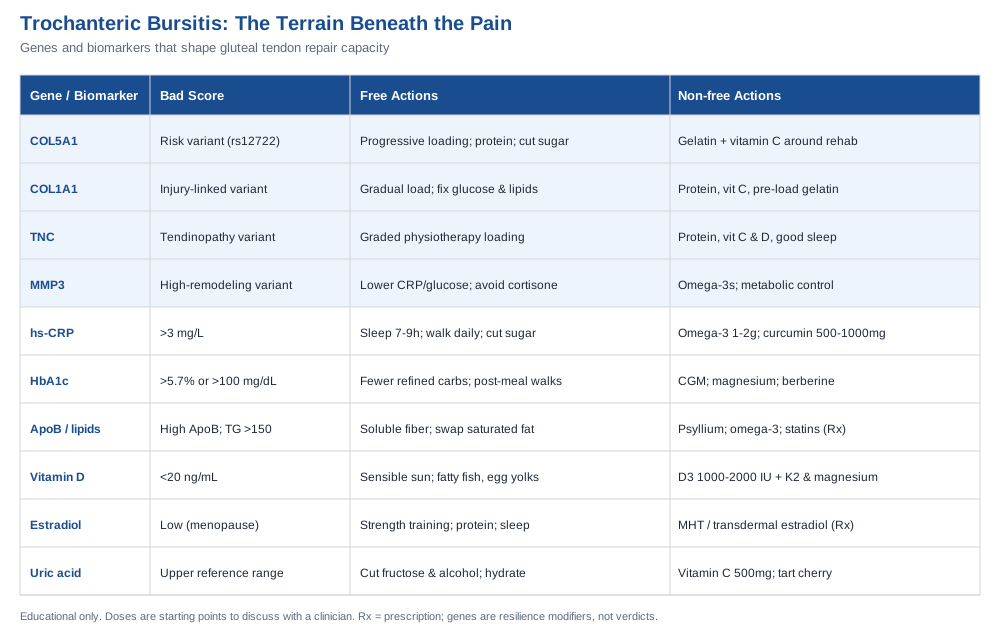
The 6 Biomarkers Worth Tracking When Hip Tendon Pain Won't Settle
Tendons are stubborn to heal for a simple reason: they have a sparse blood supply and a slow metabolic turnover. That makes them exquisitely sensitive to the internal environment your blood carries to them every day. High sugar, high inflammatory tone, poor lipids, low vitamin D, and shifting hormones all degrade the raw materials and the repair machinery that gluteal tendons depend on. A 2025 systematic review and meta-analysis found that people with metabolic disorders carry a substantially higher burden of tendinopathy, and that the relationship is dose-dependent — the worse the metabolic picture, the worse the tendons (De Luca et al., 2025, Journal of Experimental Orthopaedics).
The six markers below are chosen because each is measurable, each has a plausible or proven link to tendon health, and each is something you can actually move. For every one, you will find how to measure it, a no-supplement plan, and a supplement-or-equipment plan. Doses and frequencies are practical starting points to discuss with a clinician, not prescriptions — and every marker should be interpreted in the context of the whole picture, not in isolation.
1. High-sensitivity C-reactive protein (hs-CRP) — your inflammation thermostat
hs-CRP is a general marker of low-grade, body-wide inflammation. It does not diagnose the hip directly, but a chronically elevated hs-CRP tells you the same inflammatory tone that stalls tissue repair is running in the background. Tendinopathy that refuses to settle often coexists with a raised inflammatory baseline, and inflammation is one of the mechanisms the metabolic-tendinopathy literature repeatedly implicates.
How to measure it
A simple blood test, often bundled into a standard panel. Ask specifically for high-sensitivity CRP, not standard CRP. Cost is typically modest — roughly 10 to 30 USD, or free in many public systems when ordered. Optimal is generally below 1.0 mg/L; 1–3 mg/L is intermediate; above 3 mg/L (with no acute infection) suggests meaningful chronic inflammation. Retest after 8–12 weeks of changes.
If the score is bad, the plan without supplements
The biggest levers are sleep, movement, and body fat. Prioritize 7–9 hours of sleep, since short sleep alone raises inflammatory markers. Reduce visceral fat through a modest calorie deficit and daily walking. Cut ultra-processed foods and added sugar, which drive inflammatory signaling. Add regular but non-aggravating aerobic exercise (walking, cycling, swimming) most days. Alcohol reduction and smoking cessation both lower hs-CRP measurably.
If the score is bad, the plan with supplements or equipment
Omega-3 fish oil (EPA/DHA around 1–2 g combined daily) has the most consistent evidence for lowering inflammatory markers; take with food, and be aware it mildly thins blood, so pause before surgery and tell your doctor if you use anticoagulants. Curcumin (500–1000 mg/day with piperine or a bioavailable form) may help; cycle 8–12 weeks on and reassess, and note it can cause mild stomach upset. A quality sleep-tracking device can turn "I think I sleep badly" into an actionable number. Avoid stacking many anti-inflammatory supplements at once — you lose the ability to tell what worked.
2. HbA1c and fasting glucose — the sugar that stiffens tendons
This is arguably the highest-value marker on the list. Chronic high blood sugar drives the formation of advanced glycation end-products (AGEs), which cross-link collagen and make tendons stiffer, weaker, and slower to repair. The association is striking: reviews report that diabetes raises the odds of certain tendinopathies several-fold, with mechanisms including AGE deposition, oxidative stress, and microvascular damage (review of diabetes and tendon pathology, 2024). Even "pre-diabetic" glucose levels appear to matter for tendon quality.
How to measure it
HbA1c reflects your average blood sugar over roughly three months; fasting glucose is a snapshot. Both are cheap and widely available (about 10–30 USD, often free). Aim for HbA1c below 5.7% (ideally in the low-5s) and fasting glucose under 100 mg/dL, with many longevity-focused clinicians preferring the lower end. A continuous glucose monitor (CGM) worn for two weeks reveals how your specific meals spike sugar.
If the score is bad, the plan without supplements
Reduce refined carbohydrates and sugary drinks; prioritize protein and fiber at each meal to blunt glucose spikes. Take a 10–15 minute walk after your largest meals — post-meal walking meaningfully lowers glucose excursions. Build muscle through resistance training, since muscle is your largest glucose sink. Improve sleep, because a single poor night worsens next-day glucose handling.
If the score is bad, the plan with supplements or equipment
A two-week CGM (available over the counter in many regions, roughly 70–100 USD per sensor) is the single most educational tool here. Among supplements, evidence is modest: magnesium (200–400 mg/day, may cause loose stools), and berberine (500 mg two to three times daily with meals) can lower glucose but should be cycled (8–12 weeks) and avoided with certain medications because it interacts with drug metabolism and can cause GI upset. Do not self-treat frank diabetes with supplements — that requires medical management.
3. ApoB and the lipid panel — cholesterol that infiltrates tendon tissue
This is where the thinking of Sniderman, Dayspring, and Attia is directly relevant. Beyond heart disease, elevated cholesterol appears to harm tendons: lipids can accumulate within the tendon matrix, degrading its mechanical properties. Reviews describe hypercholesterolemia as a plausible risk factor for tendon pain and rupture, with animal and clinical data showing lipid-laden tendons are weaker (Beason et al., emerging ideas on hypercholesterolemia and tendons; review on tendon healing, hyperlipidemia and statins). ApoB counts the actual number of atherogenic particles and is a more precise measure than LDL-C alone.
How to measure it
A standard lipid panel (about 10–40 USD, often free) gives LDL-C, HDL, and triglycerides. ApoB is a small add-on test (roughly 20–50 USD) increasingly recommended as the better particle marker. General targets: triglycerides well under 150 mg/dL, and ApoB in the lower range your clinician recommends based on your overall risk.
If the score is bad, the plan without supplements
Increase soluble fiber (oats, legumes, psyllium-rich foods), replace saturated fat with mono- and polyunsaturated fats (olive oil, nuts, fatty fish), and cut refined carbohydrates, which are the main driver of high triglycerides. Lose excess visceral fat and keep alcohol low. Regular aerobic exercise raises HDL and lowers triglycerides.
If the score is bad, the plan with supplements or equipment
Psyllium husk (5–10 g/day with plenty of water) lowers LDL modestly; introduce gradually to avoid bloating. Omega-3s lower triglycerides at higher doses (2–4 g/day). If your ApoB or cardiovascular risk is genuinely high, statins or other lipid-lowering drugs are a medical conversation — note that statins have a debated, generally small association with tendon symptoms in a minority of people, so report new tendon pain to your prescriber rather than stopping on your own.
4. Vitamin D (25-hydroxyvitamin D) — the raw material for muscle and tendon function
Vitamin D influences far more than bone; it supports skeletal muscle function, pain modulation, and connective tissue health. Deficiency is common in people with lower-limb musculoskeletal complaints and has been linked to specific tendon injuries. In one large analysis, vitamin D deficiency was associated with elevated tendon-injury risk, and deficiency is strikingly prevalent among musculoskeletal patients (vitamin D insufficiency in lower-extremity complaints; vitamin D deficiency and distal biceps injury). Because strong gluteal muscles offload the tendons, weak vitamin-D-deprived muscle indirectly loads the sore tendon more.
How to measure it
A 25-hydroxyvitamin D blood test (about 20–50 USD, often free). Many labs flag deficiency below 20 ng/mL and insufficiency at 20–30 ng/mL; a common target is roughly 30–50 ng/mL. Test at the end of winter when levels are lowest, and retest after 3 months of supplementation.
If the score is bad, the plan without supplements
Sensible sun exposure (short, regular midday exposure of arms and legs, respecting skin-cancer caution) is the natural route. Include vitamin-D-containing foods: fatty fish, egg yolks, and fortified products. These alone rarely correct a true deficiency in higher latitudes, so testing matters.
If the score is bad, the plan with supplements or equipment
Vitamin D3 is inexpensive and effective: typical repletion is 1000–2000 IU/day, with higher clinician-guided doses for significant deficiency. Take it with a fat-containing meal, and pair it with vitamin K2 and adequate magnesium for balanced use. Avoid chronic mega-dosing (routinely above 4000 IU/day without monitoring), which can raise calcium to harmful levels. Retest rather than guessing.
5. Estradiol and sex hormones — the reason this pain peaks around menopause
GTPS is far more common in women, especially in the perimenopausal and postmenopausal years, and the leading explanation is hormonal. Estrogen supports collagen production and tendon stiffness; as estradiol falls, tendons appear to become weaker and slower to adapt. A narrative review of GTPS management highlights this female predominance and the hormonal contribution (GTPS management narrative review, 2024), and a randomized trial specifically tested whether menopausal hormone therapy, exercise, or both improve pain and function in postmenopausal women with GTPS (MHT and exercise for GTPS RCT).
How to measure it
Blood tests for estradiol, and often FSH, help place you in the menopausal transition (about 30–80 USD, sometimes free). In cyclically menstruating women, timing matters; in postmenopausal women a single reading is more interpretable. Interpret with a clinician, since "normal" ranges shift dramatically with menopausal stage.
If the score is bad, the plan without supplements
You cannot easily raise estrogen naturally to premenopausal levels, so the leverage is protecting the tendon despite lower hormones: consistent progressive strength training for the hips and glutes, excellent sleep, protein sufficiency (roughly 1.2–1.6 g/kg/day), and avoiding the crash-diet muscle loss that removes tendon-protecting strength. These are exactly the levers the exercise arm of the GTPS trial relied on.
If the score is bad, the plan with supplements or equipment
Menopausal hormone therapy (MHT), including transdermal estradiol, is a genuine medical option that the GTPS trial investigated; it carries individualized risks and benefits and must be prescribed and monitored. Over-the-counter "phytoestrogen" supplements have weak and inconsistent evidence for tendon outcomes and should not be assumed equivalent to MHT. This is a conversation for a menopause-literate clinician, not a self-guided supplement stack.
6. Uric acid — the overlooked metabolic marker
Uric acid is a marker Peter Attia frequently tracks as a barometer of metabolic health, and it belongs on this list as an emerging, more advanced option. Elevated uric acid clusters with insulin resistance, high fructose intake, and the broader metabolic syndrome that the tendinopathy meta-analysis links to worse tendon outcomes. The evidence tying uric acid directly to gluteal tendinopathy is still indirect, so treat it as a supporting signal rather than a proven cause — but it is cheap and informative.
How to measure it
A standard serum uric acid test (about 10–20 USD, often free), frequently included in routine panels. Optimal ranges are debated, but many metabolic-health clinicians prefer the middle of the reference range rather than the high end.
If the score is bad, the plan without supplements
The most effective lever is cutting fructose and alcohol (especially beer and sugary drinks), which directly raise uric acid. Weight loss, better hydration, and reducing ultra-processed food all help. Since high uric acid overlaps heavily with insulin resistance, the glucose plan above pulls double duty here.
If the score is bad, the plan with supplements or equipment
Vitamin C (500 mg/day) has modest uric-acid-lowering evidence and is low-risk. Tart cherry products may help some people. If uric acid is high enough to cause gout, that is a medical situation requiring specific prescription therapy — do not rely on supplements. As always, cycle and reassess rather than adding indefinitely.
Once you know your numbers, the natural next question is whether your baseline was stacked against you from the start — which is where your genes come in.
What Your Genes May Say About Tendon Resilience
Genetics will not tell you whether your hip hurts today, but it can help explain why some people develop stubborn tendon problems from ordinary loads while others never do. Tendons are built mostly from collagen, so the genes that govern collagen structure and turnover shape your baseline resilience. This is the terrain that genomics researchers like Ali Torkamani work in, and Gary Brecka has popularized the idea of pairing gene variants with targeted lifestyle inputs.
An honest caveat first: most of this evidence comes from studies of Achilles tendinopathy, anterior cruciate ligament injury, and athletic populations, not gluteal tendinopathy specifically. The genes below are best understood as resilience modifiers you can partly compensate for, not verdicts. A broad review of the genetics of tendon and ligament injury lays out the main players (genetics of sports injuries and athletic performance).
COL5A1 — the collagen "fine-tuning" gene
COL5A1 encodes part of type V collagen, which regulates how tightly type I collagen fibrils are packed — essentially the fine-tuning of tendon architecture. Certain variants (notably around rs12722) are repeatedly associated with tendon and ligament injury risk. A meta-analysis in Caucasian populations found specific COL5A1 genotypes associated with reduced tendon-ligament injury risk (COL5A1 polymorphisms meta-analysis).
If the gene is unfavorable, the plan without supplements: you cannot rewrite the gene, but you can maximize collagen quality through consistent progressive loading (the strongest known stimulus for tendon adaptation), adequate protein, and avoiding the metabolic hits — high sugar and smoking — that further degrade collagen. Warm up thoroughly and progress training loads gradually, since a less forgiving matrix punishes sudden spikes.
If the gene is unfavorable, the plan with supplements: the gelatin/collagen-plus-vitamin-C protocol described in the next section is directly relevant here, because it aims to increase collagen synthesis around loading. Vitamin C (500 mg/day) is a cofactor for collagen cross-linking. Cycle intentional collagen "dosing" around your rehab sessions rather than taking it randomly.
COL1A1 — the main structural collagen
Type I collagen is the primary building block of tendon, and COL1A1 variants have been linked to tissue strength and injury susceptibility, with some variants appearing protective against soft-tissue injury. As with COL5A1, the effect is a modifier of baseline strength rather than a switch.
Without supplements: load management is again the lever — build tendon capacity slowly and protect against sudden overload. Prioritize the biomarker fixes above, since high glucose and lipids degrade type I collagen regardless of genotype.
With supplements: protein sufficiency (1.2–1.6 g/kg/day), vitamin C, and the pre-loading gelatin protocol give the raw materials the best chance. There is no supplement that changes the gene; the goal is optimizing everything downstream of it.
TNC (tenascin-C) — the mechanical-stress responder
Tenascin-C is a matrix protein produced in response to mechanical stress, important in tendon repair. Variants in TNC have been associated with tendinopathy in case-control work, including in athletes (TNC and COL27A1 associations with tendinopathies).
Without supplements: because TNC responds to mechanical load, appropriately dosed loading is the compensation — enough stimulus to trigger repair signaling, not so much that you overwhelm a sensitive tendon. This is where a structured, progressive physiotherapy program earns its keep.
With supplements: there is no targeted supplement for TNC; support general tendon repair (protein, vitamin C, vitamin D sufficiency, sleep) and let carefully graded loading do the signaling work.
MMP3 — the tendon "remodeling" gene
Matrix metalloproteinases like MMP3 break down and remodel the tendon matrix, and variants influencing their expression have been studied in tendinopathy. Too much or poorly regulated remodeling can tip a tendon toward degeneration.
Without supplements: control the inflammatory and metabolic drivers (the hs-CRP and glucose plans) that push matrix breakdown, and avoid repeated cortisone injections, which can accelerate tendon degradation — the Mellor trial found education plus exercise outperformed corticosteroid injection over a year.
With supplements: omega-3s and a well-controlled metabolic environment create conditions favoring healthy remodeling over degradation. No supplement directly targets MMP3; the strategy is to keep the signals that activate destructive remodeling turned down.
Genes set the starting line, but the research on how to actually build tendon tissue has shifted meaningfully in the last decade — and that shift is worth understanding in detail.
The Tendon-Repair Research That Challenges "Tendons Just Don't Heal"
For years, the clinical mood around tendons was pessimistic: poor blood supply, slow turnover, "you'll just have to manage it." A line of research associated with physiologist Keith Baar — widely discussed on the Peter Attia and other science podcasts — has pushed back, suggesting you can meaningfully stimulate collagen synthesis with the right nutrition timed around the right loading. The anchor study showed that vitamin-C-enriched gelatin taken before short bursts of activity roughly doubled a marker of collagen synthesis compared with placebo (Shaw, Baar et al., 2017, American Journal of Clinical Nutrition). Here are the ten most practical takeaways.
1. Tendons adapt — just slowly
Tendons are not inert. They synthesize new collagen in response to load; they simply do it on a slower timeline than muscle. Expecting change over months, not days, keeps you from quitting a program right before it works.
2. Load is the primary medicine
No supplement substitutes for progressive mechanical loading. The tendon needs the mechanical signal to know it should get stronger. Everything else is support.
3. There is a "window" around exercise
Collagen synthesis rises after a bout of loading, then plateaus. Short, frequent loading sessions (rather than one marathon session) may keep synthesis switched on more often — the study used activity separated by rest windows.
4. Vitamin C is a required cofactor
Collagen cross-linking depends on vitamin C. The intervention paired gelatin with vitamin C for exactly this reason. If you are deficient, your tendon literally cannot build well-structured collagen.
5. Gelatin or collagen before loading, not after
The protocol gave the amino-acid building blocks about an hour before loading, so blood levels peaked when the tendon was being stimulated. Timing was part of the effect, not an afterthought.
6. The dose was meaningful
The larger benefit appeared at roughly 15 g of gelatin, not a token pinch. This matters when people sprinkle a gram of collagen in coffee and expect tendon change.
7. Isometrics may help you load through pain
Sustained isometric contractions can reduce tendon pain enough to let you keep loading, which a meta-analysis of isometric exercise in tendinopathy examined (isometric exercise in tendinopathy meta-analysis). For a hip too sore to train, this can be the entry point.
8. The metabolic environment gates everything
High glucose and lipids degrade collagen quality regardless of how perfectly you time your gelatin. The biomarker section and this section are the same story from two angles.
9. Cortisone buys time but not tissue
Injections can calm pain short-term but do not build tendon and may weaken it with repetition — consistent with the long-term edge of exercise over injection in gluteal tendinopathy.
10. Consistency beats intensity
The unifying lesson: modest, well-timed, repeated inputs — loading, protein, vitamin C, sleep — compound. Tendons reward the patient far more than the aggressive.
A realistic way to apply this: 10–15 g of gelatin or collagen peptides with about 50 mg or more of vitamin C, taken roughly 45–60 minutes before your rehab loading session, a few times a week. Gelatin is generally well tolerated; the main caution is that this supports, and never replaces, a properly progressed loading program. If you take blood thinners or have kidney issues, clear high-protein additions with your clinician first.
Gentle, Evidence-Checked Complementary Approaches
These approaches are add-ons, not replacements for loading-based rehab, which remains the best-supported treatment for gluteal tendinopathy — the LEAP trial by Mellor and colleagues found education plus exercise gave the best global improvement at one year (Mellor et al., 2018, BMJ). For each option below, be clear-eyed: much of the evidence is for tendinopathy or chronic pain in general rather than the hip specifically.
Low-level laser therapy / photobiomodulation
Photobiomodulation uses specific wavelengths of red and near-infrared light in an attempt to reduce pain and support tissue repair, which is why it is studied in tendon conditions. The mechanism — modulating cellular energy production and inflammation — is at least plausible for a slow-healing tissue like tendon.
A 2021 systematic review and meta-analysis of randomized trials (in BMC Sports Science, Medicine and Rehabilitation) reported that low-level red and near-infrared photobiomodulation can improve pain and function in tendinopathy, though results vary with dose and wavelength. Notably, there is little trial evidence for GTPS specifically, so this is an extrapolation from other tendons.
Realistically, photobiomodulation is low-risk and could be trialed as an adjunct alongside loading, ideally with a practitioner who uses documented dosing parameters. Do not expect it to work in isolation, and set a defined trial period (for example 6–8 weeks) before judging whether it adds anything for your hip.
Massage therapy
Massage of the surrounding gluteal and lateral thigh musculature may reduce the muscular tension and sensitivity that accompany chronic hip pain. It does not "break down" a tendon problem, but it can improve comfort and make loading exercises more tolerable.
Evidence for massage in chronic musculoskeletal pain is moderate and generally short-term; studies comparing massage with other approaches show more immediate pain relief but less durable benefit than active strategies. There is no strong GTPS-specific trial, so consider massage a comfort and adherence aid rather than a corrective treatment.
Practically, avoid deep, aggressive pressure directly over the bony trochanter and the compressed tendon, which can flare symptoms; focus on the broader muscle. Used occasionally to reduce a pain spike so you can keep training, it is reasonable and safe for most people.
Mindfulness meditation / MBSR
When hip pain has lasted many months, the nervous system's pain processing often becomes part of the problem — pain can amplify independently of tissue damage. Mindfulness-based stress reduction targets exactly this dimension, teaching a different relationship with persistent pain rather than trying to fix the tendon.
The evidence base here is relatively strong for chronic pain broadly: a randomized trial found mindfulness meditation improved chronic pain outcomes (Morone et al., 2014), and a systematic review and meta-analysis supported small-to-moderate benefits (mindfulness meditation for chronic pain meta-analysis). This is not tendon-specific, but the chronic-pain overlap is real.
Apply it as a daily 10–20 minute practice via a structured app or MBSR course, especially if night pain, poor sleep, and frustration have taken hold. It complements, and does not replace, the physical rehab — think of it as improving the "operator" while loading rebuilds the tendon.
Tai chi
Tai chi combines slow, controlled movement, balance, and gentle loading of the hips and legs, which is conceptually well-matched to a condition driven by weak, poorly-controlled gluteal muscles. It also improves balance, indirectly reducing compensatory gait patterns that overload the hip.
The clinical evidence is strongest for knee osteoarthritis and falls prevention rather than gluteal tendinopathy, so the support here is indirect. Still, as a low-impact way to build lower-limb strength and control, it fits the loading philosophy that actually works for this condition.
Use tai chi as a supplement to targeted hip-abductor strengthening, not a substitute — it may not load the gluteal tendons hard enough on its own to drive full adaptation. Begin with a qualified instructor, and stop any position that provokes sharp trochanteric pain.
Conclusion
The most useful reframe in this whole article is the first one: "trochanteric bursitis" is usually a gluteal tendon problem, and tendons are shaped by the body they live in. That is why the highest-leverage moves are not another ice pack, but the things you can measure and change — your inflammatory tone, blood sugar, lipids, vitamin D, hormones, and metabolic markers — layered on top of a patient, progressive loading program. Your genes may explain your baseline, but they mostly tell you how carefully to build, not whether you can.
None of this promises a cure, and stubborn hip tendons genuinely test your patience. But the picture is far more hopeful than "just live with it." The tools are concrete: strengthen the glutes with graded load, fix the biomarkers that quietly sabotage repair, time your protein and vitamin C intelligently, and treat the pain-processing side of chronic pain seriously.
A calm next step: pick one thing this week. Ask your clinician for a simple panel — hs-CRP, HbA1c, a lipid panel with ApoB, and vitamin D — and start a genuinely progressive hip-strengthening program guided by a physiotherapist. Track your pain and your numbers over the next three months. Better information, turned into a few consistent habits, is how most people finally move this problem in the right direction.
This article is educational and not a substitute for individual medical advice. Blood markers, hormone therapy, and supplements should be interpreted and prescribed with a qualified healthcare professional who knows your full history.
Musculoskeletal: Joint Conditions Tendon & Ligament Conditions