This article contains AI generated content.
Knee Myofascial Pain Syndrome: 4 Genes and 7 Biomarkers to Track
If you've been told your knee pain is "just tight muscles" or "just overuse," but the ache, the tender bands, and the referred pain up or down the leg keep coming back no matter how much you stretch, you already know that explanation doesn't hold up. Knee myofascial pain syndrome behaves differently from a torn ligament or worn-down cartilage. It lives in the muscle and fascia around the joint — the quadriceps, the IT band and tensor fasciae latae, the popliteus tucked behind the knee, the gastrocnemius heads — and it tends to flare in patterns that generic advice rarely accounts for.
The standard playbook — foam roll more, stretch daily, ice it, maybe try a massage gun — isn't wrong, exactly. It's just incomplete. It treats every case of myofascial pain as identical, when in reality two people with near-identical trigger point maps can have very different underlying physiology: one running low on magnesium and vitamin D, the other carrying a genetic profile that turns ordinary muscle tension into amplified, persistent pain. Advice built for the average case tends to under-serve both of them.
This article takes a more specific approach. Instead of another list of stretches, it looks at the measurable biology that shapes how myofascial pain develops and why it lingers — the blood biomarkers worth checking, the genetic variants that influence pain sensitivity and muscle recovery, and the practical, evidence-aware steps that follow from each. It also pulls in what a widely respected pain-science podcast episode has to say about chronic muscle pain, and rounds out with complementary approaches that hold up under actual clinical scrutiny.
None of this is a promise of a fix. Myofascial pain is influenced by biomechanics, stress, sleep, and training load as much as by any single number on a lab report. But better information changes the questions you ask your clinician, the tests you request, and the interventions you try first instead of last. That's a realistic kind of hope, and it's the one this article is built around.
Summary
Knee myofascial pain syndrome rarely has one clean cause, which is exactly why generic stretching advice so often falls flat. Underneath the tender bands in the quadriceps, IT band, and popliteus, there's usually a mix of measurable biology at play: nutrient levels that affect how easily muscle fibers relax, low-grade inflammation that keeps trigger points irritable, and inherited variations in how the nervous system processes pain signals in the first place.
This article walks through seven blood biomarkers worth tracking — from vitamin D and magnesium to hs-CRP and creatine kinase — with real cost ranges, what a low or high result might mean, and concrete plans for correcting it with and without supplements. It then looks at four genes tied to pain sensitivity and muscle recovery (including the well-studied COMT and OPRM1 variants), what current human research actually shows about them, and how to work around an unfavorable genetic profile. A pain-science podcast breakdown and a review of complementary approaches with real clinical support — massage, laser therapy, Tai Chi, biofeedback, and relaxation training — round out a practical, non-generic path forward.
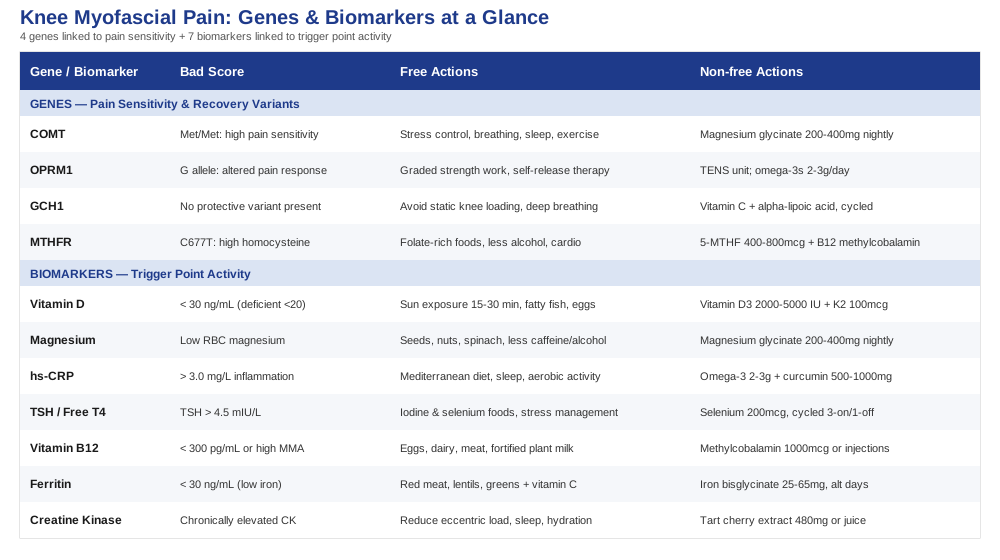
The Knee Biomarkers Worth Tracking for Myofascial Pain
Myofascial trigger points don't form in a vacuum. They form more easily, and heal more slowly, when the tissue around them is short on the raw materials it needs to relax, when systemic inflammation is running high, or when hormonal and metabolic signals are off. Most of the biomarkers below aren't specific to the knee — they reflect whole-body physiology — but the knee's muscles (quadriceps, hamstrings, gastrocnemius, popliteus, IT band/TFL complex) are large, heavily used, and mechanically loaded every day, which makes them an early place where these deficits show up as pain.
The seven biomarkers below are the ones with the clearest mechanistic link to muscle tension, trigger point irritability, and slow recovery, plus reasonable accessibility through a standard blood draw.
Vitamin D (25-hydroxyvitamin D)
Vitamin D receptors are present in skeletal muscle, and low vitamin D status has repeatedly been linked to diffuse musculoskeletal pain, higher pain sensitivity, and slower recovery from muscle injury. A widely cited review in the journal Pain examined the relationship between vitamin D status and chronic pain conditions and found a consistent, biologically plausible association, even though the authors were careful to note that correlation isn't the same as proof of causation Straube et al., Pain, 2009. In people with knee myofascial pain, unexplained deficiency is worth ruling out before assuming the problem is purely mechanical.
How to measure it: A standard 25-OH-D blood test, available through most primary care providers or direct-to-consumer labs. Cost typically runs $40–100 out of pocket, often less or free with insurance coverage. Optimal ranges are debated, but most clinicians flag anything under 30 ng/mL as insufficient and under 20 ng/mL as deficient.
If the score is low, the plan without supplements: Aim for 15–30 minutes of midday sun exposure on uncovered skin (arms, legs) 3–5 times a week, adjusted for skin tone, latitude, and season. Add fatty fish, egg yolks, and fortified dairy to the diet. This alone is often not enough to correct a true deficiency, especially in winter months or northern latitudes.
If the score is low, the plan with supplements or equipment: Vitamin D3, 2,000–5,000 IU daily, taken with a fat-containing meal for absorption, paired with 100 mcg of vitamin K2 to support calcium handling. Retest after 8–12 weeks and adjust the dose. Take continuously rather than cycling, but avoid unsupervised doses above 10,000 IU/day. Side effects at excessive doses include nausea, elevated blood calcium, and kidney stone risk in susceptible individuals — this is one supplement where more is not automatically better.
Magnesium (RBC Magnesium)
Magnesium is required for muscle fibers to relax after contracting. Without enough of it, muscles are biochemically biased toward staying tight — which is precisely the environment in which trigger points thrive. Standard serum magnesium tests are notoriously insensitive, since only about 1% of the body's magnesium circulates in blood; a red blood cell (RBC) magnesium test better reflects tissue stores.
How to measure it: RBC magnesium panel, roughly $60–90, ordered through a physician or a direct-access lab. Less accurate serum magnesium tests are cheaper (around $20–30) but can miss a real deficiency.
If the score is low, the plan without supplements: Increase pumpkin seeds, almonds, spinach, and dark chocolate. Reduce alcohol and excess caffeine, both of which increase magnesium loss through the kidneys. A warm Epsom salt (magnesium sulfate) foot or bath soak is a reasonable low-cost adjunct, though transdermal absorption evidence is mixed.
If the score is low, the plan with supplements or equipment: Magnesium glycinate or citrate, 200–400 mg of elemental magnesium nightly. Take continuously, with an optional one-week break every 4–6 weeks to reassess whether symptoms return. Start at the lower end of the dose — diarrhea and GI upset are the main side effects, especially with citrate or oxide forms, and are dose-dependent.
High-Sensitivity C-Reactive Protein (hs-CRP)
hs-CRP is a general marker of systemic, low-grade inflammation. It won't tell you which muscle is inflamed, but a persistently elevated result suggests the whole body is running a background inflammatory load that can lower the threshold for trigger points to form and stay irritable. Peter Attia frequently includes hs-CRP in his recommended baseline panels precisely because it's cheap, widely available, and a reasonable proxy for overall inflammatory burden even outside cardiovascular risk assessment.
How to measure it: A simple blood draw, $20–50, often bundled into routine metabolic panels. Values under 1.0 mg/L are considered low risk in cardiometabolic contexts; for general inflammatory load, most clinicians want to see a stable result under 3.0 mg/L, with anything above investigated further if there's no obvious acute cause (infection, recent injury).
If the score is high, the plan without supplements: Shift toward a Mediterranean-style eating pattern, prioritize 7–9 hours of sleep, address visceral fat if present, and get 150–200 minutes of moderate aerobic activity weekly. Also worth checking: gum and dental health, since chronic low-grade oral infections are an underrated contributor to elevated CRP.
If the score is high, the plan with supplements or equipment: Omega-3 fatty acids (EPA/DHA), 2–3 g/day, and curcumin with piperine, 500–1,000 mg once or twice daily. Take continuously and retest in 8–12 weeks. Side effects: fish oil can cause a fishy aftertaste, mild GI upset, and has a mild blood-thinning effect — use caution if already on anticoagulants; curcumin can cause GI upset at higher doses.
Thyroid Panel (TSH and Free T4)
Hypothyroidism, including the subclinical form, is associated with generalized muscle stiffness, cramping, and reduced pain tolerance. It's an easy thing to overlook in a knee-specific pain workup, but an underactive thyroid slows the metabolic processes muscles rely on to clear waste products and repair after use, which can prolong myofascial irritability.
How to measure it: TSH plus Free T4, around $30–70 depending on the lab, often included in an annual physical panel. TSH above roughly 4.5 mIU/L, especially paired with normal-to-low Free T4, is worth discussing with a physician even without an outright hypothyroidism diagnosis.
If the score is abnormal, the plan without supplements: Ensure adequate dietary iodine and selenium (seafood, dairy, eggs), manage chronic stress (the HPA axis and thyroid function are closely linked), and get consistent sleep. Avoid eating very large quantities of raw cruciferous vegetables in one sitting, since they contain goitrogens that can mildly interfere with thyroid hormone synthesis.
If the score is abnormal, the plan with supplements or equipment: Selenium, 200 mcg/day, cycled 3 months on and 1 month off rather than taken indefinitely, since chronic high-dose selenium carries toxicity risk. If TSH is clearly elevated with symptoms, this is a case to bring to a physician for consideration of thyroid hormone replacement rather than to self-treat with supplements. Side effects of excess selenium include hair thinning, GI upset, and a garlic-like breath odor — a practical warning sign to reduce the dose.
Vitamin B12
B12 deficiency can produce muscle weakness, cramping, and diffuse aching that overlaps significantly with myofascial pain presentations, particularly in older adults, vegetarians, vegans, and anyone on long-term metformin or proton-pump inhibitors, both of which impair B12 absorption.
How to measure it: Serum B12, $40–60. If B12 is borderline (200–400 pg/mL) but symptoms suggest deficiency, ask for methylmalonic acid (MMA), $80–120, which is a more sensitive functional marker of B12 status at the cellular level.
If the score is low, the plan without supplements: Increase eggs, dairy, meat, and fish, or fortified nutritional yeast and plant milks for those avoiding animal products.
If the score is low, the plan with supplements or equipment: Sublingual methylcobalamin, 1,000 mcg daily, or — if malabsorption is suspected (common with autoimmune gastritis or long-term acid-reducing medication) — B12 injections, 1,000 mcg weekly for four weeks, then monthly maintenance. Injection kits are inexpensive and can be self-administered at home after instruction. Retest at 3 months. Side effects are rare; occasional mild acne flare has been reported, and injection sites can be briefly sore.
Ferritin
Ferritin reflects the body's iron stores, and low iron is a well-documented cause of fatigue and reduced exercise tolerance, both of which make muscles more prone to overuse-related trigger points because they're working closer to their limit for any given task. High ferritin, on the other hand, can signal inflammation or, less commonly, iron overload, and should not be treated with iron supplementation.
How to measure it: Standard blood test, $30–50. Attia and other longevity-focused clinicians often prefer a target range roughly between 30–150 ng/mL for most adults, though exact cutoffs vary by lab and sex.
If ferritin is low, the plan without supplements: Prioritize red meat, lentils, and dark leafy greens, paired with a vitamin C source (citrus, bell peppers) to boost non-heme iron absorption. Avoid drinking tea or coffee with iron-containing meals, since tannins inhibit absorption.
If ferritin is low, the plan with supplements or equipment: Iron bisglycinate, 25–65 mg every other day rather than daily — alternate-day dosing has been shown to improve absorption and reduce GI side effects compared to daily dosing. Continue for about 3 months, then retest. Side effects include constipation, GI upset, and dark stools. If ferritin is high, do not supplement iron — investigate for inflammation or, if persistently elevated, hereditary hemochromatosis with a physician.
Creatine Kinase (CK)
CK rises when muscle fibers are damaged, whether from an intense workout, an unaccustomed activity, or ongoing overuse. In the context of knee myofascial pain, a chronically or repeatedly elevated CK can indicate that the surrounding muscles (quadriceps in particular) are being pushed past their recovery capacity, which perpetuates trigger point formation rather than resolving it.
How to measure it: Simple blood draw, $25–45. Best measured at least 48–72 hours after any intense exercise session to avoid a false-positive reading from normal, expected post-exercise elevation.
If CK is elevated, the plan without supplements: Temporarily reduce eccentric-heavy movements (deep squats, downhill running, jumping) that load the quadriceps and knee stabilizers hardest. Prioritize sleep and hydration, and reintroduce training load gradually rather than resuming at full intensity.
If CK is elevated, the plan with supplements or equipment: Tart cherry extract, 480 mg, or 8–12 oz of tart cherry juice daily, taken around periods of higher training load — this is one of the better-studied natural options for exercise-induced muscle damage. A percussion massage gun or foam roller, used for 5–10 minutes post-exercise, can help with perceived soreness, though its effect on CK levels specifically is modest. Cycle supplementation around training blocks rather than using it year-round. Side effects are minimal, mainly GI upset or added sugar intake from juice.
Tracking these seven markers together — rather than in isolation — gives a more complete picture than any single number. A person with low vitamin D, low magnesium, and a mildly elevated CRP has a very different treatment priority list than someone with a borderline thyroid panel and low ferritin, even if both present with near-identical knee trigger points.
The Genetic Side: What Your DNA May Be Telling You About Knee Pain Sensitivity
Biomarkers describe your current physiology; genetics describe a tendency. Researchers like Ali Torkamani, whose work on polygenic risk at Scripps Research emphasizes that most gene variants shift probabilities rather than determine outcomes, and public figures like Gary Brecka, who has popularized methylation-focused genetic testing (particularly around MTHFR) as a starting point for personalized health decisions, both make the same underlying point worth keeping in mind here: a gene variant is a lens for asking better questions, not a diagnosis or a life sentence.
For knee myofascial pain specifically, the most relevant genetic research isn't about the knee at all — it's about how the nervous system processes and amplifies pain signals in general, and about muscle recovery capacity. Below are four of the better-studied genes in this space, with a clear note on how strong (or early) the human evidence actually is.
COMT (Catechol-O-Methyltransferase)
COMT breaks down catecholamines like dopamine and norepinephrine. Low-activity variants of this gene (commonly discussed as the Met/Met genotype at the Val158Met site) leave more of these compounds active in the system for longer, which has been linked in human studies to heightened pain sensitivity and a greater likelihood of developing a chronic pain condition after an initial injury. A landmark study identified three COMT haplotypes that meaningfully predicted individual pain sensitivity in a human cohort Diatchenko et al., Human Molecular Genetics, 2005. This is one of the more consistently replicated findings in human pain genetics, though it explains a portion of individual variation, not all of it.
If the gene variant is unfavorable, the plan without supplements: Because low-COMT-activity individuals appear more sensitive to stress-driven pain amplification, daily stress regulation matters more than average here: consistent sleep timing, paced breathing practice (5–10 minutes daily), and 150 minutes/week of moderate aerobic exercise, which helps regulate catecholamine turnover. Reducing high caffeine intake is also reasonable, since caffeine adds to the catecholamine load this genotype already struggles to clear.
If the gene variant is unfavorable, the plan with supplements or equipment: Magnesium glycinate, 200–400 mg nightly (see the magnesium biomarker section above for full detail), since magnesium supports healthy nervous system regulation broadly. Avoid stacking high-dose methyl-donor supplements (like methylfolate) on top of this without guidance, particularly if MTHFR status is also unfavorable, since the interaction between COMT and methylation capacity is still not fully mapped in human research. Cycle any nervous-system-focused supplement with periodic breaks and reassess symptoms rather than taking an ever-growing stack indefinitely.
OPRM1 (Mu-Opioid Receptor Gene)
The A118G variant (rs1799971) of OPRM1 affects how the body's own opioid receptors respond to endogenous pain-modulating signals. Carriers of the less common G allele showed measurably higher pressure pain thresholds in a controlled human study — meaning the relationship between this variant and pain perception is real, but its direction and size vary by pain modality, which matters because pressure-based tenderness is exactly how trigger points are typically assessed Fillingim et al., The Journal of Pain, 2005.
If the gene variant is unfavorable, the plan without supplements: Graded exposure through structured, low-intensity strength work around the knee (bodyweight or light-resistance quad and hamstring work, 2–3 times weekly) tends to build tolerance to pressure-type discomfort over time better than avoidance does. Self-administered trigger point release with a tennis ball or lacrosse ball, 2–3 times weekly for 60–90 seconds per point, is a reasonable low-cost habit to pair with this.
If the gene variant is unfavorable, the plan with supplements or equipment: A TENS unit, used for 20–30 minutes as needed on affected areas, is an equipment-based option with reasonable safety and low cost (most units run $30–60). Omega-3s at 2–3 g/day (detailed in the CRP section) offer a secondary anti-inflammatory angle. Topical menthol or capsaicin creams applied as needed are another low-risk option, with the main side effect being localized skin irritation or a burning sensation, particularly with capsaicin.
GCH1 (GTP Cyclohydrolase 1)
GCH1 regulates production of tetrahydrobiopterin (BH4), a cofactor involved in nociceptor (pain nerve) sensitivity. A specific "pain-protective" haplotype of this gene was shown in combined animal and human research to reduce pain sensitivity and the likelihood of developing persistent pain after nerve injury or surgery Tegeder et al., Nature Medicine, 2006. The protective haplotype is relatively rare; most people carry the more common, non-protective version, which isn't harmful on its own but doesn't offer the same buffering effect against pain amplification.
If the gene profile is unfavorable (i.e., lacking the protective haplotype), the plan without supplements: Focus on reducing situations that provoke prolonged static loading of the knee (long periods of driving, kneeling, or standing without movement breaks), since sustained mechanical stress is one of the more direct triggers for nociceptor activation regardless of genetic background. Diaphragmatic breathing practice and consistent 7–9 hour sleep support general nervous system downregulation.
If the gene profile is unfavorable, the plan with supplements or equipment: Because BH4 is vulnerable to oxidative degradation, modest antioxidant support is a reasonable, low-risk angle: vitamin C, 500 mg/day, and alpha-lipoic acid, 300 mg/day, cycled 8 weeks on and 2 weeks off. This is an indirect, mechanism-based approach rather than one with direct trial evidence in GCH1 carriers specifically, so expectations should stay modest. Side effects are mild — occasional GI upset with alpha-lipoic acid, best taken with food.
MTHFR (Methylenetetrahydrofolate Reductase)
The MTHFR C677T variant reduces the efficiency of an enzyme involved in folate metabolism and converting homocysteine to methionine, as documented on the National Library of Medicine's genetics reference MedlinePlus Genetics, MTHFR gene. The direct link between MTHFR status and myofascial pain specifically is much thinner than the COMT or OPRM1 evidence — this is an area where popular health media (including Gary Brecka's content) has moved faster than the underlying research. What's better established is that reduced MTHFR activity can raise homocysteine, which has broader associations with vascular and inflammatory health that may indirectly affect muscle tissue recovery. Treat this one as a reasonable early lead, not a settled mechanism.
If the gene variant is unfavorable, the plan without supplements: Increase dietary folate through leafy greens, legumes, and citrus, plus B12-rich foods, and reduce alcohol intake, which further impairs folate metabolism. Regular aerobic exercise has also been shown to help lower homocysteine levels over time.
If the gene variant is unfavorable, the plan with supplements or equipment: Methylated folate (5-MTHF), 400–800 mcg/day, alongside methylcobalamin B12, 500–1,000 mcg/day. Some people tolerate this better on a 5-days-on, 2-days-off cycle rather than continuous dosing, since a subset of people report overmethylation symptoms — irritability, anxiety, or insomnia — at higher or continuous doses. Start at the lower end and monitor homocysteine levels every 3 months if this is a driving concern.
Genetics rarely act alone. A person with an unfavorable COMT profile and a chronically low magnesium level is dealing with two compounding factors, not one — which is exactly why pairing the genetic picture with the biomarker picture tends to be more useful than looking at either in isolation.
What a Leading Pain Science Podcast Reveals About Chronic Muscle Pain
Andrew Huberman's conversation with Stanford pain medicine specialist Dr. Sean Mackey on the Huberman Lab podcast is one of the more thorough, research-grounded public discussions of chronic pain available, and several of its points directly challenge the "just push through it" or "rest until it's gone" framing that still dominates casual advice about muscle and joint pain. Below are ten of the most useful takeaways, adapted to a knee myofascial pain context.
1. Pain and tissue damage are not the same signal
The intensity of pain you feel doesn't map cleanly onto the amount of tissue damage present. A knee with a fairly minor myofascial irritation can produce intense, disruptive pain, while more significant tissue changes elsewhere can be nearly silent. This is a reason not to assume severe pain always means severe structural damage — and not to assume mild pain means it's safe to ignore.
2. Chronic pain involves the brain rewiring itself, not just the tissue staying injured
When pain persists past normal healing time, the nervous system itself can become sensitized — a process called central sensitization. The muscle tissue may have long since had the capacity to recover, but the pain-processing pathways have become more reactive. This is why purely local treatments (only working on the knee) sometimes underperform expectations.
3. Fear of movement often does more damage than the movement itself
Avoiding activity out of fear of re-injury frequently leads to deconditioning, which increases pain sensitivity over time rather than reducing it. Graded, monitored return to movement is generally favored over prolonged rest for musculoskeletal pain that isn't linked to acute structural injury.
4. Sleep quality directly changes next-day pain thresholds
Poor or shortened sleep measurably lowers pain thresholds the following day. Anyone tracking knee myofascial pain flares should also be tracking sleep duration and quality, since a bad night can look like a pain "flare" that's really a sleep-driven sensitivity spike.
5. Stress and pain share overlapping neural circuitry
The brain regions and neurochemical systems involved in processing stress overlap substantially with those involved in processing pain. This isn't a claim that pain is "just stress" — it's a mechanistic explanation for why stress management (breathing practices, adequate downtime) measurably affects reported pain intensity in real trials.
6. Mindset and expectation change measurable pain outcomes
Expectation effects on pain are real and measurable via brain imaging, not simply self-reported placebo. This doesn't mean pain is imaginary — it means the framing and context around treatment (confidence in a plan, clear understanding of what's happening) has a physiological, not just psychological, effect on outcomes.
7. Breathing practices have a direct, testable effect on pain modulation
Structured breathing exercises engage the autonomic nervous system in ways that can measurably shift pain perception in controlled settings, not just subjectively. A few minutes of slow, extended-exhale breathing before or after a knee-focused stretching or strengthening session is a low-cost addition worth testing.
8. Chronic low-grade inflammation and chronic pain reinforce each other
Persistent pain can itself contribute to a pro-inflammatory state, and inflammation can lower pain thresholds — a bidirectional loop. This lines up directly with the hs-CRP tracking discussed earlier in this article: inflammation isn't just a bystander marker, it's plausibly part of the pain cycle.
9. Individual variability in pain response is real and biologically grounded
People genuinely differ in how much pain a given stimulus produces, for reasons that include genetics (echoing the COMT and OPRM1 research discussed above), prior pain history, and current nervous system state. This is a case against one-size-fits-all pain protocols and a case for the personalized, marker-driven approach this article takes.
10. Multimodal treatment consistently outperforms single-modality treatment
Combining approaches — movement, sleep, stress regulation, and targeted physical treatment — produces better outcomes than relying on any single intervention alone. This is the strongest practical argument for treating knee myofascial pain as a whole-system issue rather than a purely local one.
These themes connect directly back to the biomarker and genetic sections above: inflammation, sleep, stress physiology, and individual biological variability aren't separate topics from the trigger points in your knee — they're part of the same system producing them.
Complementary Approaches That Actually Have Evidence Behind Them
Not every complementary approach marketed for muscle pain has real support behind it. The five below were selected specifically because there's human clinical evidence — not just theory — connecting them to myofascial pain or closely related musculoskeletal pain conditions.
Massage Therapy
Massage, and specifically trigger point release techniques, work directly on the mechanism believed to drive myofascial pain: taut bands of muscle fiber that stay contracted and irritable. For knee myofascial pain, this makes it one of the more directly relevant complementary options rather than a general wellness add-on.
A randomized, placebo-controlled trial found that both single and multiple trigger point release massage sessions produced measurable increases in pressure pain thresholds at treated trigger points, with cumulative benefit across repeated sessions Moraska et al., American Journal of Physical Medicine & Rehabilitation, 2017.
Realistically, this means scheduling focused trigger point work on the quadriceps, IT band, and calf muscles around the knee — either from a licensed massage therapist or via self-massage tools (a firm ball or roller) — 2–3 times per week, aiming for 60–90 seconds of sustained pressure per point rather than brief, glancing pressure. Mild post-session soreness for a day is normal; sharp or worsening pain is not, and is a signal to reduce intensity.
Low-Level Laser Therapy / Photobiomodulation
Low-level laser therapy (LLLT), also called photobiomodulation, uses specific wavelengths of light to modulate cellular activity in irritated tissue. It's been studied specifically in myofascial pain populations, which gives it a more direct evidence base than many complementary options.
A systematic review and meta-analysis of randomized controlled trials found that LLLT meaningfully reduced pain and improved pressure pain threshold and some range-of-motion outcomes in patients with myofascial neck pain syndrome, though it did not significantly improve disability scores on its own Tehrani et al., Lasers in Medical Science, 2022. This evidence is specific to neck myofascial pain rather than the knee, so results should be considered suggestive, not conclusive, for knee application — the underlying tissue mechanism is similar, but direct knee-specific trials are limited.
In practice, this means treatment through a licensed physical therapist or chiropractor with access to a clinical-grade LLLT device (typically $30–80 per session, or bundled into a treatment plan), applied directly over trigger points for a few minutes per session, generally 2–3 times weekly for several weeks. Home-use LLLT devices exist but vary widely in power output and quality; the clinical evidence is generally built on professional-grade equipment.
Tai Chi
Tai Chi combines slow, controlled movement, weight shifting, and breath coordination — all of which load the knee gently while training balance and neuromuscular control, making it a reasonable fit for a joint where muscular guarding and altered movement patterns often perpetuate myofascial pain.
The most directly relevant evidence comes from knee osteoarthritis research rather than myofascial pain research specifically, but the mechanism (reducing muscular guarding, improving movement quality around the joint) is highly relevant. A randomized controlled trial found that 12 weeks of Tai Chi produced significantly greater improvements in knee pain, physical function, and quality of life compared to a wellness education and stretching control group, with no serious adverse events reported Wang et al., Arthritis & Rheumatism, 2009.
A realistic starting point is a beginner-level class (many community and physical therapy settings offer Tai Chi for joint health specifically) twice weekly for at least 12 weeks before judging effect, matching the study's protocol. It's low-impact and generally safe, though anyone with significant balance issues or acute knee instability should get clearance from a physical therapist first.
Biofeedback
Biofeedback uses real-time monitoring (commonly surface EMG, which measures muscle electrical activity) to help someone learn to consciously reduce excess muscle tension — directly relevant to myofascial pain, where sustained, low-level muscle overactivation is part of the underlying problem.
Human trials in myofascial pain of the neck and upper back region have compared biofeedback to other active treatments and found it a credible, effective option for reducing pain in these muscle groups Eslamian et al., 2020. Evidence specific to the knee region is sparser, so this should be viewed as a plausible extension of a technique validated elsewhere in the myofascial pain literature, rather than knee-specific proof.
Access is typically through a physical therapist or pain clinic with sEMG equipment, with sessions run weekly for 6–8 weeks while the person learns to recognize and voluntarily reduce tension patterns in the quadriceps or surrounding muscles. Some portable home sEMG biofeedback devices exist for continued practice between sessions. There are no meaningful side effects; the main limitation is access and cost, which varies widely by clinic and insurance coverage.
Progressive Muscle Relaxation
Progressive muscle relaxation (PMR) involves systematically tensing and then releasing muscle groups, training a more conscious sense of the difference between tension and true relaxation — a skill that's often underdeveloped in people who've been unconsciously guarding a painful knee for months.
According to the National Center for Complementary and Integrative Health, progressive relaxation has shown moderate benefit for chronic low back pain and function based on clinical practice guideline review, with evidence in other musculoskeletal pain conditions described as promising but more mixed in quality NCCIH, Relaxation Techniques for Health.
This is one of the easiest complementary approaches to start without any cost: 10–15 minutes daily, working through major muscle groups including the thighs and calves, ideally guided by a free recorded script or app for the first few weeks until the sequence becomes familiar. It pairs naturally with the breathing practices discussed in the podcast section above. It's considered very low risk, though NCCIH notes rare, temporary reports of increased anxiety in some people during initial sessions — a reason to stop and reassess rather than push through if that occurs.
Conclusion
Knee myofascial pain syndrome is rarely explained by a single cause, and it doesn't respond well to single-cause solutions. The most useful shift isn't finding one fix — it's building a more complete picture: which of the seven biomarkers above might be quietly working against muscle recovery, whether a genetic tendency toward heightened pain sensitivity is part of the story, and which complementary approaches have real evidence behind them rather than just popularity.
None of this replaces a proper clinical evaluation, and a knee that's swollen, unstable, or worsening needs a physical exam before anything else. But for the more common pattern — persistent, tender, trigger-point-driven pain that hasn't responded to generic stretching and rest — the next smart step is concrete: get a basic panel done (vitamin D, magnesium, hs-CRP, thyroid, B12, ferritin, and CK if you're active), track your symptoms alongside sleep and stress for a couple of weeks, and bring both to a physician or physical therapist who's willing to look at the whole picture rather than just the joint.
Disclaimer
This article is for educational purposes only and does not constitute medical advice. Consult a qualified healthcare provider before starting any new supplement, exercise program, or treatment, especially if you have an existing medical condition or are taking other medications.
Neurological Endocrine & Metabolic
Musculoskeletal: Sports Injuries
Endocrine & Metabolic: Thyroid Conditions